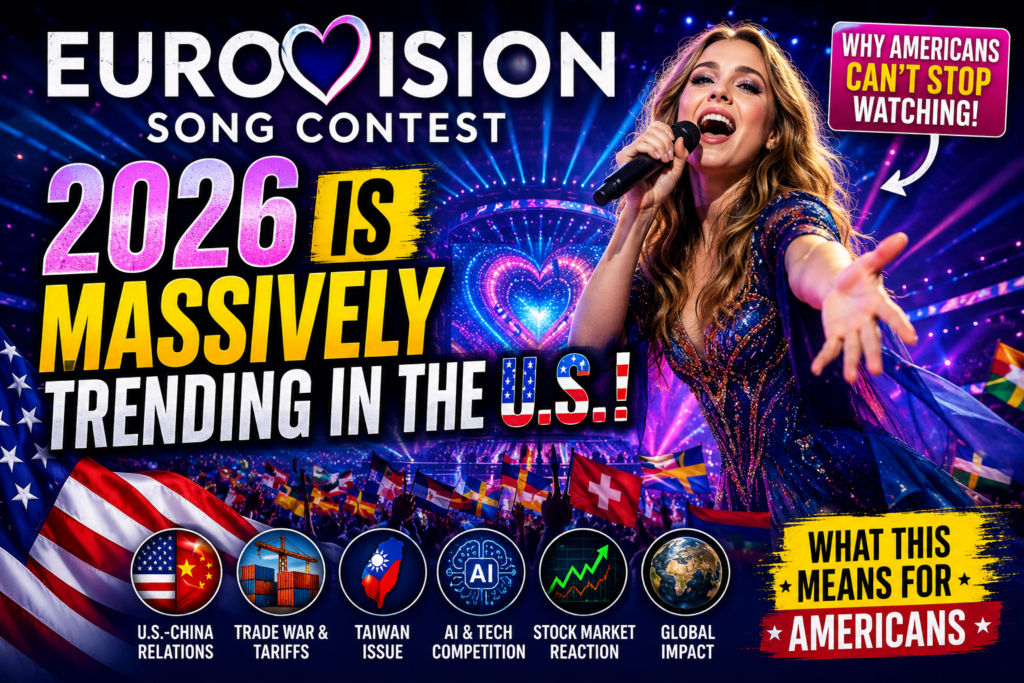
America Didn’t Used to Care About Eurovision… So What Changed?
For decades, the Eurovision Song Contest was seen in America as a strange European music competition filled with flashy costumes, dramatic performances, political voting, and songs most Americans never heard twice.
Now, everything has changed.
In 2026, Eurovision has exploded across U.S.social media platforms including TikTok, YouTube, X, Instagram, and Reddit.Millions of Americans are suddenly watching livestreams, reacting to performances, debating winners, and even learning about European politics through the competition.
Searches for “How to watch Eurovision in the USA” have surged.Reaction videos from American creators are going viral.Major U.S.entertainment publications are covering Eurovision daily.Even Wall Street analysts and tech commentators are discussing the contest’s cultural impact.
At first glance, this might seem surprising.Why would Americans become obsessed with a European singing competition during a time of rising inflation, geopolitical uncertainty, AI disruption, trade wars, and growing tensions between the United States and China?
The answer is bigger than music.
Eurovision 2026 has become a symbol of something much deeper: a changing world where entertainment, politics, technology, economics, and global influence are colliding in real time.
The Internet Made Eurovision Impossible to Ignore
TikTok, YouTube, and Streaming Turned Eurovision Into a Global Event
The biggest reason Eurovision exploded in the United States is simple: social media erased borders.
A decade ago, Americans rarely saw Eurovision clips unless they intentionally searched for them.In 2026, Eurovision content floods feeds automatically through TikTok algorithms, YouTube Shorts, Instagram Reels, and AI-powered recommendations.
One dramatic performance can reach tens of millions of viewers overnight.
American audiences love:
- outrageous stage performances
- emotional ballads
- shocking live moments
- political controversy
- audience voting drama
- meme-worthy reactions
Eurovision delivers all of that at once.
This year’s competition generated enormous engagement online thanks to:
- futuristic AI-generated stage visuals
- emotionally charged performances linked to global conflicts
- surprise political messages
- cyberpunk-style production design
- record-breaking livestream numbers
Many younger Americans now describe Eurovision as:
“The Olympics mixed with Coachella and reality TV.”
That comparison may sound exaggerated, but the online numbers tell a different story.
Why Eurovision 2026 Feels Different From Previous Years
The World in 2026 Is More Tense . and Eurovision Reflects That
Eurovision has always contained political undertones.But in 2026, global tensions are impossible to separate from entertainment.
The contest is happening during a period of:
- worsening U.S.-China relations
- ongoing trade war discussions
- Taiwan military concerns
- economic uncertainty
- AI competition between superpowers
- rising nationalism worldwide
- digital propaganda battles
As a result, Eurovision is no longer viewed as “just music.”
It has become a stage for soft power.
Countries are using culture, technology, and entertainment to shape global perception.That matters more today than ever before.
How U.S.-China Relations Are Quietly Shaping Global Entertainment
The New Cold War Isn’t Only About Weapons
The United States and China are currently competing on multiple fronts:
- artificial intelligence
- semiconductor manufacturing
- military influence
- social media dominance
- economic power
- entertainment influence
This competition affects nearly every global industry . including music and streaming platforms.
American analysts increasingly view entertainment as part of geopolitical strategy.Whoever controls digital culture influences younger generations worldwide.
China continues expanding its media influence through technology platforms, investments, and AI-powered content systems.Meanwhile, the United States still dominates global entertainment through Hollywood, streaming services, and social media ecosystems.
Eurovision unexpectedly entered this battle because it represents something unique:
- multinational cooperation
- digital cultural influence
- online audience mobilization
- real-time international engagement
For Americans watching from home, Eurovision offers a rare glimpse into how other countries see themselves . and how they want the world to see them.
The Taiwan Issue and Why Global Audiences Are Paying Attention
Political Anxiety Is Fueling Demand for Escapism
One major reason entertainment events are receiving massive attention in 2026 is global anxiety.
The Taiwan issue continues to create uncertainty in international markets.Military drills, diplomatic warnings, and semiconductor supply chain concerns have made investors nervous worldwide.
Americans are feeling this pressure directly through:
- rising electronics prices
- supply chain instability
- inflation concerns
- stock market volatility
- fears about future conflict
In stressful times, audiences often turn toward large emotional entertainment events.
Eurovision provides:
- excitement
- humor
- national pride
- emotional storytelling
- community interaction
- distraction from negative headlines
This psychological effect should not be underestimated.
Historically, entertainment consumption rises during periods of economic and geopolitical uncertainty.Analysts saw similar trends during:
- the 2008 financial crisis
- the COVID-19 pandemic
- major election cycles
- periods of military conflict
Eurovision 2026 arrived at exactly the moment many people needed collective entertainment.
AI and Technology Competition Changed Eurovision Forever
Artificial Intelligence Is Reshaping Music and Performance
One of the biggest reasons Eurovision 2026 became globally viral is its use of advanced AI technology.
Several performances reportedly used:
- AI-assisted visual effects
- real-time stage rendering
- holographic enhancements
- machine-learning-powered audience interaction
- automated translation systems
For tech-focused American audiences, Eurovision suddenly became more than music.
It became a showcase for the future of entertainment technology.
This is especially important because the United States and China are currently competing aggressively in the AI race.
American companies are investing billions into:
- generative AI
- music synthesis
- digital avatars
- AI video production
- immersive entertainment
At the same time, Chinese technology firms are accelerating development in:
- AI-powered livestreaming
- recommendation algorithms
- synthetic media
- virtual performers
Eurovision sits directly in the middle of this transformation.
The contest demonstrates how entertainment may look in the next decade:
- hyper-personalized
- globally streamed
- AI-enhanced
- interactive
- emotionally optimized for engagement
Many experts believe future music competitions may rely heavily on artificial intelligence for production, translation, visual effects, and audience targeting.
The Trade War Is Affecting Entertainment Too
Tariffs and Economic Pressure Are Reshaping Media Industries
Many Americans don’t realize how connected global entertainment is to international trade.
The ongoing trade tensions between the United States and China affect:
- streaming hardware
- smartphones
- semiconductors
- cameras
- production technology
- advertising markets
Tariffs increase costs for companies producing entertainment equipment and consumer electronics.
This matters because Eurovision 2026 relies heavily on advanced production systems:
- LED technologies
- AI graphics processors
- broadcasting equipment
- cloud infrastructure
- high-speed networking
Rising costs in the technology sector eventually impact consumers.
Americans are already paying more for:
- phones
- laptops
- gaming systems
- TVs
- streaming subscriptions
As entertainment becomes increasingly digital, trade wars directly influence how global events are produced and consumed.
Why the American Stock Market Is Watching Global Entertainment
Investors Are Following Viral Trends More Than Ever
Wall Street pays close attention to viral internet behavior because online trends increasingly affect:
- advertising revenue
- streaming subscriptions
- technology stocks
- AI companies
- social media platforms
Eurovision’s massive U.S.online popularity boosted discussions surrounding:
- streaming companies
- music technology startups
- AI entertainment firms
- live-event production businesses
Analysts are particularly interested in companies involved in:
- recommendation algorithms
- livestream infrastructure
- AI-generated content
- digital advertising
The connection between entertainment and finance is stronger than ever.
A viral cultural moment can now influence:
- stock prices
- investor confidence
- brand partnerships
- advertising spending
This is one reason major corporations closely monitor social media engagement around global events.
Why Younger Americans Connect With Eurovision
Gen Z Wants Global Culture, Not Just Local Entertainment
American entertainment used to dominate global youth culture almost completely.
That is changing rapidly.
Generation Z consumes content from everywhere:
- Korea
- Japan
- Europe
- Latin America
- Africa
- the Middle East
Eurovision fits perfectly into this globally connected digital culture.
Young Americans appreciate:
- multilingual songs
- diverse performers
- international fandoms
- online community interaction
- meme culture
- emotional authenticity
Unlike traditional American talent shows, Eurovision feels unpredictable and chaotic.
That unpredictability makes it addictive online.
Many Americans are also exhausted by highly manufactured celebrity culture.Eurovision feels more genuine, spontaneous, and emotionally raw.
The Political Symbolism Behind Eurovision 2026
Music Has Become a Form of International Messaging
Eurovision has long carried political symbolism, whether organizers admit it or not.
In 2026, audiences are paying closer attention to:
- voting alliances
- diplomatic tensions
- national image campaigns
- cultural messaging
- protest symbolism
Some performances indirectly referenced:
- war
- censorship
- migration
- economic hardship
- AI fears
- climate anxiety
This transformed Eurovision from a music competition into a global conversation.
For Americans, this creates curiosity because the contest offers insight into international public sentiment outside traditional news coverage.
What Eurovision’s Popularity Says About America
Americans Are Looking Beyond Their Borders
The growing American obsession with Eurovision reflects a larger cultural shift.
Many Americans increasingly want:
- international perspectives
- global entertainment
- cross-cultural experiences
- alternatives to traditional media
At the same time, domestic political polarization has pushed some audiences toward global content as a form of escape.
Eurovision provides:
- community
- excitement
- humor
- emotional storytelling
- cultural discovery
That combination is extremely powerful in today’s fragmented digital environment.
Future Predictions: What Happens Next?
Eurovision Could Become a Major U.S.Entertainment Event
Several trends suggest Eurovision’s American popularity may continue growing rapidly.
1.More U.S.Streaming Partnerships
American streaming platforms may invest heavily in Eurovision rights after seeing massive engagement numbers.
2.Increased American Celebrity Involvement
U.S.artists and influencers are already reacting publicly to Eurovision performances.Future collaborations are likely.
3.AI-Powered Interactive Viewing
Future broadcasts may allow viewers to:
- customize camera angles
- receive live translations
- interact with performers virtually
- use AI-generated companion experiences
4.Greater Political Attention
Governments increasingly recognize entertainment as a soft-power tool.Eurovision’s global visibility will continue attracting political discussion.
5.Economic Opportunities
Brands, advertisers, streaming platforms, and tech companies see enormous commercial potential in globally viral entertainment events.
What This Means for Americans
Eurovision Is More Than Music . It’s a Window Into the Future
For Americans, Eurovision 2026 represents several important shifts happening simultaneously:
- globalization of entertainment
- AI transformation of media
- changing youth culture
- rising geopolitical competition
- economic uncertainty
- digital community-building
The event demonstrates how interconnected the world has become.
A European music contest can now influence:
- American social media trends
- U.S.streaming markets
- technology discussions
- advertising campaigns
- investor behavior
That would have seemed impossible twenty years ago.
Now it feels normal.
FAQ Section
Why is Eurovision 2026 trending in the United States?
Eurovision is trending because of viral social media clips, AI-enhanced performances, global political themes, and increased accessibility through streaming platforms.
Can Americans watch Eurovision live?
Yes.Americans can watch Eurovision through official streaming platforms, YouTube clips, and select broadcast partners depending on regional rights agreements.
How is AI influencing Eurovision?
AI is being used for visual effects, live translations, stage production, audience engagement, and content recommendation systems.
What does Eurovision have to do with U.S.-China relations?
The contest reflects broader global competition in technology, entertainment influence, AI development, and digital culture . all areas where the U.S.and China compete heavily.
Is the stock market reacting to entertainment trends?
Yes.Investors monitor viral entertainment trends because they affect streaming companies, tech firms, advertisers, and consumer behavior.
Why are younger Americans interested in Eurovision?
Gen Z audiences prefer globally connected digital culture, multilingual content, online communities, and unpredictable entertainment experiences.
Could Eurovision become permanently popular in America?
Many analysts believe Eurovision’s U.S.audience will continue growing because of streaming accessibility, social media virality, and globalized entertainment habits.
Final Thoughts
Eurovision Song Contest 2026 is not just another entertainment trend.
It reflects a rapidly changing world where politics, technology, economics, artificial intelligence, and culture are merging into one massive digital experience.
Americans are no longer isolated from global entertainment.They are actively participating in it.
At a time when trade wars, AI competition, inflation, and geopolitical tensions dominate headlines, Eurovision offers something surprisingly powerful:
- connection
- emotion
- creativity
- community
- and a reminder that culture still matters in a divided world
The viral rise of Eurovision in America may look unexpected today.
But in many ways, it is exactly the kind of global phenomenon the internet was always going to create.
As technology continues reshaping entertainment, one thing is becoming increasingly clear:
The future of culture will not belong to one country alone.