The Middle East has seen no shortage of crises, but what unfolded in early 2026 marks one of the most consequential flashpoints in a generation.The United States and Iran.two nations locked in decades of mutual distrust.are now navigating the aftermath of open military conflict while simultaneously sitting across (sometimes the same) negotiating tables.For millions of people around the world watching oil prices climb, energy supplies tighten, and diplomats scramble, one question looms above all others: Is a new Iran nuclear deal actually possible?
This article breaks down everything you need to know.how the conflict started, what the US Iran nuclear talks look like right now, what each side wants, and what a deal (or no deal) means for the world.
How Did the USA-Iran Conflict in 2026 Begin?
To understand where things stand today, you have to understand how quickly the situation escalated.It didn’t happen overnight.
The groundwork was laid in 2018, when President Trump withdrew the United States from the 2015 Joint Comprehensive Plan of Action (JCPOA).the landmark nuclear agreement that had placed strict limits on Iran’s uranium enrichment in exchange for sanctions relief.After the US exit, Iran gradually ramped up its nuclear activities.By mid-2025, Iran had enriched uranium to 60% purity, far above the 3.67% limit set by the original deal, with 90% required for a nuclear weapon.
In April 2025, the Trump administration launched a new round of nuclear diplomacy.Several rounds of indirect talks, mediated by Oman, took place in cities including Muscat and Rome.But those talks failed to produce a binding agreement.The IAEA declared Iran non-compliant with its nuclear obligations for the first time in 20 years, citing Tehran’s enriched uranium stockpile and its refusal to fully answer questions about undeclared nuclear activities.
Then, on February 28, 2026, the United States joined Israel in launching a series of strikes against Iran.targeting its nuclear infrastructure, military facilities, and ballistic missile program.Iran’s Supreme Leader, Ali Khamenei, was killed in those strikes.His son was appointed as successor.Iran responded with counter-strikes against Israeli territory, US military bases in the region, and crucially, closed the Strait of Hormuz.the narrow waterway through which roughly one-fifth of the world’s oil and gas flows.
The conflict.sudden, devastating, and with enormous global consequences.had begun.
The Strait of Hormuz: Why It’s at the Center of Every Negotiation
You cannot talk about US Iran nuclear talks in 2026 without understanding the Strait of Hormuz.This roughly 33-kilometer-wide passage between the Gulf of Oman and the Persian Gulf is arguably the world’s most strategically important waterway.
Iran’s closure of the strait sent shockwaves through global energy markets.Gas prices in the United States surged, with American consumers absorbing an estimated $37 billion hit from the spike in gasoline and diesel prices since the conflict began.Global shipping was disrupted.Oil-dependent economies from South Asia to Europe felt the strain.
The US responded by imposing a naval blockade on Iranian ports in April 2026.For weeks, the two sides effectively imposed competing blockades on each other.a situation economists warned could tip the global economy into recession if left unresolved.
For Iran, control over the Strait of Hormuz is both a strategic and sovereign issue.Iranian officials have called for a “new mechanism governing the strait”.language that Washington has interpreted as Iran wanting a permanent toll or coordination requirement.The US position is clear: the strait must be freely navigable for all commercial vessels without any Iranian permission required.
This standoff over Hormuz has, in many ways, overshadowed the nuclear question.at least in the early stages of ceasefire negotiations.
Where Do US Iran Nuclear Talks Stand Right Now?
As of mid-May 2026, the US and Iran are closer to a preliminary agreement than at any point since the conflict began.but significant gaps remain.
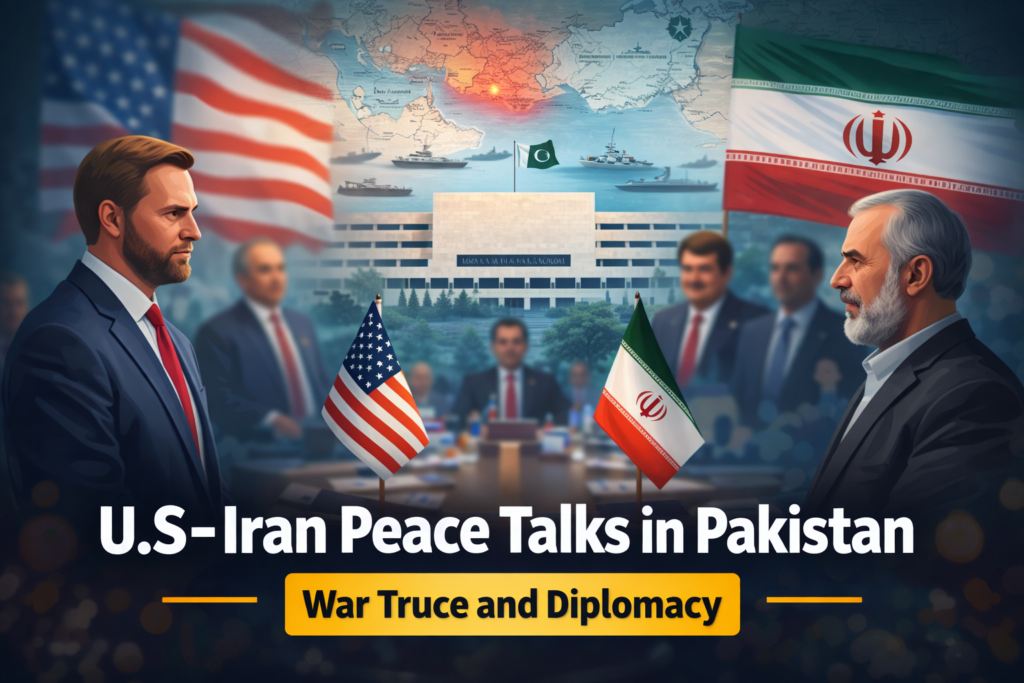
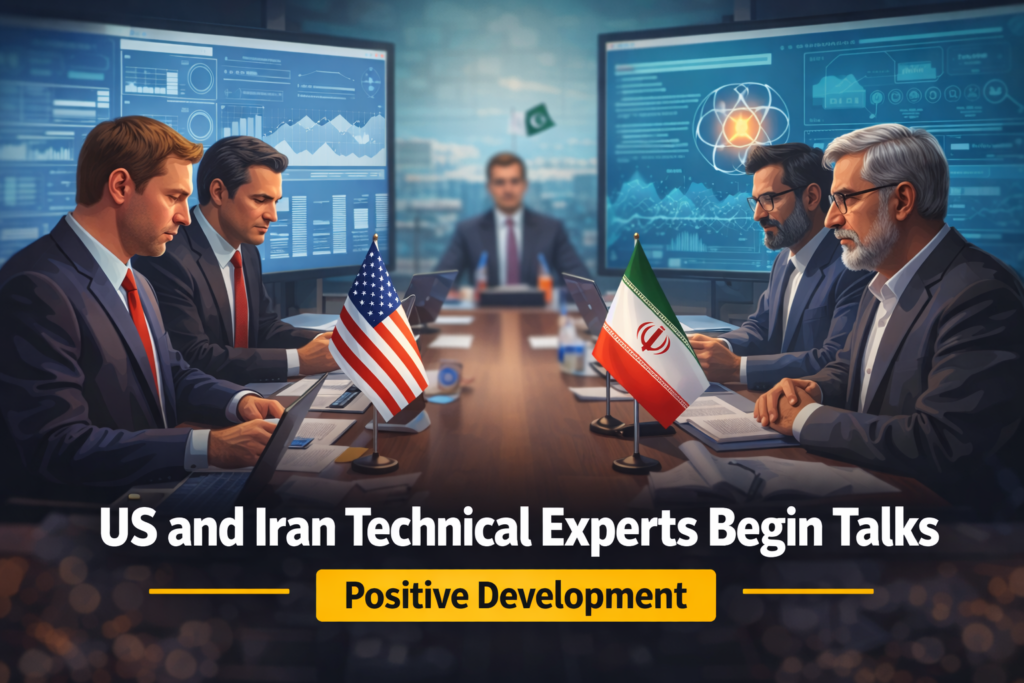
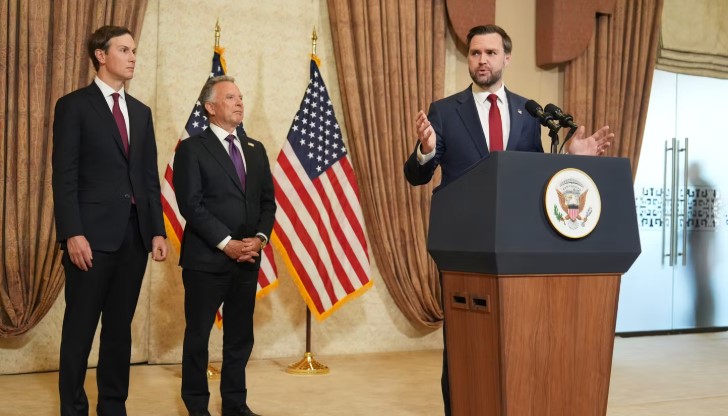
The framework currently under discussion is a one-page, 14-point Memorandum of Understanding (MOU), being negotiated through Pakistani mediators as well as direct engagement between Trump’s envoys Steve Witkoff and Jared Kushner and Iranian officials.Pakistan has played a crucial mediating role throughout the conflict, with senior Pakistani officials in near-constant communication with both Washington and Tehran.
The broad outlines of the proposed MOU include:
What Iran would commit to:
- A moratorium on uranium enrichment (duration is still being actively negotiated.Iran proposed 5 years, the US demanded 20, with current talks centering on a 12–15 year compromise)
- A formal commitment never to seek a nuclear weapon or conduct weaponization-related activities
- Refraining from operating underground nuclear facilities
- Accepting an enhanced inspections regime, including snap inspections by UN inspectors
- Potentially removing its stockpile of highly enriched uranium from the country.possibly transferring it to the United States, though Tehran has resisted this demand
What the US would commit to:
- Gradually lifting sanctions imposed on Iran
- Releasing billions of dollars in Iranian assets frozen in foreign banks around the world
- Lifting the naval blockade on Iranian ports
- Opening a 30-day window for detailed follow-on negotiations
Secretary of State Marco Rubio has publicly stated that “we don’t have to have the actual agreement written in one day”.signaling US flexibility on pace, while remaining firm on substance.
Why a Deal Is So Difficult to Reach: The Trust Deficit
Even with the outlines of a framework visible, reaching a final agreement has proved extraordinarily difficult.and the reasons go deeper than politics.
The core obstacle is trust.Iran has been “personally burnt” by Trump before, as one senior analyst from London’s Chatham House noted publicly.When Trump withdrew from the 2015 JCPOA during his first term and reimposed sweeping sanctions, Iran suffered years of economic punishment despite having complied with the deal’s terms.Iranian negotiators are not willing to make upfront concessions.particularly on the nuclear file.only to see promises evaporate again.
From the US side, Trump has grown impatient with what he views as Iranian stalling tactics.When Iran’s counterproposal arrived in mid-May, Trump called it “totally unacceptable” and said the ceasefire was on “massive life support.” The proposal’s Iranian version and English translation reportedly differed in subtle but significant ways, adding to the confusion.
There’s also a factional divide within Iran’s own leadership.American officials have expressed the belief that the Iranian government is not speaking with one voice, making it difficult to reach consensus on any deal.Iran’s Parliament Speaker publicly mocked reports of a breakthrough, suggesting that hawks in Tehran are not aligned with whatever the negotiating team might be willing to sign.
Meanwhile, Israel.a key US ally in the region.is watching the talks with anxiety.Israeli officials have privately expressed concern that Trump might accept a “bad deal” that leaves Iran’s nuclear capacity partially intact while bypassing issues like ballistic missiles and support for armed proxy groups.Israel fired over 1,000 ballistic missiles at Israeli and Gulf Arab state territory during the conflict, and Israeli officials are not reassured by the apparent exclusion of missile restrictions from the current MOU framework.
What Each Side Actually Wants From a Nuclear Agreement
Understanding the competing demands helps make sense of why negotiations are so complicated.
The United States’ Core Demands
Washington’s initial list of objectives was sweeping: destroy Iran’s ballistic missile capabilities, dismantle its navy, end its support for armed proxy groups across the Middle East, and ensure Iran never develops a nuclear weapon.A 15-point proposal delivered to Tehran via Pakistan in late March 2026 called for the dismantling of nuclear facilities at Natanz, Isfahan, and Fordow, the handover of all highly enriched uranium to the IAEA, and a permanent ban on nuclear weapons development.
As of May 2026, the US position appears to have narrowed.Secretary of State Rubio has said that the military phase of the operation is “concluded” and that the US is now seeking a “memorandum of understanding for future negotiations.” The primary red lines remaining are: Iran cannot develop a nuclear weapon, its enriched uranium stockpile must be addressed, and Hormuz must be open to free navigation.
Iran’s Core Demands
Tehran’s position centers on several non-negotiables.Iran wants:
- All US and Israeli military strikes to stop permanently
- Formal security guarantees against future aggression, potentially backed by powers like China, Russia, Pakistan, and Turkey
- War reparations for the damage inflicted
- Lifting of all US sanctions.not gradually, but substantively
- International recognition of its sovereign rights over the Strait of Hormuz
- Nuclear discussions deferred to a later phase of talks, not treated as a precondition for ending the war
Iran has insisted that it has always maintained a “crystal clear” position against developing nuclear weapons, while defending its right to peaceful nuclear technology under international non-proliferation treaties.
What History Tells Us About Iran Nuclear Deals
The current situation cannot be fully understood without looking back at how we got here.
The 2015 JCPOA was, by most accounts, a genuine diplomatic achievement.It placed strict and verifiable limits on Iran’s nuclear program in exchange for sanctions relief.Iran complied.The deal worked.until 2018, when Trump unilaterally withdrew, calling the agreement a “giant fiction.” Sanctions were reimposed.Iran’s economy suffered.And Iran began steadily expanding its nuclear program, eventually enriching uranium to levels far beyond what the JCPOA permitted.
A former State Department negotiator who participated in brokering the 2015 deal told CNN that getting a deal now is “much tougher” than it was then.One reason: Iran’s current leadership is considerably more hard-line than it was in 2015, and the Iranian public has witnessed firsthand what happens when they make concessions to Washington.
The lesson Iran appears to have drawn: don’t give up your leverage until you have binding, enforceable guarantees in return.
Frequently Asked Questions About the USA-Iran Conflict and Nuclear Talks
Q: Is Iran close to having a nuclear weapon? Iran’s enriched uranium stockpile.estimated at around 440 kilograms enriched to 60% purity.is significant, but the country would still need to enrich further to 90% to produce weapons-grade material.US and Israeli strikes on Iran’s nuclear facilities in 2025 and 2026 have damaged key infrastructure, though experts say it is difficult to determine exactly how much of Iran’s nuclear capacity was destroyed.
Q: What is Pakistan’s role in the US-Iran nuclear talks? Pakistan has emerged as the key mediator between the two sides, a role that surprised many observers.Pakistani officials have maintained direct communication channels with both Washington and Tehran, and the Islamabad talks in April 2026 were a pivotal moment in the ceasefire process.Pakistani officials describe their role as that of a trusted neutral party that both sides are willing to work through.
Q: What would happen if no deal is reached? The consequences of a failed negotiation could be severe.Both US officials and analysts have warned that the Strait of Hormuz closure threatens to cause a global recession.On the military side, the US has not fully ruled out resuming strikes if diplomacy collapses.Some Pentagon officials have argued for additional pressure on Tehran.On the Iranian side, hard-liners have indicated they are prepared for continued conflict.
Q: How does the 2026 situation compare to the 2015 Iran nuclear deal? The 2015 JCPOA was a multilateral agreement involving the US, UK, France, Germany, Russia, and China, negotiated over years.The current talks are bilateral in nature.mediated by Pakistan rather than a coalition of world powers.and are being conducted under wartime conditions.Analysts say the current framework, if it materializes, could have elements similar to the 2015 deal, such as enrichment moratoriums and sunset clauses, but would be born out of conflict rather than patient diplomacy.
Q: What does the USA conflict with Iran mean for global oil prices? The closure of the Strait of Hormuz has had significant ripple effects on global energy markets.The waterway handles a fifth of the world’s oil supply.Prolonged closure.or a collapse of ceasefire talks.could push energy prices substantially higher.Reopening the strait is therefore a shared interest of the US, Iran, and much of the global community.
Is a New Iran Nuclear Deal Still Possible?
The honest answer as of May 2026 is: yes, but it remains fragile.
The framework for a preliminary agreement.a one-page MOU that kicks off 30 days of detailed negotiations.is closer to being signed than at any point since the conflict began.Both sides have shown, at various moments, a genuine appetite for resolution.Trump himself told reporters in May: “They want to make a deal.We’ve had very good talks over the last 24 hours, and it’s very possible that we’ll make a deal.”
But the structural obstacles are real.The trust deficit between Washington and Tehran is deep, shaped by decades of hostility and, most recently, by the experience of the collapsed 2015 deal.Iran’s internal divisions.between pragmatists who see a deal as necessary for economic survival, and hard-liners who view negotiations as capitulation.make it difficult for any Iranian team to lock in agreements without intense domestic pushback.
And then there are the unresolved issues that remain outside the current MOU framework: Iran’s ballistic missile program, its support for armed proxy groups across the region, and the final disposition of its enriched uranium stockpile.
A deal.even an imperfect one.would be a significant achievement in de-escalating one of the world’s most dangerous conflicts.The alternative.continued closure of the Strait of Hormuz, a possible resumption of strikes, and prolonged economic pain for populations around the world.is a stark reminder of just how high the stakes are.
Conclusion: The World Is Watching
The USA-Iran conflict of 2026 is not just a regional story.It is a global economic event, a nuclear proliferation challenge, and a test of whether diplomacy can still work when trust is at a historic low.
For people in the United States and beyond, the outcome of these talks will affect everything from fuel prices at the pump to the broader stability of the Middle East.A successful Iran nuclear deal would not just end a war.it could reshape the security architecture of the region for decades to come.
The coming weeks will be decisive.Negotiators on both sides know it.The question is whether the political will.on both sides.can outlast the mutual suspicion.
Stay informed.Share this article with someone who wants to understand what’s really happening in the US-Iran nuclear talks.And bookmark this page.developments in this story are moving fast.