
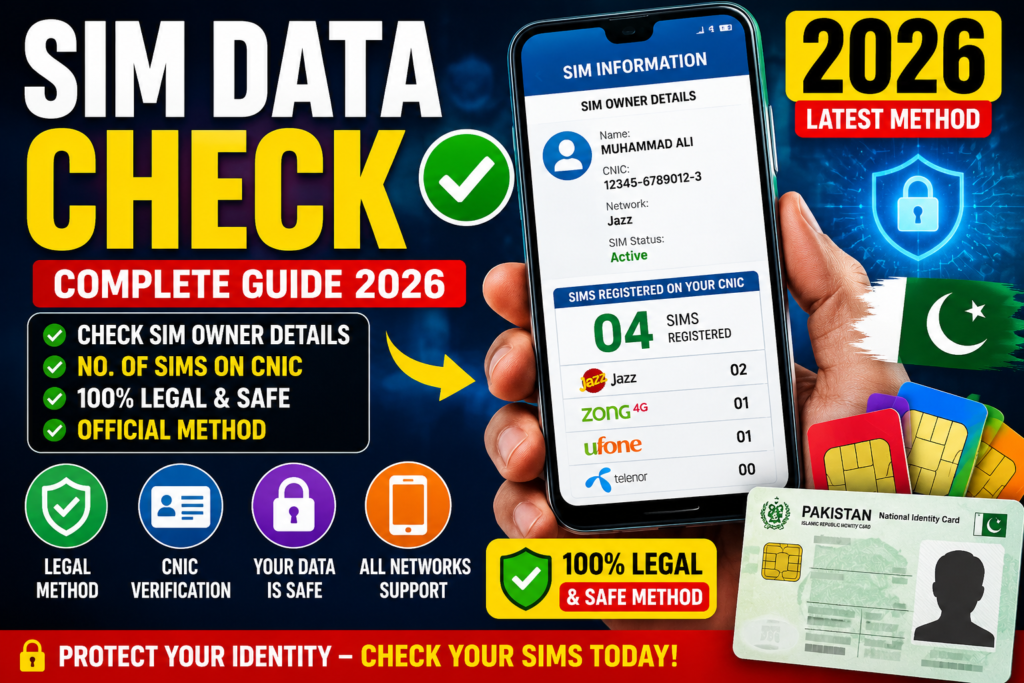
In today’s digital world, mobile numbers are connected to nearly everything.
From banking apps and social media accounts to government verification systems and online shopping, your SIM card has become part of your digital identity.
CNIC OR MOB NUMBER
That’s why searches like:
- “SIM owner details”
- “check SIM owner details”
- “SIM owner details online check Pakistan”
have exploded online in recent years.
People want to know:
- How many SIMs are registered on their CNIC
- Whether someone is using a SIM illegally in their name
- How to verify mobile ownership safely
- Whether online SIM-checking websites are real or fake
In Pakistan, SIM verification has become a major issue because of rising concerns involving:
- Online fraud
- Scams
- Identity theft
- Cybercrime
- Fake registrations
At the same time, governments around the world are increasing digital security measures as mobile technology becomes more important globally.
In this guide, we’ll explain everything about checking SIM owner details in Pakistan legally and safely, including the risks of fake websites, PTA verification methods, cybersecurity concerns, and why mobile identity protection matters more than ever in 2026.
Why SIM Ownership Matters More Than Ever
A few years ago, SIM cards were simply used for phone calls and SMS.
Today, they are connected to:
- Banking verification
- WhatsApp accounts
- Biometric identity systems
- Social media logins
- Government databases
- Online payments
- Digital wallets
This means unauthorized SIM usage can create serious risks.
If someone illegally registers a SIM using your CNIC, it could potentially be linked to:
- Fraudulent activity
- Scam calls
- Financial crimes
- Fake accounts
That’s why many Pakistanis regularly search online to check how many SIM cards are registered under their identity.
What Is SIM Owner Details Online Check?
The term “SIM owner details online check Pakistan” usually refers to verifying:
- SIM registration information
- Network ownership
- Number verification
- CNIC-linked mobile numbers
Many users search for ways to identify unknown callers or confirm whether a number belongs to someone they know.
However, there’s an important warning:
Not all websites claiming to provide SIM owner details are legitimate.
Some fake platforms may:
- Steal personal information
- Spread malware
- Collect CNIC data
- Attempt phishing scams
This is why using official methods is extremely important.
The Official Way to Check SIMs Registered on Your CNIC
In Pakistan, the safest and most trusted method involves official telecom verification systems.
The Pakistan Telecommunication Authority provides systems that allow users to check the number of SIMs registered under their CNIC.
Users can typically verify:
- Active SIM count
- Mobile operators linked to their CNIC
- Unauthorized registrations
This helps reduce identity misuse and telecom fraud.
Why Fake SIM Registrations Are Dangerous
Unauthorized SIM registrations can create major problems.
Cybercriminals sometimes attempt to use stolen or illegally obtained identity information to activate SIM cards.
These SIMs may later be used for:
- Scam calls
- Fraudulent banking activity
- Fake social media accounts
- Illegal online activities
If the SIM is registered under your identity, legal complications could potentially arise.
That’s why cybersecurity experts recommend checking your registered SIM count regularly.
Pakistan’s Digital Security Push
Pakistan has significantly expanded digital verification systems over the last decade.
Biometric SIM verification became a major part of telecom regulation to reduce:
- Terror-related communications
- Identity fraud
- Criminal misuse of mobile numbers
As smartphones and internet usage continue growing, mobile identity protection is becoming even more important.
Pakistan now has millions of active mobile internet users, making telecom security a national priority.
Why People Search for SIM Owner Details Online
Search trends show several common reasons people look for SIM ownership information.
1. Unknown Caller Verification
People often receive spam or suspicious calls and want to know who owns the number.
2. CNIC Security Checks
Users want to ensure no unauthorized SIMs are active under their identity.
3. Fraud Prevention
Many Pakistanis now monitor digital security more carefully because of increasing cybercrime.
4. Family Verification
Parents sometimes verify numbers used by children or family members.
However, privacy laws still matter, and unauthorized access to personal telecom information may violate regulations.
The Rise of Online Fraud and Fake SIM Check Website
One major issue in 2026 is the rise of fake “SIM database” websites.
These platforms often promise:
- Full owner names
- CNIC numbers
- Addresses
- Family details
Many of these claims are misleading or illegal.
Cybersecurity experts warn users not to enter:
- Personal CNIC numbers
- Phone numbers
- Banking details
on unknown websites.
Risks include:
- Identity theft
- Account hacking
- Malware infections
- Financial fraud
This is why only official telecom verification methods should be trusted.
How Mobile Security Became a Global Issue
SIM security is no longer just a Pakistan-specific issue.
Around the world, telecom systems are under pressure from:
- Cyberattacks
- Digital fraud
- AI-powered scams
- Data breaches
- SIM swapping attacks
Even major economies like the United States and China are investing heavily in digital identity protection.
Mobile security now intersects with:
- Artificial intelligence
- Financial systems
- National security
- Global cybersecurity policy
AI and SIM Fraud: A Growing Threat
Artificial intelligence is changing cybercrime rapidly.
Scammers increasingly use AI tools for:
- Voice cloning
- Fake customer support calls
- Automated phishing
- Deepfake scams
SIM-based verification systems are becoming targets because mobile numbers are often connected to financial accounts.
Tech companies including:
are all investing heavily in AI safety and cybersecurity technologies.
The Economic Impact of Cybercrime
Cybercrime now costs the global economy billions of dollars every year.
Fraud involving:
- Mobile banking
- SIM swapping
- Digital identity theft
continues increasing globally.
As economies become more digital, telecom security directly affects:
- Financial systems
- Consumer confidence
- Online commerce
- Government services
Pakistan’s expanding digital economy also depends heavily on secure mobile verification systems.
SIM Swapping: One of the Most Dangerous Threats
One of the biggest modern telecom threats is SIM swapping.
This happens when criminals illegally transfer your phone number to another SIM card.
Once they control your number, they may attempt to access:
- Banking OTP codes
- Social media accounts
- Email verification systems
- Crypto wallets
That’s why users should:
- Enable extra account security
- Avoid sharing verification codes
- Monitor suspicious network activity
How to Protect Your SIM and Mobile Identity
Digital security experts recommend several important steps.
Use Official Verification Systems
Only trust official telecom platforms and government-approved services.
Avoid Sharing CNIC Publicly
Never upload identity documents on random websites or social media.
Enable Two-Factor Authentication
Protect important accounts with additional verification layers.
Monitor Suspicious Activity
Unexpected OTP messages or network loss may indicate security problems.
Report Unknown SIM Registrations
If unauthorized SIMs appear under your identity, contact your telecom provider immediately.
Why Governments Are Tightening Telecom Regulations
Governments worldwide are strengthening digital identity laws.
Reasons include:
- National security
- Financial fraud prevention
- Cybercrime reduction
- Digital infrastructure protection
Telecom systems are increasingly connected to:
- Banking
- Healthcare
- Government databases
- International commerce
As a result, SIM ownership verification has become part of broader cybersecurity policy.
The Global Technology Competition Behind Digital Security
The future of telecom security is also connected to global technology competition.
Countries are racing to dominate:
- AI systems
- Cybersecurity tools
- 5G networks
- Semiconductor technology
The technology rivalry between the United States and China influences global digital infrastructure decisions.
This includes:
- Data privacy
- Telecom security
- Internet governance
- Cyber defense systems
Even issues like SIM verification are now linked indirectly to larger geopolitical technology competition.
Social Media and SIM Verification
Most social media platforms rely heavily on mobile verification.
Apps like:
often use phone numbers for:
- Account recovery
- Login security
- Verification systems
This makes SIM security extremely important for protecting online identity.
Why Search Interest Keeps Growing
Searches related to “check SIM owner details” continue rising because people are becoming more aware of:
- Cybersecurity risks
- Fraud attempts
- Online scams
- Identity theft
At the same time, smartphone usage keeps expanding globally.
As digital dependence increases, telecom identity protection becomes more important every year.
Future Predictions: What Happens Next?
Experts believe telecom verification systems will continue evolving rapidly.
Future technologies may include:
- AI fraud detection
- Biometric authentication
- Blockchain identity systems
- Advanced telecom encryption
Governments and tech companies will likely increase cooperation to improve digital identity protection.
However, cybercriminals are also becoming more sophisticated.
This means users must stay informed and security-conscious.
Final Thoughts
The growing interest in “SIM owner details online check Pakistan” reflects a much larger global issue:
Digital identity security.
In 2026, your mobile number is connected to nearly every part of your digital life — from banking and social media to online payments and government verification systems.
That’s why protecting your SIM ownership information is more important than ever.
While many websites promise instant access to SIM owner details, users should remain extremely careful and rely only on trusted, official verification methods.
As cyber threats continue evolving worldwide, awareness and digital security habits may become the strongest defense against fraud and identity theft.
The future of online safety increasingly starts with protecting the small device we carry every day:
our mobile phone.
FAQs
How can I check SIM owner details in Pakistan legally?
The safest method is using official telecom or PTA-approved verification systems.
Is it safe to use online SIM database websites?
Many unofficial websites may be unsafe or misleading. Avoid sharing personal information on unknown platforms.
Why should I check SIMs registered under my CNIC?
Unauthorized SIM registrations could potentially expose you to fraud or legal complications.
What is SIM swapping?
SIM swapping is a fraud method where criminals transfer your phone number to another SIM card to access your accounts.
Can fake SIM registrations cause problems?
Yes. Fraudulent SIM registrations may be linked to scams or cybercrime activities.
Why is SIM security becoming more important globally?
Mobile numbers are now connected to banking, social media, identity verification, and digital services worldwide.