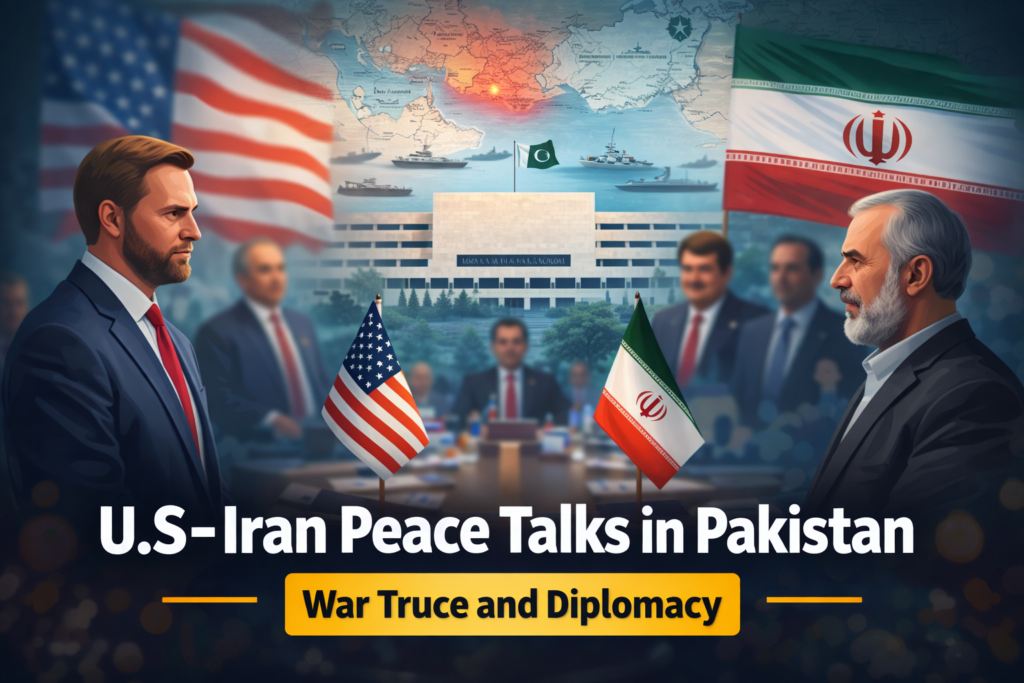

US–Iran Talks Collapse in Islamabad After 21 Hours, No Agreement Reached
US Vice President JD Vance says Iran rejected key nuclear terms as 21-hour peace talks in Pakistan ended without a deal.
Introduction
High-level negotiations between the United States and Iran in Islamabad, Pakistan ended without a breakthrough after nearly 21 hours of continuous discussions. The talks, considered a major diplomatic opportunity to reduce tensions, failed to produce an agreement due to deep differences between the two sides.
US Position and Key Statements
US Vice President JD Vance confirmed that no deal was reached and stated that Iran declined to accept critical US conditions, particularly regarding nuclear weapons.
He emphasized that the United States had clearly defined its red lines, including a firm requirement that Iran must not develop nuclear weapons or pursue capabilities that would allow rapid nuclear advancement. According to Vance, these demands reflect the core objectives of the US administration.
Core Issue: Iran’s Nuclear Program
The primary point of disagreement during the negotiations was Iran’s nuclear program.
The United States demanded:
- A clear commitment from Iran not to build nuclear weapons
- Limits on nuclear enrichment activities
- Restrictions on advanced nuclear capabilities
Iran did not agree to these terms, which ultimately led to the collapse of the talks.
Iran’s Response
Iranian officials downplayed the failure, stating that it was unrealistic to expect a final agreement in a single round of talks.
They indicated that:
- Negotiations of this scale require time and multiple sessions
- Diplomatic engagement will continue
- Regional partners, including Pakistan, will remain involved
Iranian sources also suggested that what they described as excessive US demands prevented progress.
Strait of Hormuz Dispute
Another major focus of the talks was the Strait of Hormuz, one of the world’s most critical oil transit routes.
Discussions included:
- Security of maritime routes
- Control over the waterway
- Conditions for global shipping access
The outcome of these discussions is crucial for global energy stability.
Ceasefire and Ongoing Tensions
The talks took place during a fragile 14-day ceasefire involving the United States, Iran, and regional actors. However, no clear roadmap has been announced for what will happen after the ceasefire period ends.
Concerns remain over:
- Possible military escalation
- Continued regional instability
- Impact on global oil markets
Pakistan’s Role
Pakistan acted as a mediator and host for the negotiations. Islamabad was placed under high security as both delegations held multiple rounds of discussions.
Pakistani officials have urged both sides to maintain the ceasefire and have expressed willingness to facilitate further dialogue.
Meeting Dynamics
According to sources familiar with the talks:
- Discussions were intense and extended over long hours
- Multiple sessions were held with breaks in between
- The atmosphere fluctuated between constructive and tense
Despite some progress in discussions, the gap between both sides remained unresolved.
Global Implications
The failure to reach an agreement may have broader consequences, including:
- Continued instability in the Middle East
- Pressure on global oil supply
- Rising geopolitical tensions
Conclusion
The US–Iran talks in Islamabad ended without a deal, underscoring the deep divisions between the two countries. While dialogue did take place, no concrete outcome was achieved. The situation remains uncertain, with future diplomatic efforts likely needed to prevent further escalation.
US Iran talks failed, US Iran negotiations 2026, Iran nuclear dispute, Islamabad talks, Strait of Hormuz crisis, Middle East tensions