Trump vs. Pope Leo XIV: The Historic Feud Over the Iran War — Everything You Need to Know
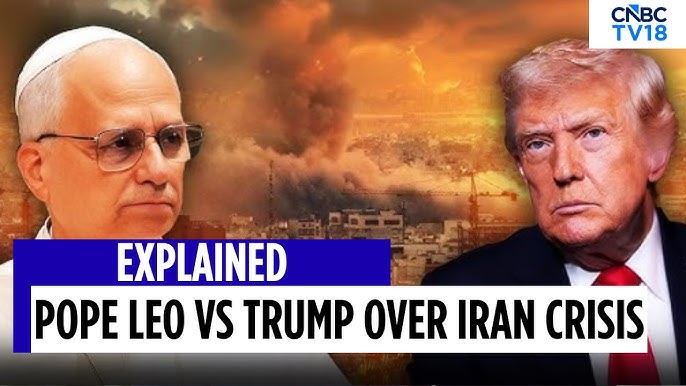
Trump called the first American pope “weak on crime” and “terrible for foreign policy.” Pope Leo XIV fired back saying he has “no fear” of the Trump administration. Here’s the full story behind the most extraordinary clash between a U.S. president and a pope in modern history.
It is a confrontation without modern precedent: a sitting U.S. president publicly attacking a pope — and a pope who is, himself, a native-born American. The war of words between President Donald Trump and Pope Leo XIV, which erupted in mid-April 2026, has stunned political observers, shocked Catholic leaders around the world, and added a volatile new dimension to an already explosive geopolitical moment.
Understanding this feud requires understanding the man at the center of it — a Chicago-born pontiff who is anything but a pushover — and the specific issue that ignited it: the ongoing U.S. and Israeli-led war against Iran, and whether God, the Church, or the Oval Office gets to decide what kind of war is just.
Who Is Pope Leo XIV? The First American Pope
Pope Leo XIV was elected to lead the Catholic Church in April 2025, following the death of Pope Francis. The conclave elected him after just four ballots over two days — one of the shortest papal elections in modern history. He is a native of Chicago, Illinois, and he is the first pope ever born in the United States.
Since assuming the papacy, Leo has outlined peace, justice, and truth as the pillars of Vatican diplomacy. In a January speech, the pope denounced what he called “diplomacy based on force.” In his Easter blessing this year, he urged “those who have the power to unleash wars” to “choose peace.” Before the Iran conflict exploded into his papacy, Leo maintained a relatively low global profile. The Iran war changed that completely.
Born and raised in Chicago. First American-born pope in the 2,000-year history of the Catholic Church. Elected April 2025 after the death of Pope Francis. Has described peace, justice, and truth as the foundations of his papacy. Currently on an 11-day pastoral trip to Africa — visiting Algeria, Cameroon, Angola, and Equatorial Guinea — during which he has continued to speak out against the Iran war.
What the Pope Said — and Why It Infuriated Trump
Pope Leo’s public criticism of the Iran war began building weeks before the feud exploded publicly. On Palm Sunday, Leo said that God “does not listen to the prayers of those who wage war.” In an April 10 social media post, he wrote plainly: “God does not bless any conflict. Anyone who is a disciple of Christ, the Prince of Peace, is never on the side of those who once wielded the sword and today drop bombs.”
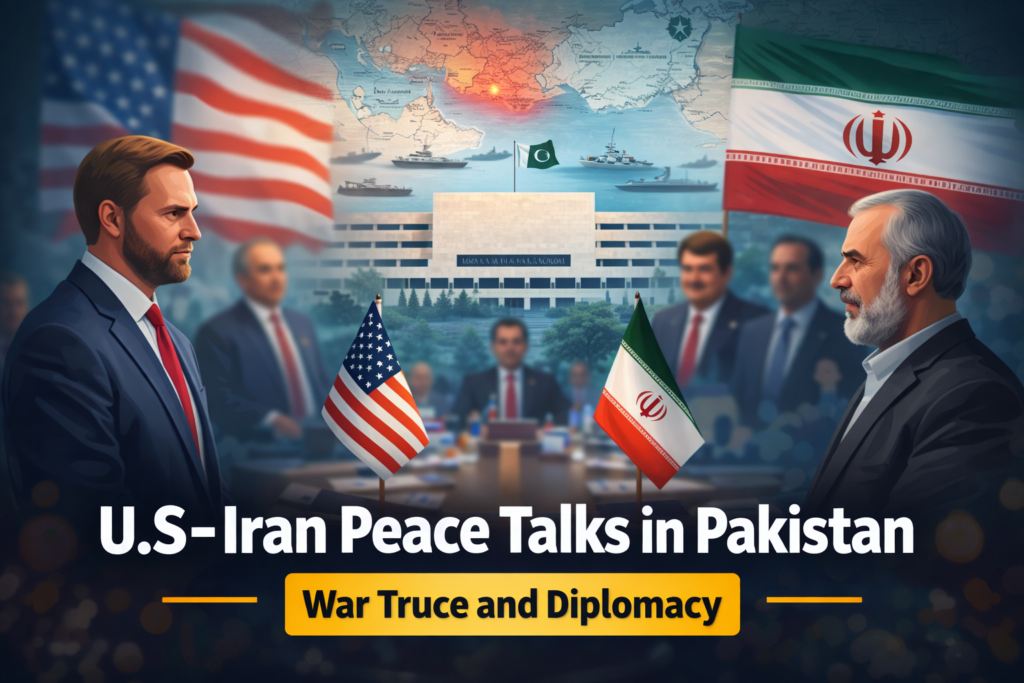
Then, in a prayer vigil at St. Peter’s Basilica on April 11 — the same day U.S. and Iranian officials began unsuccessful peace negotiations in Islamabad — Leo said: “Enough of the idolatry of self and money! Enough of the display of power! Enough of war!”
The comments that most directly provoked Trump, however, came after the president threatened to “wipe out” Iran’s “whole civilization” if Tehran did not reopen the Strait of Hormuz. Pope Leo called that language “truly unacceptable,” adding that “attacks on civilian infrastructure are against international law.” He urged people to contact their elected leaders and members of Congress to demand peace.
“I have no fear of the Trump administration, nor speaking out loudly about the message of the Gospel, which is what the Church works for. I will continue to speak out strongly against war.” — Pope Leo XIV, aboard the papal plane to Algeria, April 13, 2026
What Trump Said: An Unprecedented Presidential Broadside
Trump’s response to Leo’s peace advocacy was unlike anything seen from a modern American president toward a sitting pope. In a lengthy Truth Social post on Sunday, April 13, Trump accused Leo of being “WEAK on Crime, and terrible for Foreign Policy.” He told the pope to “get his act together” and “stop catering to the Radical Left.” He said Leo should “focus on being a Great Pope, not a Politician,” and that the pope’s political statements were “hurting him very badly and, more importantly, it’s hurting the Catholic Church!”
“Leo should get his act together as Pope, use Common Sense, stop catering to the Radical Left, and focus on being a Great Pope, not a Politician,” Trump wrote. He added, pointedly: “I don’t want a Pope who thinks it’s OK for Iran to have a Nuclear Weapon. I don’t want a Pope who thinks it’s terrible that America attacked Venezuela.”
Then Trump made a claim that struck many observers as particularly audacious: he suggested that Pope Leo had only been elected because he was American, as a strategic maneuver by the Catholic Church to better manage Trump himself. “I don’t want a Pope who criticizes the President of the United States,” Trump added in his post, before claiming Leo “wasn’t on any list to be Pope, and was only put there by the Church because he was an American.”
Trump also shared an AI-generated image of himself depicted in the likeness of Jesus Christ — a post he later deleted. Speaking to reporters, Trump said he had thought the image showed him as a doctor, not as Christ.
- Iran having a nuclear weapon is “unacceptable”
- The war is divinely approved — “God is good”
- Pope should focus on religion, not foreign policy
- Leo is “weak on crime” and “terrible on foreign policy”
- Blockade of Iranian ports will continue regardless of ceasefire
- “God does not bless any conflict”
- Threatening to destroy a civilization is “truly unacceptable”
- Attacks on civilian infrastructure violate international law
- “The masters of war pretend not to know what destruction costs”
- Has a “moral duty” to speak out — “no fear” of Trump
Pope Leo Fires Back: “No Fear”
Leo’s response was measured but unmistakable. Aboard the papal plane traveling to Algeria on April 13, the pontiff told reporters he had “no fear of the Trump administration or speaking out loudly of the message of the Gospel.” He made clear that the Church’s mission was distinct from political calculation: “We are not politicians, we don’t deal with foreign policy with the same perspective he might understand it. But I do believe in the message of the Gospel, as a peacemaker.”
Leo also declared that his criticism of the war was rooted in a “moral duty” — not in politics. “I have no fear, neither of the Trump administration, nor speaking out loudly about the message of the Gospel, which is what the Church works for,” he said. “I will continue to speak out strongly against war, seeking to promote peace, promoting dialogue and multilateralism among states to find solutions to problems.”
In Cameroon on April 16, Leo delivered perhaps his most striking remarks yet. Speaking in St. Joseph’s Cathedral in Bamenda, he condemned world leaders who, he said, are “ravaging the world” by spending billions on war. “The world is being ravaged by a handful of tyrants,” he said — words widely interpreted as referring directly to Trump. “They turn a blind eye to the fact that billions of dollars are spent on killing and devastation, yet the resources needed for healing, education, and restoration are nowhere to be found.” He added the blunt warning: “The masters of war pretend not to know that it takes only a moment to destroy, yet often a lifetime is not enough to rebuild.”
Why This Feud Is Historically Unprecedented
Religious historians and political scientists have been quick to note just how extraordinary this confrontation is. While it is not unusual for popes to speak out on political issues — they have done so for centuries — the direct, personal, and caustic nature of Trump’s attacks on Leo represent something new in the history of U.S. presidential relations with the Vatican.
Margaret Thompson, a professor of history and political science at Syracuse University, observed that the current administration is “speaking out in more overtly religious terms than even somebody like Jimmy Carter” — invoking the name of God to justify military action, using scriptural language in press briefings, and sharing AI-generated imagery of the president as a Christ-like figure.
For his part, Pope Leo’s decision to respond directly to Trump — mentioning him by name on at least one occasion — is also a departure from the normal Vatican diplomatic playbook. As one religion scholar noted, Leo “appealed to Trump directly and in a sense, pointed the finger to say: ‘You started this war, you have the power to end this war.'” The fact that the pope is himself American gives his criticism particular resonance. Americans who might have dismissed Pope Francis as simply “anti-America” cannot as easily dismiss a pope from Chicago who is, by every measure, one of them.
“Pretty much every Catholic I spoke to, from progressive Catholics to traditional Catholics, were appalled.” — Jesuit priest and author James Martin, NPR, April 2026
The Political Dimension: Catholics and Trump’s Coalition
The feud with Pope Leo carries real political risks for Trump that several analysts have pointed out. There are approximately 72 million Catholics in the United States — roughly 20% of the adult population. Trump won meaningful Catholic support in both his 2016 and 2024 presidential campaigns. His own Vice President, JD Vance, is a converted Catholic who has published a book about his conversion to the faith.
Vance, notably, also weighed in on the pope’s comments — telling Leo to “stay out of politics” and concentrate solely on “matters of morality.” Italian Prime Minister Giorgia Meloni, a conservative and an ally of Trump, went in the opposite direction, publicly condemning Trump’s criticism of Leo as “unacceptable” and stating plainly that “the pope is the head of the Catholic Church, and it is right and normal for him to call for peace and to condemn all forms of war.” Even Iran’s president took the unusual step of posting on X to condemn Trump’s “insults” toward the pope.
Trump refused to apologize. When asked about his comments, he said he was “not a fan of Pope Leo” and repeated his contention that the pope was soft on nuclear weapons and wrong about Venezuela. He showed no signs of backing down from the confrontation.
Where Things Stand Now
As of April 18, the feud continues. Pope Leo is in the middle of an 11-day pastoral journey across Africa, and he has continued speaking out against the war at every stop. Trump’s blockade of Iranian ports remains in effect. The ceasefire expires April 22. A second round of peace talks has been proposed but not scheduled.
The clash between Trump and Leo XIV has become a defining story of 2026 — one that touches on war, religion, power, moral authority, and the question of who gets to invoke the name of God in the conduct of military affairs. It is a story without easy resolution, driven by two figures who are, in their own very different ways, absolutely certain of the righteousness of their positions.
The Bottom Line
President Trump and Pope Leo XIV are engaged in the most dramatic public confrontation between a U.S. president and a sitting pope in modern American history. It was ignited by the Iran war, inflamed by Leo’s moral condemnation of the conflict, and escalated by Trump’s unprecedented personal attacks on the head of the Catholic Church. With 72 million American Catholics watching, a ceasefire set to expire in days, and a pope with “no fear” continuing to preach from across the African continent, this story is far from over.
Sources: Euronews (April 14, 2026); NPR (April 15–16, 2026); TIME (April 13, 2026); CNN (April 12, 2026); NBC News (April 12–13, 2026); CNBC (April 15, 2026); Foreign Policy (April 16, 2026).
Disclaimer: This article is for informational purposes only and does not represent the editorial position of this publication on any political or religious matter.