Trump Issues Strongest Warning Yet to Iran: “No More Mr. Nice Guy” After Strait of Hormuz Ceasefire Violation
President Donald Trump issued his most aggressive warning yet to Iran on Sunday, April 19, 2026, declaring that Iran had committed a “total violation” of the existing ceasefire agreement after Iranian forces fired on ships passing through the Strait of Hormuz. In a post on his Truth Social platform, Trump threatened to destroy every single power plant and every single bridge in Iran if the country refused to accept what he called a “fair and reasonable” deal. At the same time, Trump confirmed that US representatives were heading to Islamabad, Pakistan, for a new round of negotiations — making Sunday’s message a combination of a maximum-pressure threat and a final diplomatic opening.
This is everything you need to know about what happened, what Trump said, what Iran did, and what comes next.
What Trump Said — The Full Truth Social Post Explained
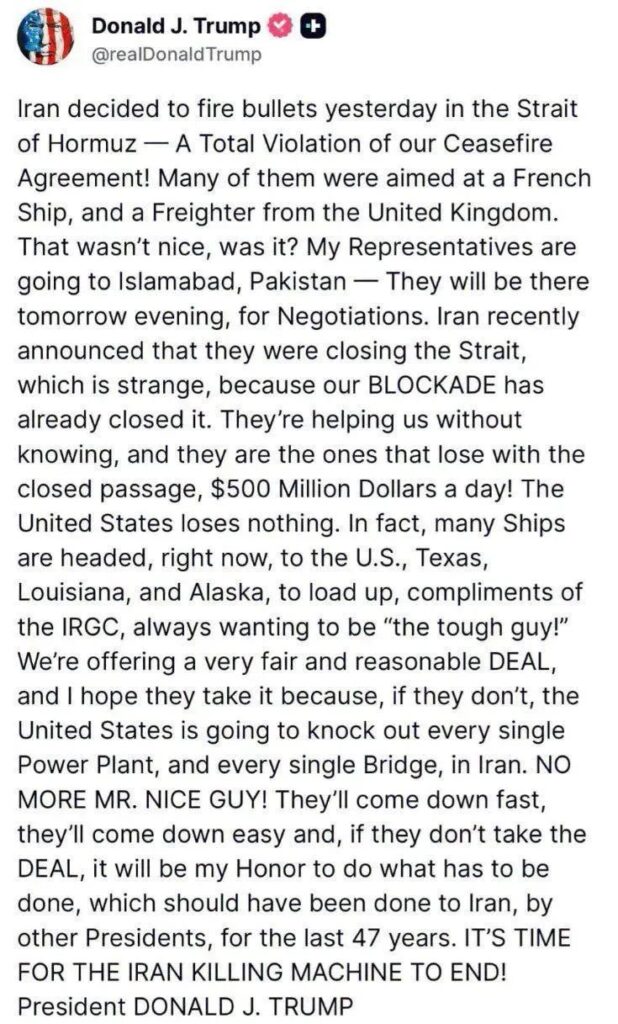
Trump’s Truth Social post on Sunday morning laid out the US position with unusual directness and urgency. He accused Iran of firing bullets in the Strait of Hormuz the previous day, targeting a French ship and a freighter from the United Kingdom. He called it a “total violation” of the ceasefire agreement that had been brokered in early April.
Trump then made a pointed observation about the blockade. He wrote that it was strange for Iran to announce they were closing the Strait, because the US blockade had already effectively closed it. He suggested Iran was “helping us without knowing,” and pointed out that Iran was losing approximately 500 million dollars a day as a result of the closed passage, while the United States was losing nothing. He noted that ships were actively heading to ports in Texas, Louisiana, and Alaska to load up on American energy supplies.
Trump then delivered the core threat. He warned that if Iran refused to accept the deal being offered, the United States would knock out every single power plant and every single bridge in the country. He used the phrase “NO MORE MR. NICE GUY” — one of the most striking lines in any presidential statement in recent memory — and said it would be his honor to do what had to be done, adding that it should have been done to Iran by other presidents over the past 47 years. He closed with the declaration: “IT’S TIME FOR THE IRAN KILLING MACHINE TO END!”
Later in the day, speaking with Fox News’ Trey Yingst, Trump escalated further. He said the US was preparing to hit Iran harder than any country had ever been hit before, and confirmed the military had “massive amounts” of ammunition ready. He said the reason was simple: you cannot allow Iran to have a nuclear weapon.
What Triggered the Post — Iran Fired on Ships in the Strait of Hormuz
The immediate trigger for Trump’s post was a serious incident that took place on Saturday, April 18, 2026, in the Strait of Hormuz. Iranian forces, specifically gunboats linked to the Islamic Revolutionary Guard Corps, fired on at least two commercial vessels attempting to transit the strait. India’s foreign ministry confirmed that two Indian-flagged vessels were involved in what it called a serious incident of firing on merchant ships. India summoned Iran’s ambassador in New Delhi in response.
The firing came just one day after Iran’s Foreign Minister Abbas Araghchi had announced on April 17 that the Strait of Hormuz was open to all shipping traffic. That announcement had briefly sent oil prices dropping by 11 percent. But the reopening lasted less than 24 hours. Iran reimposed control of the strait, turning back vessels and resuming its restriction of maritime traffic. According to maritime tracking data, almost no vessel movement was recorded through the strait after the Saturday attacks.
Iran’s position was made explicit by the country’s parliamentary speaker and chief negotiator, Mohammad Baqer Qalibaf. He stated that it was impossible for other countries to pass through the Strait of Hormuz while Iran itself could not move freely due to the US blockade. He also made clear that Iran’s armed forces remained fully ready for further conflict, even while negotiations continued.
The Bigger Context — What the Strait of Hormuz Crisis Means for America
The Strait of Hormuz is one of the most strategically important waterways in the world. Roughly 20 percent of the global oil supply normally flows through this narrow passage between Iran and Oman. Since the conflict between the US, Israel, and Iran escalated in early 2026, the strait has been effectively closed for weeks, with severe consequences for energy markets worldwide.
At the height of the crisis, oil prices surged past 100 dollars per barrel. California gas prices exceeded 5 dollars per gallon. Dubai crude briefly hit 166 dollars — its highest price ever recorded. Brent crude fluctuated between 102 and 114 dollars per barrel depending on the status of negotiations and ceasefire announcements. Approximately 230 loaded oil tankers were reported stranded inside the Persian Gulf, waiting for the strait to reopen, at one point in early April.
US Central Command has confirmed that American forces are actively enforcing a naval blockade, specifically targeting ships entering or leaving Iranian ports. Since the blockade began, 23 ships have complied with orders to turn around. The Wall Street Journal reported that the US military was preparing in the coming days to board Iran-linked oil tankers and seize commercial vessels in international waters — a significant escalation in the enforcement posture.
Round Two of Islamabad Talks — Who Is Going and What Is at Stake
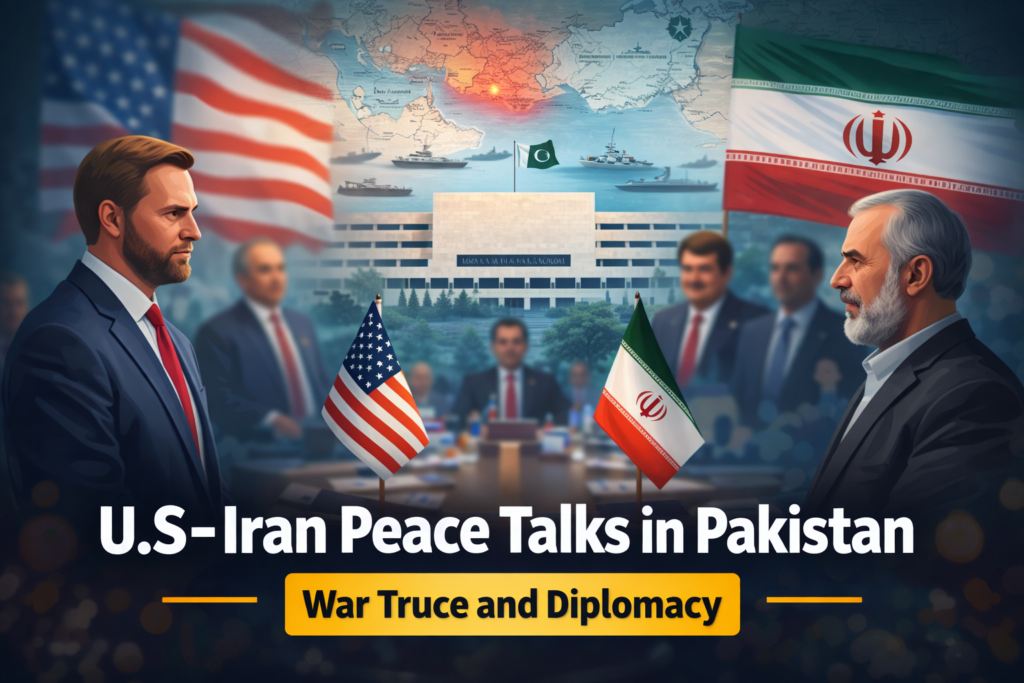
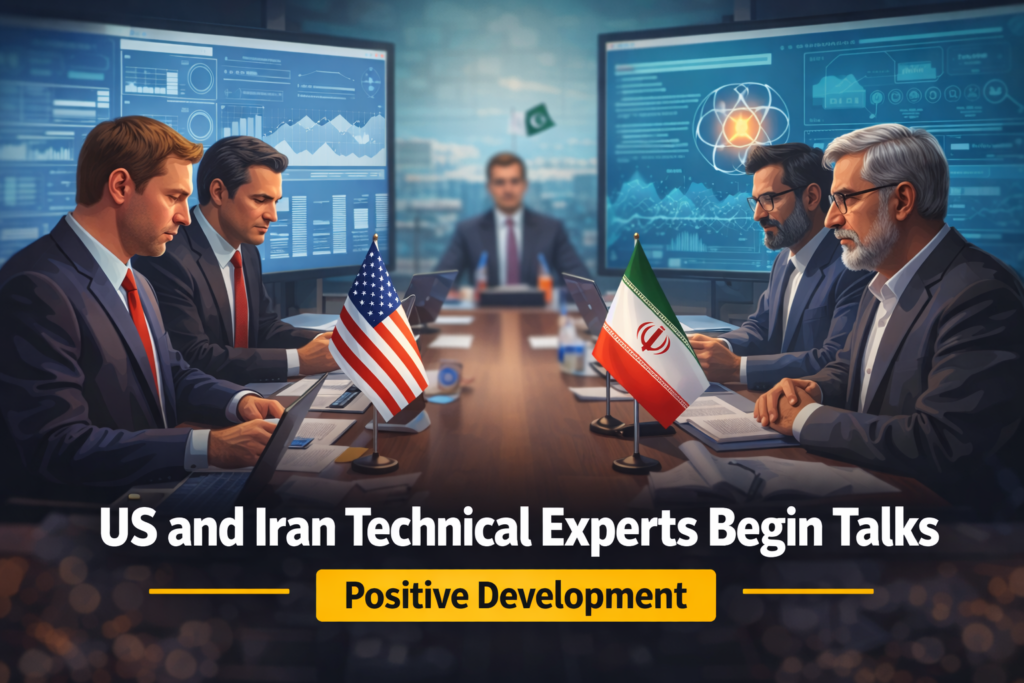
Even as Trump issued his strongest threat yet, he simultaneously confirmed that a second round of diplomatic talks would begin Monday evening in Islamabad, Pakistan. The US delegation will once again be led by Vice President JD Vance, joined by special envoy Steve Witkoff and Jared Kushner, Trump’s son-in-law. Pakistani authorities have already tightened security across Islamabad in preparation, halting public transport and heavy goods traffic and deploying barbed wire near the Serena Hotel, which hosted the previous round of talks.
The first round of Islamabad talks, held the previous weekend, collapsed without a breakthrough. The main stumbling block, according to multiple reports, was the question of uranium enrichment. The United States demanded that Iran suspend its uranium enrichment program for 20 years in exchange for sanctions relief. Iran agreed to a maximum of five years. That gap proved unbridgeable in round one, and it remains the central obstacle heading into round two.
Iran’s chief negotiator Qalibaf acknowledged the difficulty publicly, saying there was “still a big distance” between the two sides — while insisting that Iran remained committed to diplomacy. Iran has not yet officially confirmed whether it will attend the second round of talks, though Pakistani officials are actively facilitating the process.
What the US Wants — The Six Core Demands
The US position in these negotiations has been consistent and sweeping. Based on statements from Trump, Witkoff, and other administration officials throughout the 2026 crisis, Washington’s demands include the following.
First, the complete dismantlement of Iran’s nuclear enrichment program. Trump has stated there will be “no enrichment of Uranium” and that the US will work with Iran to remove all nuclear material, including deeply buried stockpiles targeted by B-2 bombers. Second, strict limits on Iran’s ballistic missile program. Third, a full end to Iran’s financial and military support for regional proxy groups including the Houthis, Hamas, and Hezbollah. Fourth, the permanent reopening of the Strait of Hormuz to free and unrestricted international shipping. Fifth, the complete surrender of Iran’s highly enriched uranium stockpile — Trump has reportedly considered deploying US special forces to seize the material. Sixth, the lifting of the US naval blockade in exchange for Iranian compliance — though Trump has made clear the blockade stays in place until Iran acts.
In exchange, the US has offered to lift primary and secondary sanctions and normalize economic relations. Iran has consistently rejected what it calls conditions amounting to unconditional surrender.
How Iran Is Responding
Iran’s public posture continues to combine diplomatic engagement with military readiness messaging. Qalibaf, the parliamentary speaker, said on Saturday that Iran’s armed forces were fully ready to resume conflict even as talks continued. Iran has maintained its position on the Strait, insisting that restricting other nations’ passage is a justified response to the US blockade of Iranian ports.
At the same time, Iran has not walked away from diplomacy entirely. Its Supreme National Security Council confirmed that Pakistan’s army chief had delivered the latest round of US proposals to Tehran during a recent visit, and that Iran was still reviewing them. Pakistan continues to serve as the critical intermediary between the two sides.
The fundamental Iranian red line has been enrichment. Iran has enriched uranium for decades and views the right to enrich as a matter of national sovereignty and technological achievement. Accepting a 20-year moratorium — the US demand — would represent a complete reversal of that position. Accepting five years — Iran’s counter-offer — is unacceptable to Washington.
What Happens If Talks Fail Again
If the second round of Islamabad talks collapse without a deal, the consequences would be severe and immediate. Trump has now publicly committed to destroying Iran’s power grid and bridge infrastructure if no deal is reached. This would mark a major escalation beyond the nuclear and military targets struck in earlier rounds of the conflict.
The US military has already demonstrated its capacity for large-scale strikes. The February 2026 operation that began the current phase of the conflict included the assassination of Supreme Leader Khamenei and the destruction of key Iranian military and nuclear facilities. A new wave of strikes targeting civilian infrastructure — power plants and bridges — would represent an entirely different category of warfare, with direct and immediate consequences for Iran’s civilian population of over 85 million people.
The humanitarian, legal, and geopolitical implications would be profound. European allies have urged restraint. India, China, and Pakistan all have significant economic interests in the strait and in Iranian trade. Any further escalation risks drawing in additional regional actors and permanently reshaping the Middle East’s energy and security architecture.
Where Things Stand Right Now — April 19, 2026
As of today, Sunday April 19, 2026, the Strait of Hormuz remains effectively closed. Iranian forces fired on commercial ships on Saturday. Trump responded with his most aggressive threat yet. US representatives are traveling to Pakistan for a second round of talks beginning Monday evening. Iran’s chief negotiator has acknowledged a large gap remains between the two sides. The ceasefire that was announced on April 7 is due to expire imminently, and its terms are already being violated by both sides’ framing.
The coming 48 to 72 hours are the most critical of the entire 2026 Iran crisis. If the Islamabad talks produce a breakthrough — even a partial agreement on enrichment timelines, or a renewed ceasefire with a concrete Hormuz reopening — it could de-escalate the situation and begin the process of sanctions relief and diplomatic normalization. If talks fail again, Trump has made it unmistakably clear what he intends to do.
The world is watching Islamabad.
Why This Moment Matters for Every American
The Iran crisis of 2026 is not a distant foreign policy issue. It is directly affecting the price of gas at the pump, the cost of goods on store shelves, and the security of American allies and military personnel stationed across the Middle East. The Strait of Hormuz handles a fifth of the world’s oil supply. When it closes, the entire global economy feels it.
Trump’s Truth Social post on Sunday laid out a stark binary: Iran takes the deal, or Iran loses its power grid and bridges. There is no ambiguity in the message. The question is whether Iran’s leadership believes the threat is real enough — and whether the Islamabad talks can find a formula that gives both sides enough to claim a win and walk away from the brink.
That answer will come in the next few days.