Who Is the US Delegation Heading to Islamabad for Iran Peace Talks Round 2? Full Breakdown of JD Vance, Steve Witkoff, and Jared Kushner
As the Iran-US conflict enters one of its most critical phases, President Trump has confirmed that America’s top negotiators are heading back to Islamabad, Pakistan, for a second round of peace talks with Iran. The ceasefire that was brokered on April 7 is expiring, Iran fired on commercial ships in the Strait of Hormuz on Saturday, and Trump has issued his most severe threat yet — warning he will knock out every power plant and bridge in Iran if no deal is reached. Against that backdrop, three of the most powerful and controversial figures in the Trump administration are boarding planes to Pakistan in what many are calling the most important diplomatic mission of 2026.
Here is a complete guide to who is going, who they are, what they did in round one, and why the world is watching Islamabad once again.
The Three Men Trump Is Sending to Save the Deal
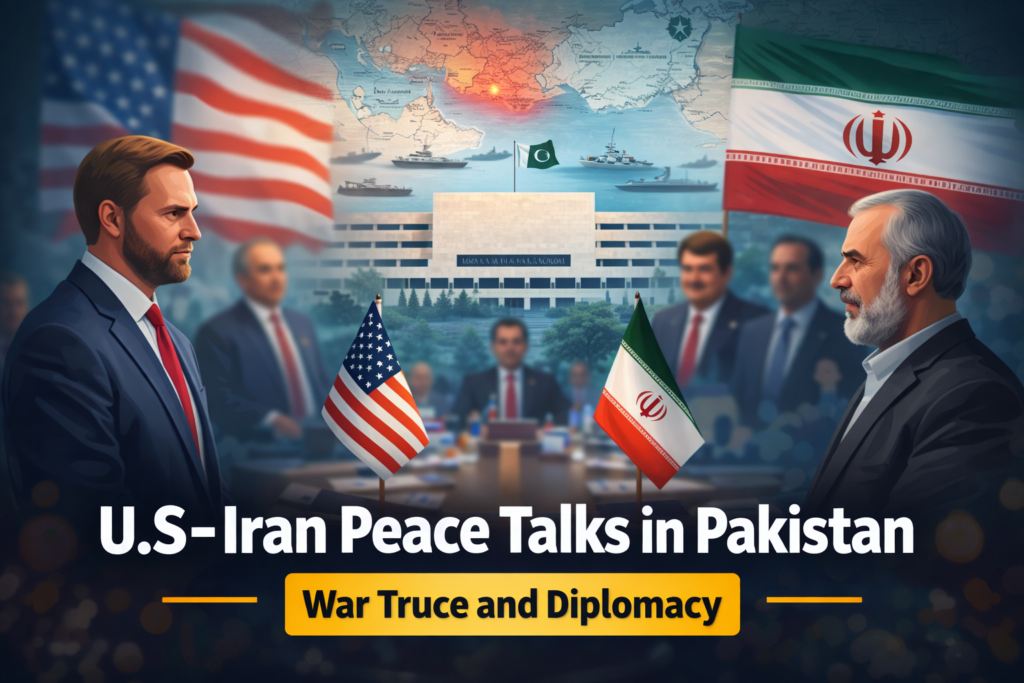
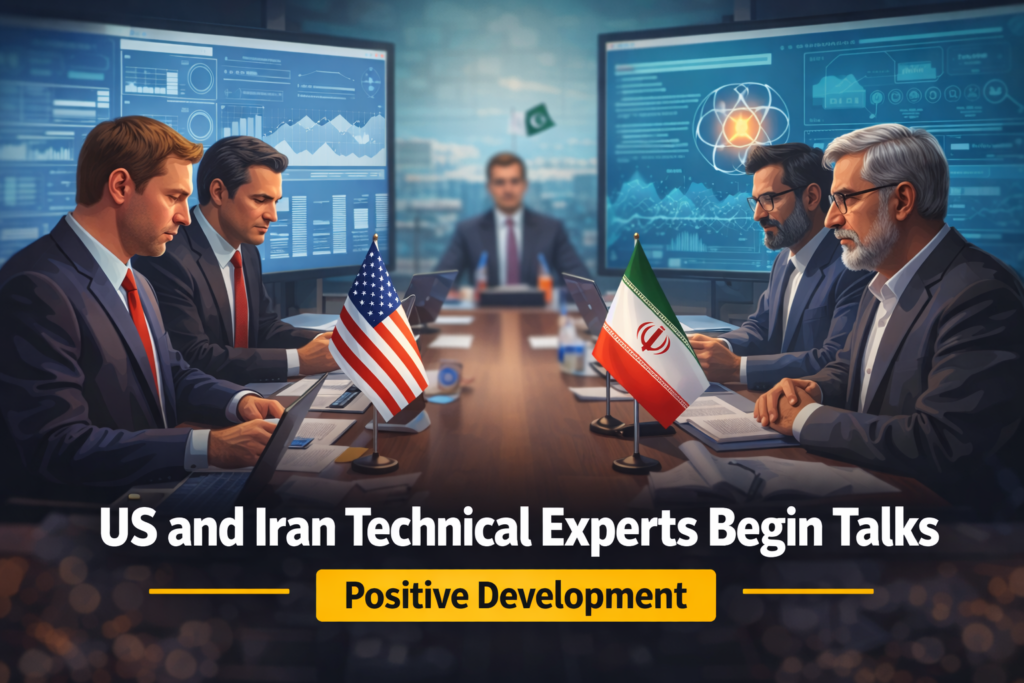
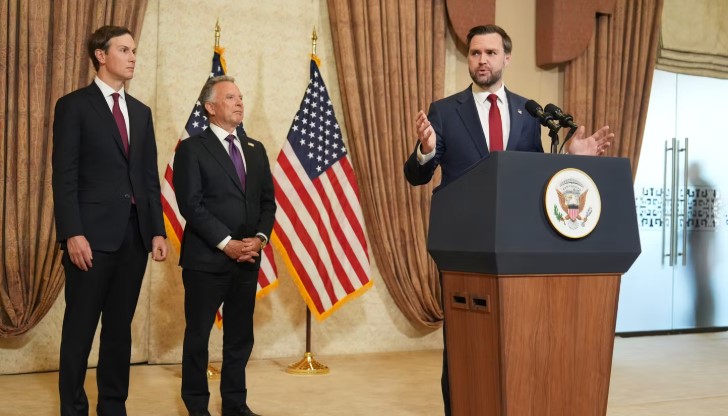
The US delegation for round two of the Islamabad talks will once again be led by Vice President JD Vance. Alongside him will be Steve Witkoff, Trump’s Special Envoy for Peace Missions, and Jared Kushner, Trump’s son-in-law and senior presidential adviser. This is the same core trio that represented America during the first round of talks held on April 11 and 12, 2026 — marathon negotiations that lasted 21 hours and ended without a deal.
Trump expressed cautious optimism about round two in a brief call with Axios on Sunday. “I feel fine about it. The concept of the deal is done. I think we have a very good chance to get it completed,” he said. Whether that optimism is justified will become clear in the hours and days ahead.
JD Vance — The Vice President Leading the Charge
Who Is JD Vance?
JD Vance is the 40th Vice President of the United States, serving under President Donald Trump in his second term. Born in Middletown, Ohio, Vance rose to national prominence after writing his bestselling memoir Hillbilly Elegy, a raw account of growing up in the Appalachian working class. He served in the United States Marine Corps, attended Yale Law School, and later worked in venture capital before entering politics. He was elected to the United States Senate from Ohio in 2022, and was selected by Trump as his running mate in 2024.
Vance is a devout Catholic and has spoken publicly about the role of faith in his life. He is widely seen as a leading contender for the Republican presidential nomination in 2028, making his performance in the Iran talks particularly high-stakes from a political standpoint as well. Trump has reportedly been polling friends and advisers about Vance’s performance during the negotiations, comparing him quietly to Secretary of State Marco Rubio.
Vance’s Role in the Iran Crisis
JD Vance was never a hawk on Iran. Throughout his Senate career, he consistently expressed skepticism about American military interventionism in the Middle East and questioned the logic of escalating with Tehran. When Trump made the decision to launch Operation Epic Fury — the large-scale military strike on Iran that began on February 28, 2026 — Vance was privately opposed. Trump himself acknowledged this publicly, saying Vance was “philosophically a little bit different” from him on the decision to go to war but ultimately came around and was “quite enthusiastic.”
This background is precisely why Iran trusts Vance more than any other US official in the room. Iranian officials have made clear through back-channel communications that they are willing to engage with Vance but are deeply suspicious of his traveling companions. Iran views Vance as a pragmatist — someone who opposed the war and is genuinely motivated to end it — rather than a representative of Israeli or neoconservative interests.
During the first round of Islamabad talks in April, Vance became the most senior American official to meet face-to-face with Iranian representatives since the 1979 Islamic Revolution. He reportedly spent much of those 21 hours correcting what he described as Iranian misperceptions about the US position, pressing the nuclear issue, and refusing to let the conversation drift to secondary demands. When the talks collapsed without a deal, Vance stood at the podium for less than five minutes and said: “We leave here with a very simple proposal, a method of understanding that is our final and best offer. We’ll see if the Iranians accept it.”
Steve Witkoff — The Special Envoy With a Real Estate Resume
Who Is Steve Witkoff?
Steve Witkoff is Trump’s Special Envoy for Peace Missions — a senior diplomatic title he holds without any prior government experience. Before entering the world of diplomacy, Witkoff spent decades as a New York City real estate developer and businessman. He and Trump have been close friends for years through their shared history in the Manhattan real estate world.
Witkoff served as a key negotiator during Trump’s first term and was credited with helping broker the Abraham Accords, which normalized relations between Israel and several Arab nations. In Trump’s second term, he was deployed as the primary back-channel negotiator for multiple crises, including negotiations over the Russia-Ukraine conflict and the Israel-Hamas war. The White House has pointed to those efforts as proof of his effectiveness. “Experienced dealmakers Special Envoy Steve Witkoff and Jared Kushner have successfully ended the war between Israel and Hamas, established the Board of Peace, brought home Americans detained abroad, and more. Their results speak for themselves,” a White House statement said.
Witkoff’s Iran Track Record and Controversy
Witkoff led the earliest US-Iran nuclear negotiations before the current war broke out, holding multiple rounds of indirect talks in Oman and Geneva starting in April 2025. He and Kushner pressed Iran hard on the nuclear issue, reportedly demanding that Iran destroy its three main nuclear sites at Fordow, Natanz, and Isfahan, and deliver all of its remaining enriched uranium to the United States. Those talks eventually collapsed, and the military strikes of February 28, 2026, followed.
Iran’s view of Witkoff is sharply negative. Iranian officials have accused him of conducting the pre-war nuclear talks in bad faith — negotiating while the United States was simultaneously planning the opening strikes of Operation Epic Fury. Some Iranian officials have privately described Witkoff as representing Israeli interests within the Trump administration rather than American strategic interests. Former US State Department negotiator Aaron David Miller, who served six secretaries of state, was blunt in his assessment. He said of the Kushner-Witkoff team: “Iran and the US under Kushner and Witkoff? Failure. They get an F in diplomacy.”
Despite Iran’s distrust of him, Witkoff remains part of the delegation and continues to coordinate directly with Trump on the nuclear demands at the center of the negotiations.
Jared Kushner — The President’s Son-in-Law in the Room
Who Is Jared Kushner?
Jared Kushner is President Trump’s son-in-law, having married Trump’s daughter Ivanka Trump in 2009. Like Witkoff, he is a real estate businessman who entered government with no prior diplomatic or foreign policy experience. During Trump’s first term, Kushner served as a senior White House adviser and was given an extraordinarily broad portfolio that included Middle East peace, criminal justice reform, and trade negotiations with China and Mexico.
Kushner’s signature achievement in Trump’s first term was the Abraham Accords in 2020, which normalized diplomatic relations between Israel and the UAE, Bahrain, Sudan, and Morocco. He has continued to serve as an informal presidential adviser in Trump’s second term, and was brought into the Iran negotiations given his Middle East experience and his unique access to the president.
Kushner’s diplomatic philosophy is transactional and unconventional. He has explicitly said he does not want history lessons and prefers to focus on what outcomes are acceptable to all parties. “I want a very simple thing — what’s the outcome that you would accept?” Kushner has said in describing his approach to negotiations. Critics argue this style works for real estate deals but fails catastrophically in the deeply complex world of nuclear arms diplomacy, where historical grievances, national identity, and security calculations cannot be set aside.
Iran’s Problem With Kushner
Iran’s distrust of Kushner runs even deeper than its distrust of Witkoff. Iranian officials view Kushner as an agent of Israeli interests within the Trump White House, pointing to his family’s long history of financial support for Israeli settlement projects and his personal relationship with Israeli Prime Minister Netanyahu. Iranian sources told multiple media outlets before the first round of Islamabad talks that if negotiations were going to produce any outcome, Vance needed to be the one leading them. “With Witkoff and Kushner, nothing will come out of it. We have seen that in the past,” one Iranian source told The Guardian.
Pakistani security officials who observed the first round of talks confirmed that Iran was able to build a genuine rapport with Vance, but sensed his hands were tied whenever Kushner and Witkoff were present. This dynamic — a VP who Iran trusts, flanked by two envoys Iran deeply distrusts — is one of the central structural problems heading into round two.
What Happened in Round One — The 21-Hour Breakdown
The first round of Islamabad talks took place on April 11 and 12, 2026. The US delegation numbered nearly 300 people. The Iranian team had approximately 70 members. Pakistan’s Prime Minister Shehbaz Sharif, Field Marshal Asim Munir, and Deputy Prime Minister Ishaq Dar served as mediators. The talks lasted 21 hours and featured both indirect and direct sessions — the first direct face-to-face contact between senior US and Iranian officials since the 1979 Islamic Revolution.
And yet they ended without a deal. The fundamental divide was over uranium enrichment. The United States demanded Iran suspend its enrichment program for 20 years. Iran offered five years. That 15-year gap proved unbridgeable. Iran’s chief negotiator Qalibaf said trust had not been established. Iran’s Foreign Ministry said the atmosphere was one of mistrust. Vance walked to the podium, spoke for less than five minutes, and left Pakistan.
After the talks collapsed, Trump announced a full naval blockade of Iranian ports. Iran reasserted control of the Strait of Hormuz. Iranian gunboats fired on commercial ships on April 18, hitting a French vessel and a UK freighter. Trump issued his “No More Mr. Nice Guy” warning. And now the same three men are getting back on a plane to try again.
What Is at Stake in Round Two
The ceasefire announced on April 7 is expiring. If round two produces no deal and no extension, the war resumes. The implications are severe. The Strait of Hormuz remains effectively closed, cutting off roughly 20 percent of the world’s oil supply and keeping global energy prices dangerously elevated. More than 230 loaded oil tankers are stranded inside the Persian Gulf. American gas prices have surged. Supply chains across the world have been disrupted.
Trump has stated clearly that if Iran does not take the deal, the US will destroy every power plant and every bridge in Iran. That would represent a new and catastrophic level of military action — one that would dwarf the strikes already carried out and cause enormous civilian suffering in a country of 85 million people.
The main issues on the table in round two are the same as round one. The nuclear enrichment timeline remains the core dispute. The Strait of Hormuz must be reopened. Iran’s ballistic missile program and support for regional proxy groups must be addressed. And the terms of sanctions relief in exchange for Iranian concessions must be agreed.
Pakistan’s Critical Role as Mediator
Pakistan has staked considerable diplomatic capital on making these talks succeed. Prime Minister Shehbaz Sharif has been personally involved in shuttle diplomacy between Washington and Tehran. Field Marshal Asim Munir has maintained direct communication with Vice President Vance throughout the crisis. Islamabad has been declared a host to what Pakistani officials are now calling the broader “Islamabad process” — an effort to frame the ongoing negotiations not as a single-session event but as a continuing diplomatic track that Pakistan anchors.
Pakistani authorities have once again secured the area around the Serena Hotel in Islamabad’s Red Zone, deploying barbed wire and halting public transportation and heavy goods traffic near the venue. The hotel asked all guests to leave on Sunday. Pakistan is all in on round two, and its regional credibility depends heavily on whether these talks produce even a partial breakthrough.
What Trump Is Saying Heading Into Round Two
Trump struck an unusual mix of threat and optimism heading into Monday’s talks. He threatened total destruction of Iran’s infrastructure if talks fail. But he also told Axios he believed the concept of the deal was already done and that there was “a very good chance” of completing it. Speaking with Fox News, he said the scenario was simple: “The nice way or the hard way. It’s going to happen. You can quote me.”
Trump’s inside-the-room team was in constant contact with him during round one. Vance alone spoke with Trump approximately a dozen times during the 21 hours of negotiations. Secretary of State Marco Rubio, Treasury Secretary Scott Bessent, and CENTCOM Admiral Brad Cooper were all looped in. The same support structure will be in place for round two.
The Bottom Line
Three men are flying to Islamabad representing the United States of America in what could be the most consequential diplomatic encounter of the decade. JD Vance is the one Iran trusts. Steve Witkoff is the one Iran blames for the war. Jared Kushner is the one Iran views with the deepest suspicion. Together they must somehow bridge a 15-year gap on uranium enrichment, negotiate a permanent reopening of the world’s most important oil shipping lane, and prevent a return to full-scale war — all before a ceasefire expires.
Whether they can do it will determine not just the future of US-Iran relations, but the price of gas at every pump in America, the stability of global energy markets, and the security of an entire region. Round two of the Islamabad talks begins Monday evening, April 20, 2026. The world is watching.