
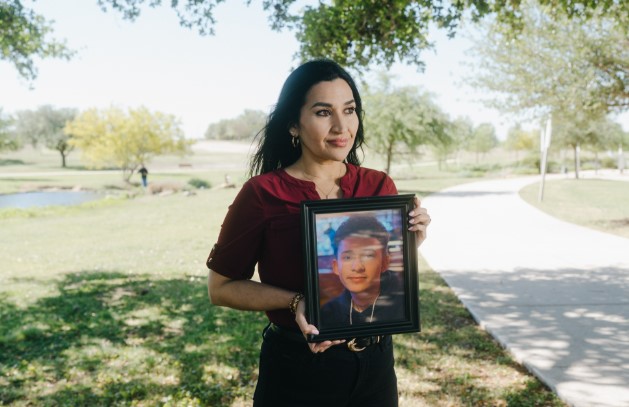
On March 15, 2025, a 23-year-old American named Ruben Ray Martinez was shot and killed by a federal immigration agent in South Padre Island, Texas. He was not a suspect in any crime. He had no prior run-ins with law enforcement. He was simply a young man celebrating his birthday during spring break. For nearly a year, the public had no idea that ICE was responsible for his death. That changed in early 2026, and the story has since ignited a fierce national debate about ICE’s use of force, government transparency, and the cost of America’s intensifying immigration crackdown.
Who Was Ruben Ray Martinez?
Ruben Ray Martinez was a 23-year-old from San Antonio, Texas. He worked at an Amazon warehouse and had recently made plans to enroll in trade school to become a mechanic. His mother, Rachel Reyes, described him as humble, kind, funny, and adventurous. She said he was finally figuring out his life, had found an apartment he liked, and was excited about the year ahead. Friends and family say he was the kind of person who would never hurt anyone. He had just turned 23 the week he died.
He and his friend Joshua Orta drove down to South Padre Island for spring break. It was supposed to be a celebration. It turned into a tragedy that his family is still fighting to understand.
What Happened the Night of the Shooting?
Just after midnight on March 15, 2025, Martinez and Orta were driving through a busy area of South Padre Island. A vehicle accident had occurred earlier at a crowded intersection, and officers from multiple agencies were on the scene helping redirect traffic. These included South Padre Island Police, the Texas Parks and Wildlife Department, and agents from Homeland Security Investigations, which is a law enforcement division that operates under Immigration and Customs Enforcement.
A Texas Game Warden signaled for Martinez to pull over, later stating in a police report that he had spotted an open container of alcohol in the car. The situation quickly escalated. According to ICE’s internal incident report, agents surrounded the vehicle and ordered the driver and passenger to get out. ICE claims that Martinez then accelerated forward and struck an HSI agent, who ended up on the hood of the car. A supervisory HSI agent standing beside the vehicle then fired multiple shots through the open driver-side window. Martinez was hit three times. Paramedics who were already on the scene rushed to help him, but he was transported to Valley Regional Medical Center in Brownsville, where he was pronounced dead.
The HSI agent who was allegedly struck by the car was treated for a knee injury at a nearby hospital and released the same night.
What Does the Body Camera Footage Actually Show?
This is where ICE’s official version of events comes under serious scrutiny. Body camera footage from the scene, released by the Texas Department of Public Safety in early March 2026, tells a very different story than what the government initially claimed.
The footage shows Martinez driving slowly through the area, with his brake lights on, appearing to interact with officers and navigate the confusing intersection like many other drivers that night. In one clip, his car can even be seen stopping at a crosswalk to let a group of young women cross the street — seconds before the fatal shots were fired.
Critically, the federal agent who fired the fatal shots was not wearing a body camera. The footage from other cameras at the scene does not clearly show Martinez ramming into the agent as ICE has insisted.
Joshua Orta, the passenger in the car that night, said in a statement to attorneys before his own death in an unrelated car crash in February 2026 that Martinez did not hit anyone. Orta wrote that an agent approached the front of the car and slapped the hood. He stated that without giving any warning, commands, or opportunity to comply, the agent fired multiple shots at Martinez from an extremely close distance of no more than two feet. Orta said the last words he heard Martinez say were “I’m sorry” before he slumped backward.
Attorneys for Martinez’s family, Charles Stam and Alex Stamm, reviewed all available footage and said they saw nothing that came close to justifying the use of lethal force. They pointed out that people who are using their vehicles as weapons do not stop to let pedestrians cross the street.
Why Did the Public Not Know for Nearly a Year?
This is one of the most disturbing aspects of the entire case. When Martinez died in March 2025, local media covered his death. But the reports did not identify which agency was responsible for the shooting. South Padre Island Police confirmed their officers were on the scene but said the matter had been referred to the Texas Rangers. The Department of Homeland Security made no public announcement about its involvement.
Rachel Reyes, Martinez’s mother, said a Texas Ranger came to her home the day after the shooting to tell her that her son had been fatally shot by an officer. He did not mention that the officer worked for ICE. It was only about a week after her son’s death that she learned a federal agent had fired the shots — and the general public would not learn this for nearly an entire year.
The truth only came to light in February 2026 when American Oversight, a nonprofit government watchdog organization, released hundreds of pages of internal ICE use-of-force documents that it had obtained through a Freedom of Information Act lawsuit. Hidden within those documents was an ICE incident report that identified HSI involvement in the fatal shooting of a US citizen in South Padre Island.
The Grand Jury Decision and ICE’s Response
In late February 2026, a Texas grand jury declined to bring criminal charges against the ICE agent, identified as Stevens, who fired the fatal shots. ICE’s acting director Todd Lyons released a statement saying the agency stands by the grand jury’s unanimous decision and that the incident was investigated from every possible angle by an independent body.
Democratic US Representatives Robert Garcia of California and Greg Casar of Texas have since called for an independent federal investigation into both the shooting itself and the reason ICE did not publicly disclose its involvement for nearly a year.
Part of a Larger Pattern Under Trump’s Immigration Crackdown
Ruben Ray Martinez is now considered the first of at least six people killed by federal immigration agents since the beginning of President Trump’s second term. His case opened the door to public scrutiny of other similar incidents that followed.
In January 2026, Renee Macklin Good, a 37-year-old writer and mother of three in Minneapolis, was fatally shot by an ICE agent during an immigration enforcement operation. Federal officials initially tried to describe her as a domestic terrorist who had attempted to ram officers with her vehicle. Video footage later obtained by media outlets contradicted that account. Alex Pretti, another Minneapolis resident, was also killed by immigration agents around the same time. Minnesota officials have since filed a lawsuit against the Trump administration alleging that federal authorities are withholding evidence in both Minneapolis cases.
All of these cases share troubling similarities: ICE agents involved in deadly incidents, government narratives that conflict with video evidence, and families left fighting for answers and accountability.
Why This Story Matters for All Americans
The debate around this case goes far beyond immigration policy. At its core, this is a story about a young American citizen who was killed by the government, whose family was not told the truth about what happened, and whose death was quietly buried in redacted documents for nearly a year.
Rachel Reyes has become a vocal advocate for accountability since learning the truth about her son’s death. She has described herself as a Trump supporter who simply wants justice. She said that what happened to her son has nothing to do with politics and everything to do with accountability, transparency, and the abuse of power.
Her attorney has argued that this tragedy is what happens when highly militarized federal law enforcement officers are deployed to handle routine everyday police work like redirecting traffic at a spring break intersection.
The case raises urgent questions about oversight of ICE’s use of force, the standards that govern when federal agents can use deadly force, and whether the American public can trust the government to be honest when its own agents kill US citizens.
Where Things Stand Today
As of April 2026, the family of Ruben Ray Martinez is exploring all available legal options. Their attorneys are continuing to push for full disclosure of all government evidence, including footage and documents still being withheld. Congressional Democrats are pressing for hearings. The Minneapolis cases are tied up in litigation. And ICE continues to defend its agents’ actions.
Meanwhile, Rachel Reyes is still waiting for answers. She told reporters that her son would not have used his car to hurt anyone, ever. She wants the world to know who Ruben Ray Martinez really was — not a threat, not a criminal, but a 23-year-old American kid who went to the beach to celebrate his birthday and never came home.
Final Thoughts
The story of Ruben Ray Martinez is not just about one young man’s death. It is a warning about what happens when federal power goes unchecked, when transparency is sacrificed, and when ordinary American citizens find themselves caught in the machinery of enforcement operations that were never designed with their safety in mind. As the immigration debate continues to intensify across the United States, cases like this one demand that Americans ask hard questions about how much power we are willing to give the government — and what happens when that power is used against us.