No one can seem to agree on when — or whether — the ceasefire between the United States and Iran was actually supposed to end. That’s not spin. That’s the Iran ceasefire deadline confusion 2026, playing out in real time, and it has left everyday Americans, policy experts, and even White House officials scrambling to keep up. Here is a clear, no-fluff breakdown of everything that happened, why the deadlines kept shifting, and what this chaos means for you.
The Iran Ceasefire Deadline Confusion 2026: Latest Breaking Update
Trump Extends the Ceasefire — But Without a New Deadline
On April 21, 2026, President Donald Trump announced on Truth Social that he was extending the ceasefire with Iran. The original truce — agreed upon April 8 — was set to expire that week. But rather than setting a firm new date, Trump tied the extension to an open-ended condition: Iran’s government must first submit a “unified proposal” to end the war.
That single decision created more confusion than clarity.
Trump’s statement read that he directed the military to continue the blockade and remain ready, extending the ceasefire until Iran’s proposal is submitted and discussions are concluded. No date. No timeline. Just a moving goalpost.
Meanwhile, the US naval blockade of Iranian ports remained firmly in place. The message from Washington was essentially: the guns are quiet for now, but the economic stranglehold is not.
When Was the Ceasefire Actually Supposed to End?
- This is where the Iran ceasefire deadline confusion 2026 gets almost surreal. In the span of 48 hours, Americans were hearing three different expiration windows from the people actually running the negotiations:
- Trump originally announced the ceasefire at 6:32 p.m. ET on April 7, putting the two-week mark at Tuesday evening, April 21.
- Trump then told Bloomberg the truce ended “Wednesday evening Washington time” — adding a full extra day.
- Pakistan publicly stated the ceasefire expired at 4:50 a.m. Pakistan Standard Time on April 22, translating to 7:50 p.m. ET on April 21.
- The White House never officially clarified that discrepancy. That is not a minor communication hiccup. That is a reflection of how disorganized and unpredictable this entire process has been.
Background: How Did We Even Get Here?
The 2026 Iran War and the Road to a Ceasefire
The current crisis began on February 28, 2026, when the United States and Israel launched large-scale military strikes on Iran, kicking off what is now widely called the 2026 Iran War. Among those killed in the opening strikes was Iran’s Supreme Leader, Ayatollah Ali Khamenei — a seismic event that rattled Iran’s entire power structure.
The strikes followed months of failed nuclear diplomacy. The US had been pushing Iran to completely halt its uranium enrichment program, restrict its ballistic missiles, and cut off support for regional groups like Hezbollah and the Houthis. Iran refused. After weeks of intense combat — including US strikes on Iran’s nuclear facilities in June 2025 under “Operation Midnight Hammer” — both sides agreed to a temporary two-week ceasefire on April 8, 2026, brokered by Pakistan.
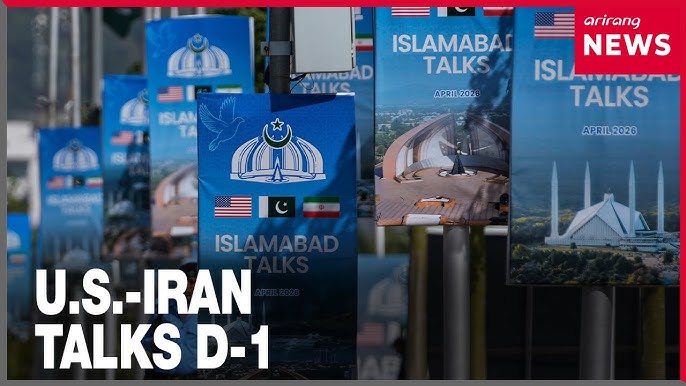
The First Round of Talks: Islamabad, April 12
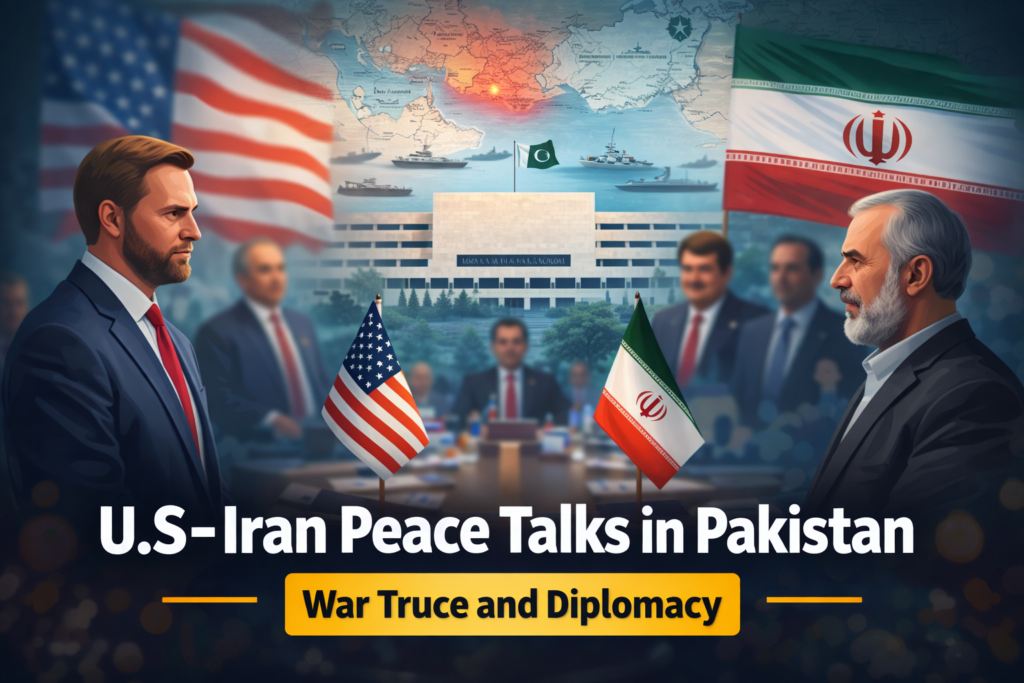
Vice President JD Vance traveled to Islamabad alongside special envoys Steve Witkoff and Jared Kushner for the first formal round of negotiations with Iranian officials. After 21 hours of talks, they left without a deal.
Vance told Fox News that the Iranians “moved in our direction” but “didn’t move far enough.” The core sticking point: the US demanded a 20-year moratorium on Iranian uranium enrichment. Iran countered with five years. Neither side budged enough to close the gap.
Key Issues Driving the Iran Ceasefire Deadline Confusion 2026
Iran’s Divided Government Is the Biggest Problem
Perhaps the clearest explanation for the Iran ceasefire deadline confusion 2026 came from Trump himself. In his extension statement, he referred to Iran’s government as “seriously fractured” — and that assessment is accurate.
American officials have identified a deep divide between Iran’s diplomatic negotiating team, led by Foreign Minister Abbas Araghchi and Parliament Speaker Mohammad Bagher Ghalibaf, and the hardline Islamic Revolutionary Guard Corps (IRGC). The diplomatic team appears more open to a framework agreement. The IRGC is deeply resistant to surrendering any nuclear capabilities or regional influence.
The result? Iran’s negotiators cannot make binding commitments without returning to Tehran for approval — and Tehran has not been sending clear signals. That is precisely why Trump cited the need for a “unified proposal” before talks can resume.
Trump’s Own Statements Kept Contradicting Each Other
The Iran ceasefire deadline confusion 2026 was not entirely Iran’s fault. Trump’s own public statements repeatedly contradicted what his team was quietly negotiating.
He told Bloomberg that Iran agreed to an unlimited suspension of its nuclear program. He told CBS News that Tehran had “agreed to everything.” He told Axios that a meeting would happen over the weekend. Iranian officials rejected all three claims publicly, saying talks were at an early stage. Multiple Trump officials privately acknowledged to CNN that the president’s social media diplomacy damaged the negotiations significantly.
The Strait of Hormuz Standoff
Adding to the tension is the ongoing battle over the Strait of Hormuz — a narrow waterway through which about 20 percent of global oil flows. Iran partially closed it at the start of the war and has maintained that control as leverage. After the first Islamabad talks failed, Trump ordered a US naval blockade of Iranian ports near the strait.
The USS Spruance later fired on and seized an Iranian cargo ship, the TOUSKA, that attempted to breach the blockade in the Gulf of Oman. Ships were attacked again in the Strait as recently as April 22, 2026, when Iran’s Revolutionary Guard opened fire on a container ship, and a second vessel came under attack the same day.
The No-Deadline Extension Problem
Analysts quickly flagged a serious flaw in Trump’s open-ended ceasefire extension. Without a firm new deadline, there is no pressure on Iran to submit a unified proposal quickly. Trump’s own advisers warned him privately that an extension without an end date could allow Tehran to drag out discussions indefinitely while maintaining its leverage — particularly control of the Strait of Hormuz.
Barbara Slavin, a distinguished fellow at the Stimson Center, called Trump’s extension statement a way to cover the embarrassment of floundering negotiations, noting that Iran had discovered new leverage it did not fully expect to have.
Impact on the United States
Gas Prices and Airline Costs Are Already Rising
The Iran ceasefire deadline confusion 2026 is not just a foreign policy story — it is hitting American wallets directly. The disruption to global oil supplies caused by the war and the Strait of Hormuz closure has added more than $100 to the price of long-haul flights from major hubs. Jet fuel prices have spiked significantly since the war began February 28, and those costs are being passed directly to consumers.
US Military Remains on Full Alert
US Central Command has confirmed that American forces remain fully prepared to resume attacks on Iran if ordered. US Secretary of Defense Pete Hegseth has publicly stated that the US stands ready in the background to ensure Iran upholds the ceasefire terms. Meanwhile, Iran-backed Hezbollah continued launching rockets and drones into northern Israel, and the Houthis in Yemen have threatened retaliation against the US if Iran is attacked again.
The US Credibility Question
There is also a longer-term credibility concern. The United States has now publicly announced multiple ceasefire deadlines and then walked them back. It has announced Iranian concessions that Iran immediately denied. And it sent a Vice President to Islamabad for talks that Iran did not show up to. Former lead US negotiator Wendy Sherman noted bluntly that you cannot negotiate with Iran in one day, and that the 2015 deal took 18 months of sustained diplomacy. The current approach has been anything but that.
What Happens Next: Predictions and Possibilities
Scenario One: Iran Submits a Proposal and Talks Resume
The most optimistic path forward is that Iran’s fractured leadership agrees internally on a negotiating position and submits a formal proposal through Pakistani mediators. A second round of Islamabad talks could then take place, led by Vance, Witkoff, and Kushner. Even under this scenario, experts are clear: a final, comprehensive deal is months away at minimum.
Scenario Two: The Ceasefire Collapses and Fighting Resumes
If Iran fails to submit a unified proposal, or if one of the ongoing flash points escalates beyond control, the ceasefire could collapse. Trump has specifically threatened to target Iranian bridges and power plants if talks fail — actions that international law experts have described as potentially constituting war crimes. A return to full-scale conflict would send global oil prices sharply higher and put American military personnel at direct risk.
Scenario Three: A Framework Agreement Buys Time
The most likely near-term outcome, according to analysts, is a limited framework Memorandum of Understanding rather than a comprehensive deal. Such an agreement would establish basic parameters — a temporary halt on high-level uranium enrichment, a process for addressing the stockpile, a mechanism for sanctions relief — and buy time for longer negotiations over the following months. That is not a solution. But it might be enough to prevent a return to war.
Final Thoughts: Clarity Is the First Casualty
The Iran ceasefire deadline confusion 2026 is a story about what happens when geopolitics collides with impulsive communication, deep mutual distrust, and a genuinely fragmented adversary. Americans deserve straight answers about when this ceasefire ends, what the US is actually demanding, and what a real deal would look like.
Right now, those answers are not coming from Washington with any consistency. What is clear is this: the stakes are enormous — for global oil markets, for American military personnel, for Middle East stability, and for the long-term question of whether Iran will develop nuclear weapons. The confusion over deadlines is not just a communication problem. It is a symptom of a negotiation that has not yet found its footing.
Stay tuned to topichype.com for live updates as this situation continues to develop.
Frequently Asked Questions (FAQs)
Q1: What was the original Iran ceasefire deadline in 2026?
The original two-week ceasefire between the US and Iran was announced on April 7–8, 2026, and was set to expire around April 21–22, 2026. However, different officials cited different exact times, contributing to the Iran ceasefire deadline confusion 2026 that made headlines globally.
Q2: Why did Trump extend the Iran ceasefire without a new deadline?
President Trump extended the ceasefire on April 21, 2026, citing Iran’s “seriously fractured” government. Rather than setting a firm new date, he tied the extension to an open-ended condition: Iran must submit a unified negotiating proposal before talks can resume. Critics noted that removing the deadline also removed pressure on Iran to act quickly.
Q3: What are the main sticking points in the US-Iran peace talks?
The biggest issues include Iran’s uranium enrichment program (the US wants zero enrichment; Iran insists on its legal right to enrich), the fate of Iran’s existing stockpile of enriched uranium, the reopening of the Strait of Hormuz, sanctions relief terms, and Iran’s support for regional groups like Hezbollah and the Houthis.
Q4: How does the Iran ceasefire deadline confusion 2026 affect Americans?
It affects Americans in multiple ways: higher gas prices due to Strait of Hormuz disruptions, more expensive airline tickets from surging jet fuel costs, continued risk to US military personnel stationed across the Middle East, and broader uncertainty in global financial markets tied to Middle East stability.
Q5: Is the US-Iran ceasefire still holding as of late April 2026?
Technically yes — the ceasefire has been extended — but it remains extremely fragile. Ships have continued to be attacked in the Strait of Hormuz, Iran-backed groups are active in Lebanon and elsewhere, and neither side has fully honored all the original ceasefire conditions. A second round of formal peace talks in Islamabad had not yet been confirmed as of April 23, 2026.