Iran-US Ceasefire Crisis: Wednesday Deadline, Ship Seizure, Drone Strikes, and the World Holding Its Breath
The fragile ceasefire between the United States and Iran is on the verge of collapse. With the truce officially expiring Wednesday evening Washington time, the past 48 hours have brought a seized Iranian cargo ship, Iranian drone strikes on US Navy vessels, a breakdown in peace talk scheduling, and a threat from President Trump to destroy every power plant and bridge in Iran. What began as a two-week pause in one of the most intense military conflicts the Middle East has seen in decades is now teetering on the edge of resumption. Here is a complete breakdown of everything happening right now.
How the Ceasefire Came About and Why It Is Expiring
The United States and Iran agreed to a two-week ceasefire on April 7, 2026, brokered by Pakistan, after more than five weeks of devastating military conflict that began on February 28 when Israel and the US launched coordinated airstrikes on Iran under Operation Epic Fury. Those strikes killed Iranian Supreme Leader Ali Khamenei and destroyed key military and nuclear facilities. Iran responded with massive missile and drone attacks across the Middle East and closed the Strait of Hormuz, cutting off roughly 20 percent of the world’s oil supply.
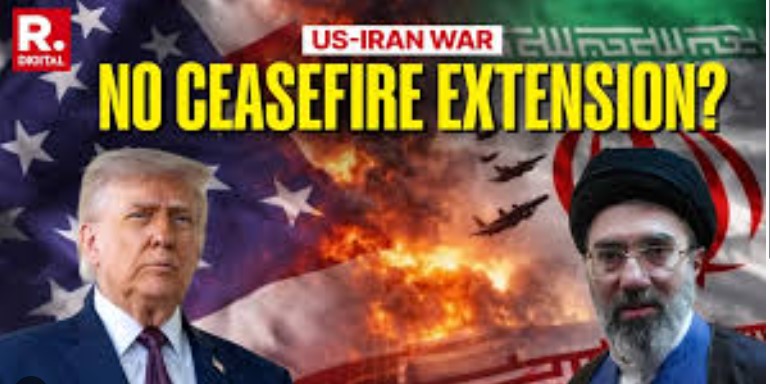
The ceasefire was designed to create space for diplomatic negotiations, with Pakistan serving as mediator. The two-week window was supposed to produce at minimum a framework for a permanent deal. It has produced neither a deal nor an extension. President Trump confirmed on Monday that the ceasefire expires Wednesday evening and called a further extension highly unlikely. When asked by Bloomberg whether fighting would resume if no deal was reached, Trump said clearly that he would certainly expect it to.
The First Round of Islamabad Talks Collapsed Without a Deal
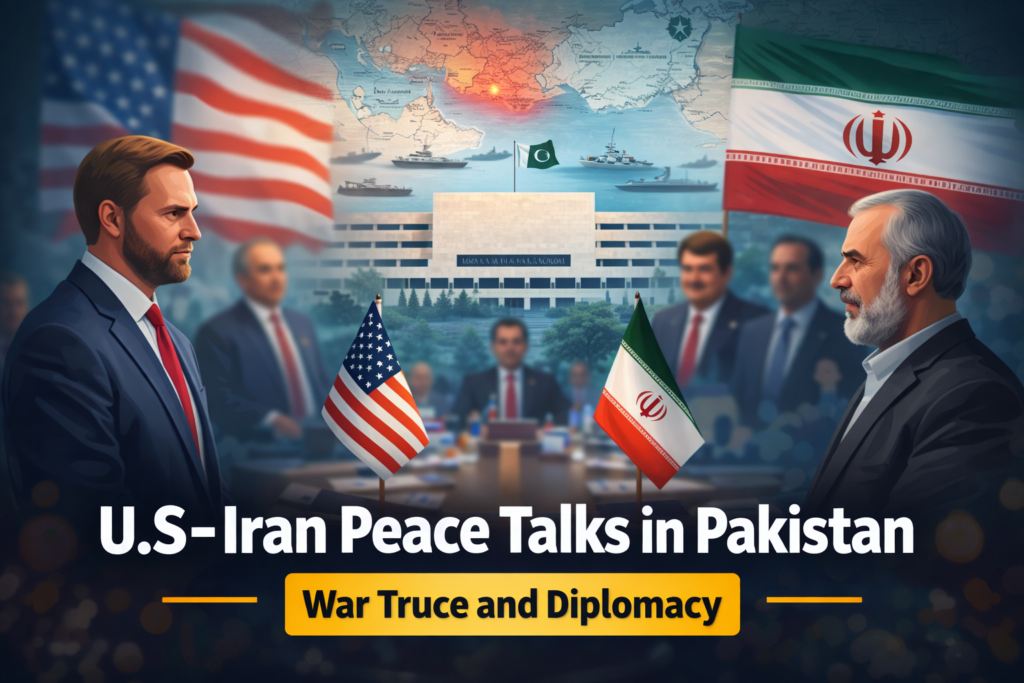
The first and only formal round of peace talks was held in Islamabad, Pakistan, on April 11 and 12, 2026. The US delegation of nearly 300 people was led by Vice President JD Vance, alongside special envoy Steve Witkoff and Jared Kushner. Iran sent a 70-member team led by parliamentary speaker Mohammad Baqer Qalibaf and Foreign Minister Abbas Araghchi.
The talks lasted 21 hours and represented the highest-level direct contact between the US and Iran since the 1979 Islamic Revolution. They ended without any agreement. The core sticking point was uranium enrichment. The United States demanded Iran suspend enrichment for 20 years. Iran offered five years. That 15-year gap proved impossible to bridge in a single session. Vance walked out and told reporters the US had left its final and best offer on the table. Two days later, Trump announced a full naval blockade of Iranian ports.
The USS Spruance Seizes the Iranian Ship Touska
The event that pushed the ceasefire to its breaking point happened on Sunday, April 19. The US Navy guided-missile destroyer USS Spruance intercepted the Iranian-flagged container ship Touska in the Gulf of Oman. The Touska, a 965-foot vessel carrying cargo from China, was heading toward the Iranian port of Bandar Abbas in what US Central Command said was a direct violation of the naval blockade.
According to CENTCOM, the Spruance issued repeated warnings over a six-hour period before acting. When the Touska refused to comply, the Spruance fired several rounds from its five-inch gun into the ship’s engine room, disabling its propulsion. US Marines from the 31st Marine Expeditionary Unit then rappelled onto the vessel from helicopters and took custody of the ship and its crew. Trump announced the seizure on Truth Social, writing that the Iranian crew refused to listen and that the Navy stopped them right in their tracks by blowing a hole in the engine room.
Iran immediately called the seizure an act of piracy and armed aggression. Iran’s Khatam al-Anbiya Central Headquarters issued a formal warning that Iranian armed forces would respond and retaliate. Naval experts told CNN that the Touska will be taken to port for inspection and could eventually become US government property as a maritime prize of war.
Iran Launches Drone Strikes on US Navy Ships
Within hours of the Touska seizure, Iran followed through on its retaliation threat. Iran’s state-run Tasnim News Agency reported that the Iranian military launched drone strikes toward several US military vessels blockading Iranian ports in the Gulf of Oman. Iran’s military framed the strikes as a direct and proportional response to what it called armed piracy by the United States. As of Monday morning, US Central Command had not reported any damage to its vessels from the Iranian drone strikes.
The exchange of a ship seizure followed by drone strikes marks the most direct military confrontation between US and Iranian forces since the ceasefire was announced two weeks ago. While the ceasefire was supposed to halt hostilities, both sides have now engaged in what each describes as defensive or responsive actions while accusing the other of being the aggressor.
Iran Refuses to Attend Round Two of Islamabad Talks
Trump announced on Sunday that US representatives were heading to Islamabad on Monday evening for a second round of negotiations. He named Vice President Vance, Steve Witkoff, and Jared Kushner as the delegation. Pakistan had already deployed nearly 20,000 security personnel across Islamabad in preparation and cleared the Serena Hotel in the Red Zone for the talks.
But Iran refused to show up. Iranian Foreign Ministry spokesman Esmaeil Baghaei said on Monday that Iran had no plans for a next round of negotiations as of that moment. He accused the United States of actions that were in no way indicative of seriousness in pursuing a diplomatic process, pointing to the naval blockade and the Touska seizure as proof that Washington was not negotiating in good faith. Iran’s First Vice President Mohammad Reza Aref went further, calling the American approach to negotiations childish and inconsistent.
Iran’s position rests on a clear condition: the US naval blockade must be lifted before meaningful talks can resume. The US position is equally firm: the blockade stays until Iran commits to the nuclear deal on Washington’s terms.
What the Strait of Hormuz Crisis Means for Americans
The Strait of Hormuz has been virtually shut for most of the past several weeks. This narrow waterway between Iran and Oman is the single most important oil transit route on earth, carrying approximately 20 percent of the world’s crude oil and liquefied natural gas under normal conditions. When it closes, the global economy feels it immediately.
US national average gas prices reached $4.05 per gallon on Sunday. Energy Secretary Chris Wright warned that prices may not return below $3 per gallon until next year if the Hormuz disruption continues. Oil prices rose again Monday after the Touska seizure dashed hopes of a diplomatic resolution, with Brent crude trading near $95 per barrel and West Texas Intermediate around $88 per barrel. Just days earlier, those prices had dropped sharply when Iran briefly announced the strait was open, only for Iran to reimpose control within 24 hours.
The UAE government has reported that more than 2,800 missiles and drones struck its territory in the first 40 days of the US-Israeli war with Iran, with more than 90 percent hitting civilian infrastructure. The ripple effects of the conflict are being felt from gas pumps in the United States to shipping lanes in Asia.
Trump’s Latest Threats and the Path to Wednesday
Trump has made clear that if no deal is reached before the ceasefire expires Wednesday evening, the United States is prepared to resume strikes. His threats have escalated significantly. He has stated the US will knock out every single power plant and every single bridge in Iran if Tehran does not accept the deal being offered. Speaking with Fox News, he said the US was preparing to hit Iran harder than any country had ever been hit before and confirmed the military had massive amounts of ammunition ready.
Trump expressed a contradictory mix of optimism and threat heading into the week. He told Axios he believed the concept of the deal was done and that there was a very good chance of completing it. He told Bloomberg he was not going to be rushed into making a bad deal and that the US had all the time in the world. When asked about an extension, he offered three different answers to five questions from reporters. His most definitive statement was that if there is no deal, he would certainly expect fighting to resume.
China’s President Xi Jinping entered the conversation on Monday, calling Saudi Crown Prince Mohammed bin Salman to urge that the Strait of Hormuz remain open to normal navigation, calling it a shared interest of the international community. Turkey’s Foreign Minister said he was optimistic the ceasefire would be extended. Russia’s Foreign Minister Sergey Lavrov emphasized the necessity of maintaining the ceasefire in a call with Iran’s Araghchi.
What a Deal Would Require
The gap between US and Iranian positions remains enormous. The United States is demanding that Iran permanently halt all uranium enrichment, surrender its stockpile of highly enriched uranium, dismantle its three main nuclear sites at Fordow, Natanz, and Isfahan, curtail its ballistic missile program, and end support for regional proxy groups including Hezbollah, Hamas, and the Houthis. The US has also made the reopening of the Strait of Hormuz a precondition for any agreement.
Iran is demanding an end to the US naval blockade, war reparations for the destruction caused by US and Israeli strikes, international recognition of its sovereignty, and the release of approximately $20 billion in frozen Iranian assets. On enrichment, Iran has agreed to a five-year moratorium as a maximum concession. Sources familiar with negotiations told Axios that talks last week were focused on a three-page memorandum of understanding that included a $20 billion asset release in exchange for Iran surrendering its enriched uranium stockpile, but that framework fell apart when the Touska seizure inflamed tensions.
Where Things Stand Right Now
As of Monday April 20, 2026, the situation is as follows. The ceasefire expires Wednesday evening Washington time. Iran has refused to attend a second round of Islamabad talks. Iran launched drone strikes on US Navy ships in retaliation for the Touska seizure. The Strait of Hormuz is effectively closed for the third consecutive day. US gas prices are at $4.05 per gallon and rising. Oil markets are volatile. Trump says an extension is highly unlikely. The US delegation is still traveling to Islamabad even without Iranian confirmation. Iran’s President Masoud Pezeshkian said Monday his country needs to end the war as swiftly as possible to focus on reconstruction, signaling some domestic pressure for a resolution. Pakistan remains the only active diplomatic channel.
The next 48 hours will determine whether the ceasefire expires into renewed warfare or whether some last-minute diplomatic intervention produces at least an extension that keeps the possibility of a deal alive. The world is watching Wednesday.