This is one of the most consequential diplomatic stories of 2026, and it has moved faster and further than almost anyone predicted at the start of the year.What began as cautious indirect nuclear negotiations in Geneva in February has evolved through military conflict, a ceasefire, talks in Islamabad, and as of today June 12, 2026 both sides are reportedly on the verge of finalizing what is being called the Islamabad Memorandum of Understanding.Here is the complete story of how we got here, who has been involved at every stage, and where things stand right now.
The Geneva Talks February 2026
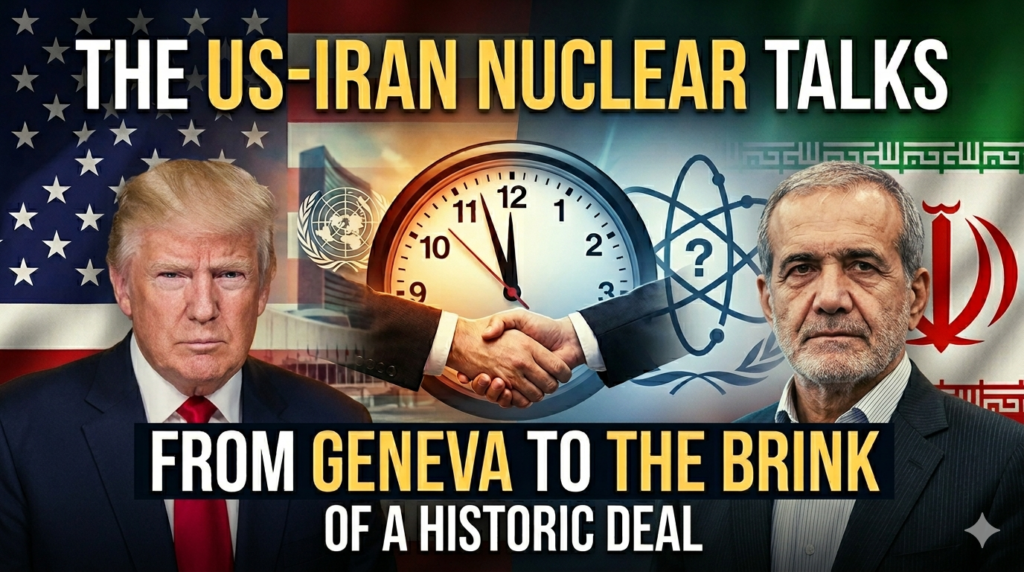
The current diplomatic chapter opened in Geneva, Switzerland in mid-February 2026.These were not the first US-Iran nuclear negotiations an earlier round had taken place in Oman in April 2025 before collapsing in June of that year when Israel launched a 12-day military campaign against Iran.But after months of escalating tensions, both sides agreed to try again.
The negotiations were structured as indirect talks mediated by Oman, with Iran’s Foreign Minister Abbas Araghchi arriving in Geneva for the second round on February 17, 2026, while the White House confirmed that US Middle East envoy Steve Witkoff would represent Washington.Also part of the American delegation was Jared Kushner, Trump’s son-in-law and senior adviser, who played a significant role throughout the process.NBC News
The talks began with Araghchi, Witkoff, and Kushner holding a three-hour session mediated by Oman before adjourning for a break.The format alternated between indirect sessions where the two sides communicated through Omani Foreign Minister Badr bin Hamad al-Busaidi as intermediary and at times more direct exchanges.Scientific American
After the second round concluded, Araghchi told media that Iran and the United States had reached an understanding on the main guiding principles, but work still needed to be done.He said the progress did not mean an agreement would be reached soon, but that the path had started.Usefulbs
The third round took place on February 26, 2026, with Iran’s President Masoud Pezeshkian saying he remained hopeful ahead of the talks, calling them a possible turning point in the long-running standoff between the two countries.Iranian Foreign Minister Araghchi said a deal with Washington was within reach and called the moment a historic opportunity for an agreement.issuu
What Were the Two Sides Actually Arguing About?
The core disagreements throughout the Geneva process came down to several fundamental issues.The United States entered the negotiations publicly maintaining that Iran must accept zero uranium enrichment meaning Tehran would have to give up its entire domestic enrichment program as a condition of any deal.Iran flatly rejected this, insisting on its right to enrich uranium domestically and demanding the lifting of all international sanctions in return for nuclear concessions.
Just before the third round of talks ended, Iranian state television reported that Tehran was determined to continue enriching uranium, rejected proposals to transfer it abroad, and sought the lifting of international sanctions indicating it was not prepared to meet US demands as they stood at that point.WBUR News
Publicly, US officials maintained that zero enrichment remained the standard for any deal with Tehran, but reports suggested that Trump was open to an Iranian proposal that would allow so-called token uranium enrichment, with strict safeguards to prevent any route to weaponization.Scientific American
Despite no deal being reached at the third Geneva round, Oman’s Foreign Minister Badr al-Busaidi, who mediated the talks, said there had been significant progress in the negotiation.WBUR News
The Collapse, the War, and the Ceasefire
The Geneva diplomatic track ultimately could not survive the deteriorating military situation.In the background of every negotiating session, the United States had been steadily increasing its military presence in the region.The United States had recently moved a second aircraft carrier group toward West Asia and increased its military presence in the region, with analysts warning that if the Geneva talks collapsed, tensions could escalate further, raising the risk of military confrontation and renewed instability across West Asia.issuu
That escalation ultimately came.By late March 2026, a third round of diplomatic contacts took place but failed to bridge the gaps.Following nearly six weeks of conflict, on April 8, Pakistan’s Prime Minister Shehbaz Sharif announced that the US and Iran had agreed to a conditional two-week ceasefire, during which talks would be held on a lasting agreement.Live Science
Sharif announced that the Islamic Republic of Iran and the United States of America, along with their allies, had agreed to an immediate ceasefire everywhere including Lebanon, effective immediately, and that Pakistan’s capital Islamabad would welcome delegations from both countries to hold negotiations aimed at reaching a conclusive agreement.PBS
The Islamabad Talks April 11 and 12, 2026
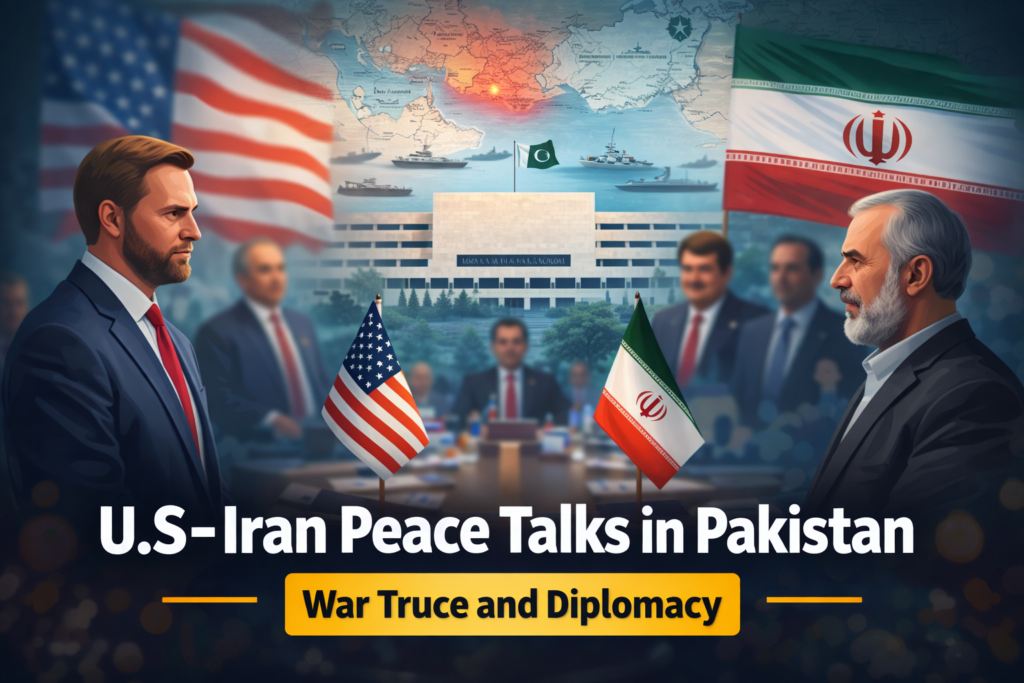
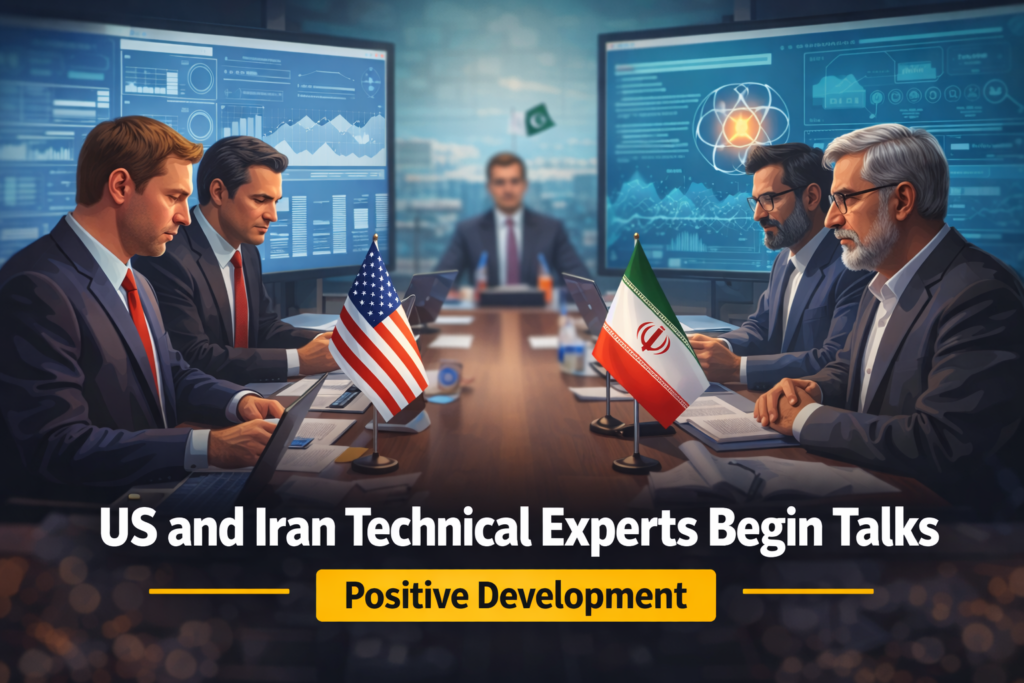
The Islamabad Talks were held at the Islamabad Serena Hotel on April 11 and 12, 2026, aimed at stabilizing the ceasefire and negotiating a potential resolution to the conflict.The talks were moderated by Pakistan, which played a central role in brokering the ceasefire and facilitating the negotiations.The talks lasted 21 hours and consisted of three rounds, with the first being indirect and the second and third being direct.Tower Foot and Ankle
The US President said most points were agreed to, but the only point that really mattered nuclear was not.He described Iran as unyielding on the issue.Iran’s Foreign Minister said an agreement was just inches away but criticized maximalist demands from US negotiators.Live Science
The Islamabad talks ended without a final agreement, but with both sides acknowledging significant progress on multiple issues.The teams were reportedly able to agree on the main points of the ceasefire framework, with the exception of issues regarding the Strait of Hormuz and the Iranian nuclear program.Tower Foot and Ankle
Where Things Stand Today June 12, 2026
As of this writing on June 12, 2026, the situation has reached what may be its most critical moment.Pakistan’s Prime Minister Shehbaz Sharif said on June 12 that the United States and Iran have agreed to the wording of an agreement aimed at ending their conflict and that mediators were working with both sides to finalize a deal.Medium
Sharif wrote that peace has never been this close as it is now, tagging Trump, US Vice President JD Vance, Secretary of State Marco Rubio, US envoy Steve Witkoff, Iranian President Masoud Pezeshkian, and Foreign Minister Abbas Araghchi in the post.Iranian Foreign Minister Araghchi appeared to echo that optimism, saying on Telegram that the Islamabad Memorandum of Understanding has never been closer.healthline
US senior administration officials said the United States and Iran are about 75 percent there on reaching a proposed memorandum to end the conflict, but that a full deal that would dismantle Tehran’s nuclear program, remove and destroy nuclear material, and keep the Strait of Hormuz open is not yet complete.One official said negotiators had reached agreement on both the broad concepts and detailed provisions of the accord, but stressed that the deal is not done until we sign it.healthline
Iran’s negotiating team also confirmed that considerable progress has been made on the draft text of a peace proposal with the US, though declined to outline a timeline for the potential deal.Live Science
The Key Players
The cast of characters across these months of negotiations has been remarkable.On the American side, the lead negotiator throughout has been Steve Witkoff, Trump’s Special Envoy for the Middle East.Jared Kushner has also played a central and perhaps underappreciated role in the direct sessions.JD Vance and Marco Rubio have been key figures on the policy side, with Rubio maintaining a publicly hard line while negotiations proceeded.
On the Iranian side, Foreign Minister Abbas Araghchi has been the consistent face of the negotiations a career diplomat who has navigated between the demands of Supreme Leader Ayatollah Ali Khamenei and the pragmatic reality that Iran’s military and economic position has significantly weakened.Pakistan’s Prime Minister Shehbaz Sharif has emerged as the surprise hero of the diplomatic process, with Islamabad stepping in as a credible neutral mediator after Oman played that role in the earlier Geneva phase.
Russia has also offered to play a role, with President Putin reiterating Russia’s offer to take Iran’s enriched uranium out of the country, noting that Russia had done this before as part of the 2015 nuclear deal and was ready to do so again.Live Science
What a Deal Would Look Like
Based on everything that has leaked from the negotiations, the broad outlines of any agreement appear to involve Iran making substantial concessions on its nuclear program including commitments not to develop nuclear weapons and limits on enrichment levels and stockpile sizes in exchange for meaningful sanctions relief.The Strait of Hormuz, which Iran threatened to close during the conflict, would be guaranteed to remain open under international shipping law.Whether Iran retains any domestic enrichment capacity at all remains the single most contested point.
The road from Geneva to where things stand today has been extraordinary from cautious indirect talks in a Swiss hotel to a shooting war, a ceasefire brokered by Pakistan, marathon negotiations in Islamabad, and now the prospect of an agreement that could reshape the Middle East for a generation.The deal is not done yet.But as of today, it has never been closer.