
ICE Agent Charged With Felony Assault in Minnesota: The Full Story Behind Operation Metro Surge’s First Criminal Case
A Hennepin County prosecutor charged ICE agent Gregory Morgan Jr. with pointing a gun at motorists on a Minneapolis highway — the first criminal charge tied to Operation Metro Surge. Meanwhile, no charges have been filed in the attack on journalist Savanah Hernandez. Here’s everything you need to know.
1stCriminal Charge from Op. Metro Surge
2Counts of Felony Assault (2nd Degree)
3Hernandez Cases Under Review
FBIFederal Probe Opened in Hernandez Case
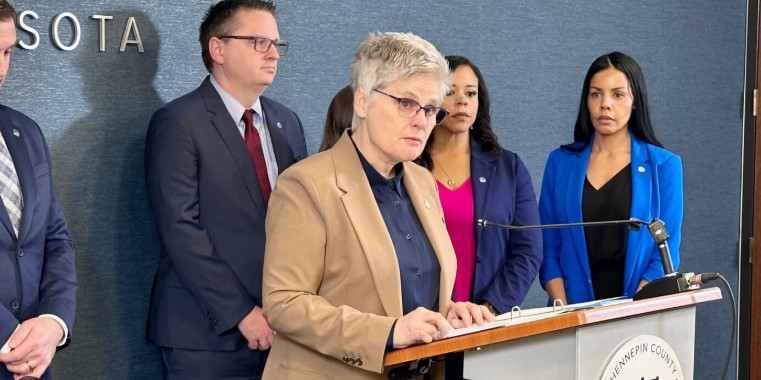
The standoff between federal immigration authorities and local Minnesota prosecutors escalated sharply this week when Hennepin County Attorney Mary Moriarty announced felony assault charges against a U.S. Immigration and Customs Enforcement (ICE) agent — marking the first time a federal immigration officer has faced criminal charges for actions allegedly taken while on duty during the sweeping immigration crackdown in Minnesota known as Operation Metro Surge.
The charges against ICE agent Gregory Donnell Morgan Jr. have ignited a firestorm on multiple fronts: a constitutional battle over whether a state prosecutor can charge a federal law enforcement officer for conduct during the performance of federal duties, a debate about accountability for immigration enforcement, and — running in sharp parallel — deep frustration on the right over the fact that no charges have been filed in the separate, widely publicized attack on Turning Point USA reporter Savanah Hernandez during an anti-ICE protest the previous weekend.
What ICE Agent Gregory Morgan Jr. Is Accused Of
According to the criminal complaint filed by Hennepin County, the incident involving Morgan took place on February 5, 2026 — during the height of Operation Metro Surge, a federal immigration enforcement blitz that drew widespread protests and scrutiny in the Twin Cities.
At approximately 4:20 p.m., near the Interstate 35W interchange on Highway 62 in Minneapolis, traffic had slowed to a single lane. Prosecutors say Morgan drove his vehicle on the shoulder to bypass the congestion. As he reached the victims’ car, he allegedly “sped up, pulled alongside the vehicle, matched its speed, opened his window and pointed his duty weapon directly at both victims” — pointing the handgun at their heads.
“Today’s charges reflect an important milestone in our efforts to seek accountability for the harms inflicted on our community during Operation Metro Surge.”— Hennepin County Attorney Mary Moriarty, press conference, April 16, 2026
Morgan, a 35-year-old Maryland resident, was part of ICE’s Enforcement and Removal Operations division. He had been deployed to Minnesota as part of the federal immigration surge. Moriarty announced two counts of second-degree assault with a dangerous weapon. Hennepin County also issued an arrest warrant for Morgan, stating it could be executed “anywhere in the country.”
What Is Operation Metro Surge?
Operation Metro Surge was a large-scale federal immigration enforcement operation launched in the Minneapolis-St. Paul metropolitan area in early 2026. It deployed ICE agents from other states — including Morgan from Maryland — to conduct immigration arrests in the Twin Cities. The operation drew significant protests and scrutiny from local officials and community groups, who raised concerns about the tactics used and the impact on immigrant communities. Minnesota had become one of the most active flashpoints in the national debate over immigration enforcement.
The Legal Battle: Can a State Charge a Federal Agent?
The legal terrain here is complicated and contested. Federal law enforcement officers generally enjoy significant protection from state prosecution when acting within the scope of their federal duties — a principle rooted in the Supremacy Clause of the U.S. Constitution, which establishes federal law as supreme over state law.
However, this protection is not absolute. Federal officers are not entirely immune from state criminal law, particularly when their conduct exceeds what their federal duties authorize. The question in Morgan’s case is whether pointing a gun at civilian motorists in a traffic backup — with no apparent connection to an immigration enforcement action — falls within or outside the scope of his duties as an ICE agent.
Legal observers on both sides of the debate have noted the complexity. Some conservatives argued that no state prosecutor should be able to arrest a federal agent for conduct during a federal enforcement operation, warning that the Hennepin County warrant would create dangerous confrontations between local police and federal agents. Some liberal legal scholars countered that if Morgan did what prosecutors allege — pointing a weapon at uninvolved civilians on a highway — that conduct was outside the scope of any legitimate federal duty.
The Federal Response
The Trump administration has not publicly commented on the specific charges against Morgan as of this writing. However, ICE said in a separate statement that a “violent mob helped a criminal escape” during another Operation Metro Surge incident and that an ICE agent was “permanently maimed” during protests — language framing the ICE agents as victims of the protest environment in Minnesota, not as subjects of legitimate law enforcement scrutiny.
The Savanah Hernandez Situation: A Parallel Controversy
Running alongside the Morgan case — and amplifying conservative outrage — is the separate situation involving Turning Point USA reporter Savanah Hernandez. During an anti-ICE protest outside the Whipple Federal Building in Minneapolis the previous weekend, Hernandez was confronted by a crowd of protesters while she was attempting to report on the demonstration.
Video footage of the incident showed a crowd of protesters surrounding Hernandez, blowing horns in her face, shouting obscenities, and shoving her as she attempted to leave. At one point, a protester pushed Hernandez into a fence. Another shoved her to the ground while she repeatedly shouted, “Stop touching me” and “Leave me, I am trying to leave!” Hernandez later said she suffered minor injuries including scrapes and soreness.
ICE Agent Morgan — Status
- Charged with 2 counts of felony assault (2nd degree)
- Arrest warrant issued, enforceable nationwide
- Incident: Feb. 5, 2026 on Highway 62
- Accused of pointing gun at civilian motorists
- First criminal charge tied to Op. Metro Surge
Reporter Hernandez — Status
- No charges filed against any of her assailants
- 3 cases submitted to prosecutors — no arrests made
- FBI has opened a federal investigation
- VPVance: FBI surging resources to prosecute attackers federally
- Timeline for charging decision unclear
As of April 17, no charges have been filed against any of the individuals who attacked Hernandez. A spokesperson for the Hennepin County Attorney’s Office told Fox News Digital that three cases tied to the Hernandez incident have been submitted by law enforcement and are under review for potential charges, though no timeline for a decision was given. The cases were submitted “out of custody,” meaning no arrests were made at the time of the alleged offenses.
The FBI has opened a federal investigation into the Hernandez attack. Vice President JD Vance announced that FBI Director Kash Patel was “surging resources” to prosecute the attackers federally. The contrast — an ICE agent charged within weeks, Hernandez’s attackers facing no charges months after the incident — has become a central point of contention in conservative media and political commentary.
The Political Firestorm
The charges against Morgan immediately ignited a political firestorm that cuts to the core of some of the most contentious debates in American politics today: immigration enforcement, police accountability, press freedom, and the relationship between federal and state authority under the Trump administration.
On the left, many activists and local officials praised Moriarty’s decision to charge Morgan, arguing that federal law enforcement officers must be held to the same standards as anyone else when they allegedly endanger civilians. In their view, Operation Metro Surge had produced a climate of fear in immigrant communities — and accountability for alleged misconduct was essential.
On the right, the reaction was fierce. Many conservatives framed the charges as a politically motivated attack on a federal agent doing his job — a dangerous precedent that could deter ICE agents from carrying out enforcement operations in cities with hostile local prosecutors. The fact that Hernandez’s attackers remain uncharged while Morgan faces felony charges was presented as evidence of a double standard in justice.
The constitutional question — whether Hennepin County can legally arrest and prosecute a federal agent for conduct during federal duty — is likely to be litigated in court if Morgan is taken into custody. Legal analysts have noted that while states technically can prosecute federal officers in some circumstances, the federal government has tools to resist or challenge such prosecutions, and the Trump administration is unlikely to cooperate with a Minnesota arrest warrant for one of its ICE agents.
What Happens Next
Several key developments are expected in the coming days and weeks. The FBI’s federal investigation into the Hernandez attack is ongoing, with Vance signaling aggressive federal prosecution of those responsible. The three cases submitted to Hennepin County for review in the Hernandez matter are awaiting a charging decision. And the constitutional standoff between Hennepin County’s arrest warrant for Morgan and the federal government’s likely resistance to that warrant is an unresolved legal collision course.
More broadly, Operation Metro Surge itself has not ended. The Twin Cities remain a flashpoint in the national debate over immigration enforcement, with protests, legal challenges, and political battles continuing on multiple fronts. The Morgan case — the first criminal charge to emerge from the operation — ensures that the scrutiny of how federal immigration enforcement was conducted in Minnesota will continue for months, likely years, through the courts.
Why This Story Matters to Americans Across the Country
The Minnesota ICE case is not just a local story. It touches on questions that resonate with Americans of every political background. How much power should federal immigration agents have — and what accountability mechanisms exist when those powers are allegedly abused? What protections do journalists have when covering contentious public protests? Can a local county prosecutor charge a federal agent for conduct on the job, and if so, what happens when the federal government refuses to recognize that authority?
These are not easy questions, and they do not have easy answers. But they are the questions at the center of one of the most politically charged cases to emerge from the Trump administration’s first year of aggressive immigration enforcement — and they are going to be argued loudly, in courtrooms and on cable news, for a long time to come.
Sources: Fox News Digital (April 17, 2026); NPR (April 16, 2026); Hennepin County Attorney’s Office press conference (April 16, 2026); BET News (April 17, 2026); RedState (April 16, 2026); Jammin 99.9 / Comms Trader (April 17, 2026).
Disclaimer: This article is for informational purposes only. Criminal charges are allegations — all defendants are presumed innocent until proven guilty in a court of law.