The Collapse of the 2026 US-Iran Ceasefire: What Happens Next?
Three weeks. That is roughly how long the fragile peace between Washington and Tehran survived before it shattered again. On July 8, 2026, speaking to reporters at the NATO summit in Turkey, President Trump said the words that markets, mediators, and millions of people across the Gulf had been dreading: the ceasefire with Iran was “over.” Within hours, US Central Command had launched fresh strikes on Iranian coastal targets, Iran’s Revolutionary Guard had fired back at American bases in Bahrain and Kuwait, and oil traders were once again pricing in the possibility of a full-blown shutdown of the Strait of Hormuz.
For a region that had barely begun to exhale after a brutal five-month war, the speed of the reversal was jarring. This article breaks down exactly how the June memorandum of understanding fell apart, what the latest US attack on Iran 2026 actually targeted, why Iran and the US are fundamentally unable to agree on who controls the world’s most important oil chokepoint, and what the escalation means for global energy markets and the risk of a wider regional war.
How We Got Here: A Ceasefire Built on Sand
To understand why this collapse felt so sudden, it helps to remember how unstable the “peace” already was.
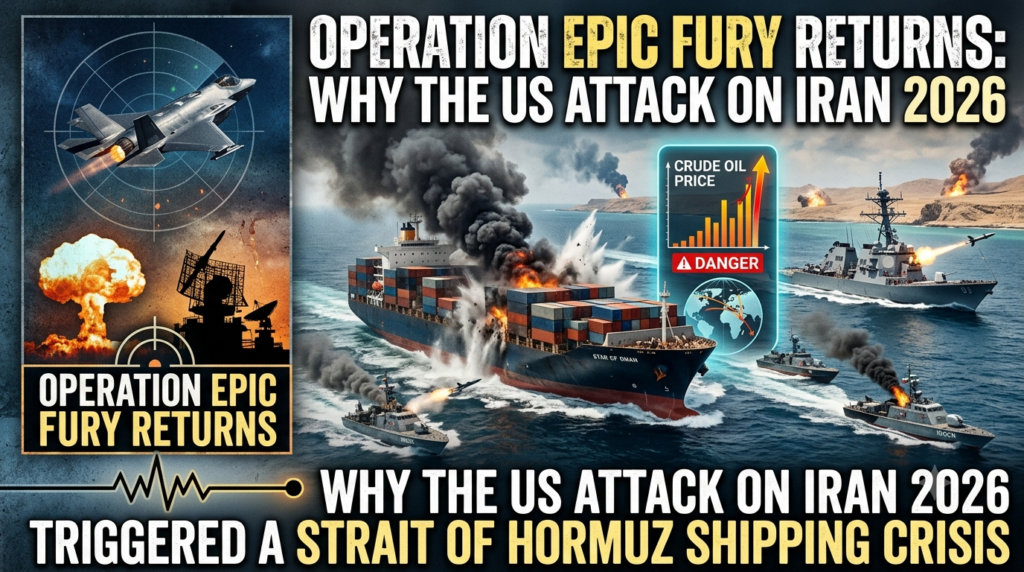
The war itself began on February 28, 2026, when US and Israeli forces launched a massive opening barrage later branded Operation Epic Fury against Iranian military infrastructure, killing Supreme Leader Ali Khamenei along with dozens of other officials. Iran responded by closing the Strait of Hormuz, and for the next several months the two sides fought a running battle across missiles, drones, tankers, and mines, dragging in Israel, Hezbollah in Lebanon, and Gulf Arab states.
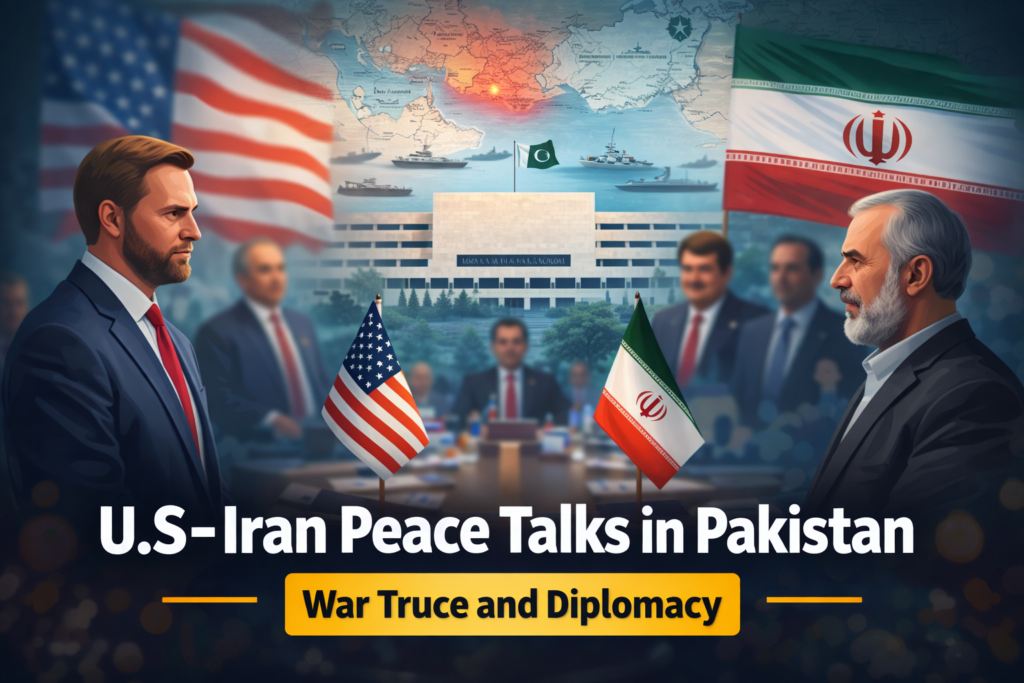
A first ceasefire, brokered by Pakistan in April, barely held. It collapsed within days over disputes about Lebanon and the reopening of the strait, triggering a US naval blockade of Iranian ports. It took until mid-June for a more durable framework to emerge: on June 17, Trump and Iranian President Masoud Pezeshkian signed the Islamabad Memorandum, a 14-point memorandum of understanding that set a 60-day window to negotiate a permanent end to the war, covering the strait, Iran’s nuclear and missile programs, and sanctions relief.
That memorandum is the “ceasefire” that just collapsed and it was already showing cracks well before July 8. Iran continued to insist that any ships passing through Hormuz follow routes it approved, effectively trying to convert a fragile truce into leverage over global shipping. The US and its Gulf partners refused to accept anything resembling Iranian tolls or control.
The Trigger: Attacks on Commercial Shipping
The immediate spark for the collapse was maritime. On July 6–7, three commercial vessels were struck in or near the Strait of Hormuz. According to reporting from NPR, one was a liquefied natural gas tanker that caught fire off the coast of Oman after reportedly ignoring warnings, while two other ships sustained damage but continued on their way. Notably, the vessels attacked were using a route that hugged Oman’s shoreline rather than the passage Tehran claims authority over reinforcing the view among analysts that Iran is punishing ships that don’t follow its preferred corridor.
In response, Washington did two things simultaneously: it revoked a special license that had allowed Iran to sell crude oil openly on international markets for the first time in years, and it ordered CENTCOM to resume strikes. Trump, speaking from the NATO summit, said he now considered the truce “over” and warned that attacks on Iran would “get much worse” if Tehran kept targeting ships in the strait.
Timeline: The 72 Hours That Broke the Ceasefire
- July 6–7: Three commercial ships are struck near the Strait of Hormuz, including a tanker that catches fire off Oman.
- July 7: The US revokes Iran’s oil-sale license and begins a fresh wave of strikes on Iranian assets. Trump tells reporters the exchange of fire “would not lead to long-term military action.”
- July 8 (day): At the NATO summit in Turkey, Trump declares the ceasefire “over” and threatens strikes on Iranian civilian infrastructure if the attacks on shipping continue.
- July 8 (evening): CENTCOM announces a new wave of strikes on roughly 90 Iranian military targets along the country’s coastline, air defenses, drone and missile storage, and a railway bridge northeast of Tehran aimed at degrading Iran’s ability to threaten freedom of navigation in Hormuz.
- July 8–9 (overnight): Iran’s IRGC Navy and Air Force launch a retaliatory drone-and-missile barrage on US military infrastructure, including Camp Arifjan and Ali Al Salem Air Base in Kuwait, and Juffair (home of the US Fifth Fleet) and Sheikh Isa Air Base in Bahrain.
- July 9: Air raid sirens sound across Bahrain and Kuwait; both countries’ air defenses intercept incoming projectiles. Iran claims to have destroyed dozens of US installations; Kuwait and Bahrain report interceptions with limited confirmed damage. Gulf states, along with Egypt, Qatar, and Oman, issue formal condemnations of Iran’s strikes on Bahraini and Kuwaiti sovereign territory.
Why the Peace Framework Was Always Fragile
“Iran has sought to assert hegemonic control over the strait and eventually collect fees on ships passing through” a dynamic that has repeatedly provoked US strikes, even under the terms of the June memorandum.
This is the crux of the entire conflict, and it’s worth stating plainly rather than glossing over it: the ceasefire never resolved the actual dispute, it just paused the shooting while the two sides continued to disagree about who controls the Strait of Hormuz.
Iran’s position: sovereignty and revenue over a “vast operational area”
Since the war began, Iranian officials have redefined the strait not as the narrow shipping channel between Hormuz and Hengam islands, but as a much broader “operational area” stretching from the port of Jask to Siri Island. Iranian negotiators have floated the idea of a new regime for the strait that would include transit charges on foreign vessels something Oman, which has traditionally co-managed the waterway, firmly opposes. For Tehran, asserting control over Hormuz is both an economic lifeline (13 days of oil storage capacity forced it to shut down oil fields during the blockade) and a matter of leverage: it is the one card Iran can play against a US military that has, by CENTCOM’s own account, destroyed roughly 90% of Iran’s defense industrial base and sunk more than 30 of its naval vessels since February.
The US position: free transit, zero tolls, zero Iranian veto
Washington’s position has been consistent since the April talks: the strait must reopen toll-free, exactly as it operated before the war, with no Iranian ability to dictate routes or charge fees. The Trump administration’s July 7 decision to revoke Iran’s oil-export license a rare economic tool it had extended as a goodwill gesture in June shows how quickly Washington is willing to reverse concessions the moment Iran is seen as testing the strait’s status.
A structural collision, not a misunderstanding
Analysts at the Institute for the Study of War and the Critical Threats Project have argued that recent US strikes do not appear to be changing Iran’s underlying strategy Tehran seems willing to risk renewed large-scale conflict rather than give up its bid for control of Hormuz, and is trying to pressure neighboring Gulf states into backing its arrangement rather than accepting Washington’s terms. In other words, this isn’t a case of a deal nearly working that fell apart over a misstep. It’s two irreconcilable visions for the strait’s future colliding roughly every three to four weeks, each time triggering another round of strikes.
The Immediate Regional Fallout
The retaliatory strikes on Bahrain and Kuwait mark a serious escalation because they extend the war beyond Iranian and Israeli territory into sovereign Gulf Arab states that are not formal parties to the conflict. Kuwait’s Foreign Ministry condemned the attacks in the strongest terms as a violation of its sovereignty and of UN Security Council resolutions. Qatar, Oman, and Egypt issued similar condemnations, warning that continued strikes on Gulf territory threaten regional stability far beyond the US-Iran dispute itself.
Militarily, the scale of this round is smaller than the initial February assault CENTCOM’s strikes and Iran’s response have not matched the intensity of the war’s opening weeks but the pattern is troubling. This is now the third time since the June memorandum was signed that the US has launched major strikes on Iran during an active 60-day negotiating window, a pattern Tehran says is eroding what little trust remained between the two sides.
Global Energy Security Shocks: Why This Matters Beyond the Middle East
The Strait of Hormuz carries roughly a fifth of the world’s seaborne oil and liquefied natural gas trade in peacetime. Even a partial, intermittent disruption ripples through the global economy in ways that are hard to overstate:
- Oil and stock markets react instantly. Reporting from Britannica and CFR confirms that oil prices rose and stocks dropped worldwide the moment Trump declared the ceasefire over a now-familiar pattern every time the truce wobbles.
- The mine problem isn’t solved. According to the Council on Foreign Relations, an estimated eighty sea mines remain in the strait’s main navigation lanes, laid during the initial blockade. Clearing them was part of the June memorandum, but the timeline remains unsettled, and US minesweeping capacity has atrophied over the years.
- Alternate routes are a partial fix at best. With safe passage through the strait’s traditional lanes still contested, exporters are increasingly relying on routes closer to Oman’s coastline precisely the routes Iran has been targeting.
- Airlines and shippers are absorbing massive costs. US airlines’ monthly fuel spending topped $6 billion in May, up 84% year-over-year, a preview of what sustained disruption could do to global transport costs.
- A hundred days of damage, and counting. CFR analysts note that even if the memorandum ultimately holds, transit fees, mines, billions of dollars in infrastructure damage, and deep regional mistrust stand between any nominal reopening of Hormuz and a genuine recovery of global energy markets.
For investors and analysts tracking the global energy security shocks stemming from this conflict, the key takeaway is that volatility is now structural, not episodic. Every three to four weeks, a new flashpoint, a struck tanker, a revoked export license, a bridge strike has been enough to reset the crisis clock.
What Happens Next: Three Scenarios
1. Managed escalation (most likely near-term). Both sides signal limited retaliation is not full-scale war. Trump himself noted the prior day that the exchange of fire “would not lead to long-term military action,” even as he authorized new strikes. Under this scenario, expect continued tit-for-tat strikes on military and shipping targets, punctuated by renewed but shaky ceasefire talks, without a full return to February’s intensity.
2. A genuine relapse into full war. If Iran escalates further against Gulf Arab states rather than just US assets, or if a strike causes mass civilian casualties, the coalition arrayed against Iran could widen again, dragging Saudi Arabia, the UAE, and Israel back into direct combat roles.
3. A renegotiated, more durable framework. The least likely but most consequential outcome: a new deal that resolves the core Hormuz governance dispute likely requiring Iran to abandon toll collection in exchange for enforceable security guarantees. Nothing in the current trajectory suggests this is imminent.
Conclusion: A Ceasefire That Never Addressed the Real Fight
The lesson of the past four months is that ceasefires between Washington and Tehran have repeatedly bought weeks, not peace. Every pause has been undone by the same unresolved question: who governs the Strait of Hormuz, and on whose terms? Until that structural dispute is settled, not papered over with another memorandum, global energy markets should expect this cycle of strikes, retaliation, and fragile truce to keep repeating. The stakes are not abstract. A fifth of the world’s oil and gas trade runs through a waterway that two nuclear-adjacent militaries are actively fighting to control, and the Gulf states caught in the crossfire are running out of patience.
The next 30 days will likely determine whether this settles into a grinding, contained standoff or spirals into a broader regional war involving Saudi Arabia, the UAE, and Israel once again.