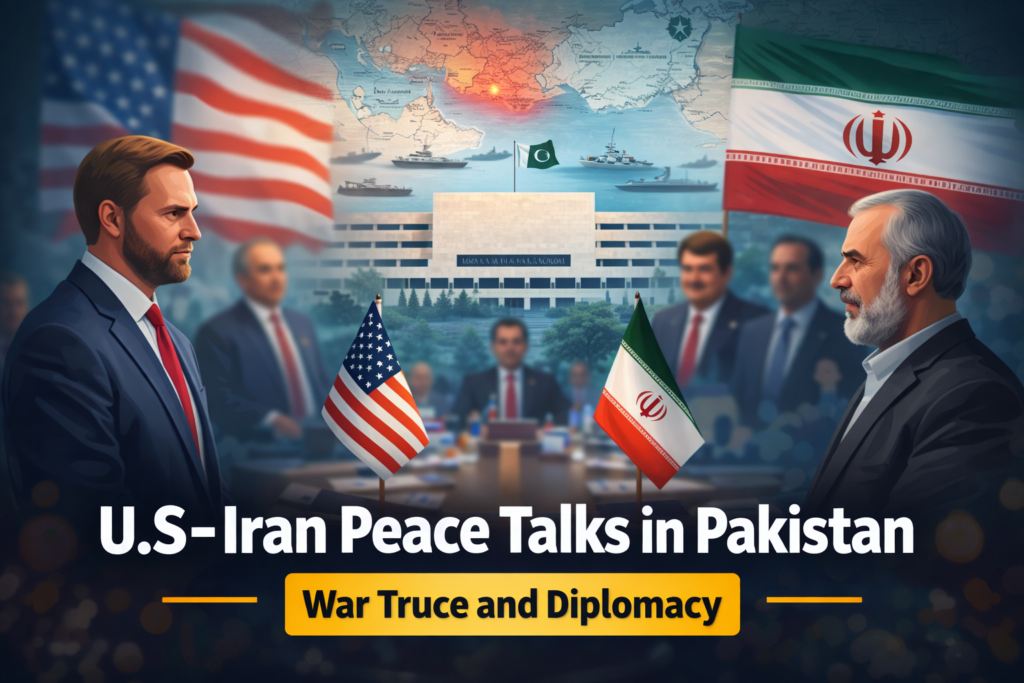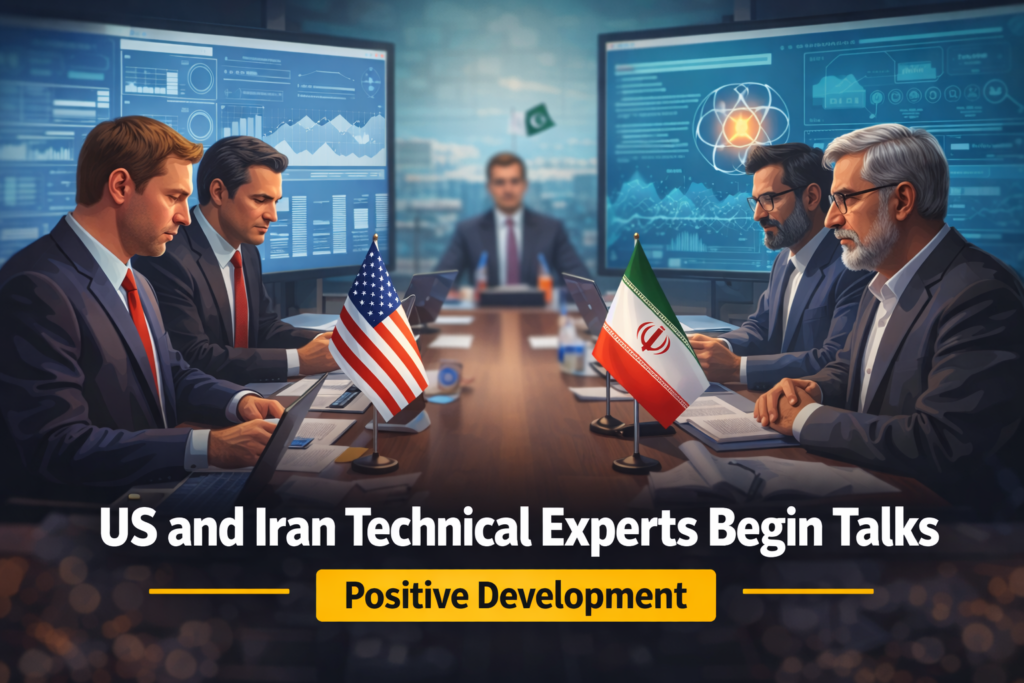
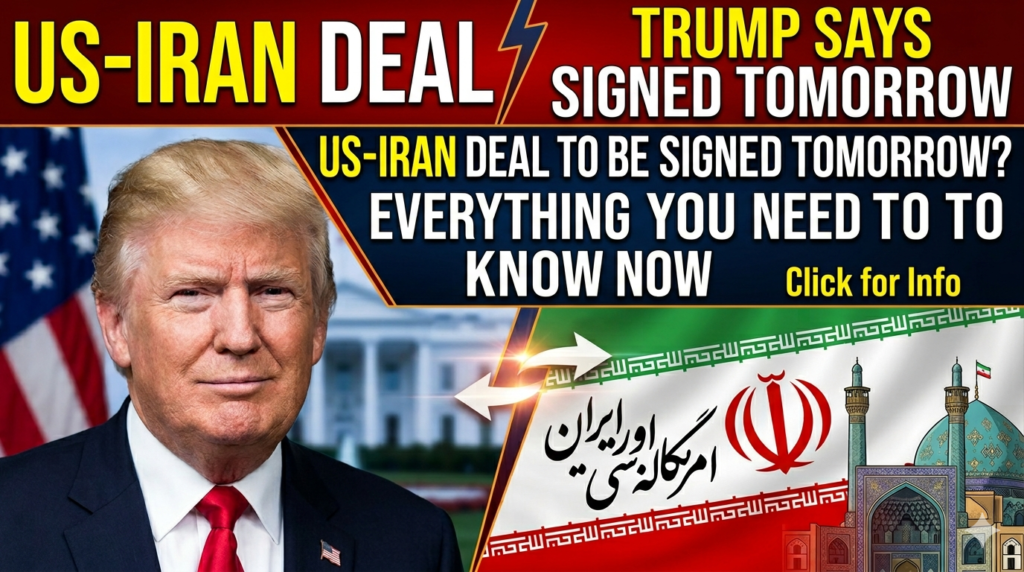
This is the biggest diplomatic story of 2026. President Donald Trump announced on Saturday, June 13, that a deal between the United States and Iran is scheduled to be signed on Sunday. The Strait of Hormuz, which Iran closed during the war and which has been choking global oil supplies for months, will reopen immediately after the signing. Pakistan’s Prime Minister Shehbaz Sharif said a finalized agreement was likely within 24 hours. And four US Air Force C-17 cargo planes have already departed for Europe to move equipment for a possible signing ceremony in Geneva.
This is not a rumor. This is not speculation. The deal is happening. Here is absolutely everything you need to know.
What Trump Said on Saturday
US President Donald Trump said a deal between Washington and Tehran will be signed on Sunday, and the Strait of Hormuz will be open to all immediately after the signing.
That single statement sent shockwaves through financial markets, diplomatic circles, and newsrooms around the world. After months of war, ceasefire negotiations, collapsed talks, military strikes, drone attacks, and diplomatic brinkmanship that at times brought the two countries to the edge of full-scale catastrophe, the United States and Iran are on the verge of putting pen to paper.
Pakistan’s Prime Minister Shehbaz Sharif said early Saturday that a peace deal was closer than ever before, with finalization likely expected in the next 24 hours. Pakistan is preparing for the electronic signing of the peace deal immediately after, followed by technical level talks next week.
Who Will Sign the Deal?
A Western source said the deal could be signed as soon as Sunday by US Vice President JD Vance and Iran’s Parliament Speaker Mohammad Baqer Qalibaf, with Geneva seen as the likeliest venue. Iranian Foreign Minister Araghchi said the deal would be signed remotely before it is announced.
Four US Air Force C-17 planes departed to Europe on Thursday, moving equipment for possible travel by Vice President Vance to a signing ceremony in Geneva in the coming days.
JD Vance is not a random choice for this moment. He led the US negotiating delegation at the critical Islamabad talks in April and has been one of the most hands-on figures in the entire diplomatic process. Saturday’s Islamabad talks marked the highest-level meeting between the US and Iran since the 1979 Islamic revolution, and a successful deal would help Vance bolster his resume for a potential 2028 presidential bid.
On the Iranian side, Parliament Speaker Mohammad Baqer Qalibaf represents a significant seniority level in the Islamic Republic’s power structure. His presence at the signing table signals that the deal has been approved at the highest levels of the Iranian government.
How Did This Deal Actually Get Made?
The deal that is about to be signed tomorrow did not come from a single negotiating table. It is the product of an extraordinary chain of diplomacy spanning more than a year, multiple countries, a shooting war, and dozens of meetings at every level of government.
According to two diplomats from two mediating countries and two US officials, the tentative agreement was reached on Wednesday night after hours of negotiations between Qatari mediator Ali Al-Thawadi and Iranian Foreign Minister Abbas Araghchi. During the talks in Tehran, Al-Thawadi spoke on the phone multiple times with Trump’s envoys Steve Witkoff and Jared Kushner.
Qatar played a quiet but decisive role in the final hours of the negotiation that most people have not focused on. While Pakistan handled the high-profile mediation and Oman played a critical role in the earlier Geneva rounds, Qatar’s Ali Al-Thawadi was apparently the person who got the two sides to yes on Wednesday night.
Trump’s announcement that a deal had been finalized came as a surprise to Israeli Prime Minister Benjamin Netanyahu, who in recent days found himself in the dark, calling allies close to the Trump administration to try and gather information.
The fact that Netanyahu was surprised by the announcement is itself one of the most significant details to emerge from this entire process. Israel launched military strikes on Iran in 2025 that set off the chain of events leading to the 2026 war. That Netanyahu was not fully in the loop on the final deal structure suggests the United States ultimately moved forward on terms that Israel was not entirely comfortable with.
What Is Actually in the Deal?
This is where the details matter enormously, and where the two sides have spent the last 48 hours publicly disputing each other’s accounts. Here is what multiple sources from different countries and different sides of the negotiation have confirmed about the deal’s contents.
The Ceasefire and Strait of Hormuz
Draft terms of the deal described to Reuters by multiple sources indicate the US would begin releasing billions of dollars in frozen Iranian assets and waive sanctions on its oil exports, in return for Iran opening the Strait.
During the 60-day period of the MOU, the Strait of Hormuz would be open with no tolls and Iran would agree to clear the mines it deployed in the strait to let ships pass freely. In exchange, the US would lift its blockade on Iranian ports and issue some sanctions waivers to allow Iran to sell oil freely.
The Strait of Hormuz reopening is the single most economically consequential provision in the entire agreement. Before the war, the Strait handled roughly 20 percent of the world’s traded oil and gas supply. Its closure triggered an energy crisis that affected economies from the United States to Europe to Asia.
The Nuclear Question
This is where the deal is most carefully worded and where the most significant concessions appear to have been made by Washington.
The draft MOU includes commitments from Iran to never pursue nuclear weapons and to negotiate over a suspension of its uranium enrichment program and the removal of its stockpile of highly enriched uranium.
Critically, Iran’s nuclear program would be addressed during the 60-day period of talks following the signing, not in the MOU itself. This means the MOU does not resolve the nuclear question it creates a framework and a deadline for resolving it. Iran does not give up enrichment tomorrow. It commits to negotiating about enrichment during the 60 days after tomorrow.
Trump had previously insisted that Iran must agree that they will never have a nuclear weapon or bomb, and that the Hormuz Strait must be immediately open with no tolls for unrestricted shipping traffic in both directions. The current MOU as reported addresses both of these points, at least partially.
The Sanctions Relief
Vice President JD Vance pushed back against reports that Iran would receive cash immediately, writing that no funds are being released for simply signing a deal or attending a meeting. The deal is structured to ensure that US and its allies’ concerns are prioritized, and that if the Islamic Republic of Iran meets its obligations, then economic benefits will flow to them and to the entire region.
This is an important clarification of one of the most disputed elements. Sanctions relief and the unfreezing of Iranian assets appear to be conditional on Iran meeting its obligations under the MOU particularly on clearing the Strait and making progress on the nuclear file rather than being delivered upfront at signing.