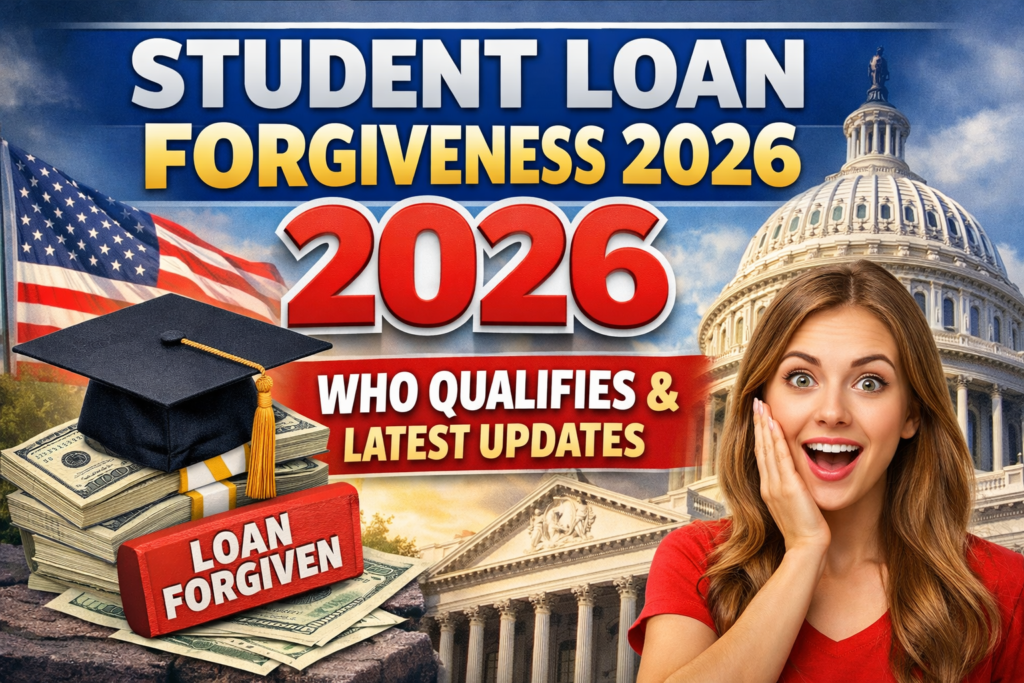
Quick Summary: The student loan landscape has changed dramatically in 2026. The SAVE
Plan is officially dead, new repayment options launch on July 1, 2026, and some forgiveness is
now taxable. This guide breaks down every active forgiveness program, who qualifies, and
what steps you need to take right now.
Table of Contents
The Big Picture: What Changed in 2026
Public Service Loan Forgiveness (PSLF)
Income-Driven Repayment (IDR) Forgiveness
Teacher Loan Forgiveness
Total and Permanent Disability (TPD) Discharge
Borrower Defense to Repayment
The New Repayment Assistance Plan (RAP)
The SAVE Plan: What Happened?
The 2026 Tax Bomb: What Borrowers Need to Know
Key Deadlines You Cannot Miss
Action Steps for Every Type of Borrower
Frequently Asked Questions
- The Big Picture: What Changed in 2026 {#big-picture}
If you have federal student loans, 2026 is one of the most consequential years you will ever face
as a borrower. Multiple programs are ending, new ones are launching, and the rules around who
qualifies for forgiveness have shifted dramatically under the Trump administration and through
sweeping new legislation — the One Big Beautiful Bill Act (OBBBA).
Here is a fast overview of the biggest changes that are either already in effect or taking effect on
July 1, 2026:
The SAVE Plan is finished. On March 10, 2026, a court order officially ended the Saving on
a Valuable Education (SAVE) Plan. All 7.5 million borrowers enrolled in SAVE must
transition to a new legal repayment plan within a 90-day window.
New repayment plans launch July 1, 2026. The Repayment Assistance Plan (RAP) and the
new Tiered Standard Plan will replace many existing income-driven options.
PSLF employer rules are changing. Effective July 1, 2026, new rules allow the Department
of Education to disqualify employers with a “substantial illegal purpose” from the PSLF
program.
IDR forgiveness is now potentially taxable. A federal tax exemption that protected
forgiven student loan amounts expired on December 31, 2025. Any forgiveness processed
in 2026 or later may be counted as taxable income.
Borrowing limits are tightening. The Grad PLUS loan program is eliminated after July 1,
2026.
Wage garnishment has resumed. The Department of Education restarted collections and
wage garnishment for defaulted borrowers in early 2026.
This is a lot to absorb. Let’s go program by program so you know exactly where you stand. - Public Service Loan Forgiveness (PSLF) {#pslf}
What Is PSLF?
The Public Service Loan Forgiveness program was created by Congress in 2007 with one simple
promise: work full-time in public service for 10 years, make 120 qualifying monthly payments on
your federal Direct Loans, and the government will forgive whatever remains. No dollar cap. No
limit. Teachers, nurses, firefighters, social workers, government employees — if you work for a
qualifying employer, this program is for you.
PSLF is unique in one critical way: it cannot be unilaterally eliminated by the executive branch
because Congress created it by law. However, the Trump administration has significantly
changed how the program works.
Who Qualifies for PSLF in 2026?
To be eligible for PSLF, you must meet all of the following:
Employment Requirements:
Work full-time (30 hours per week or more) for a qualifying employer
Qualifying employers include: U.S. federal, state, local, or tribal government agencies;
public schools; public hospitals; 501(c)(3) nonprofit organizations; fire departments; police
departments; and other school-based services such as nursing, social work, and counseling
Loan Requirements:
Have federal Direct Loans only
FFEL, Perkins, and Parent PLUS loans do not qualify unless consolidated into a Direct
Consolidation Loan
Critical deadline: Consolidation must be completed before July 1, 2026 to retain the
widest range of repayment plan options
Payment Requirements:
Make 120 qualifying monthly payments (does not need to be consecutive)
Payments must be made under a qualifying repayment plan
The new Repayment Assistance Plan (RAP) launching July 1, 2026 will be a qualifying plan
for PSLF
The New PSLF Employer Rules (Effective July 1, 2026)
This is the biggest change to PSLF in its nearly 20-year history. Under a final rule published
October 31, 2025, the Department of Education now has authority to disqualify employers from
PSLF if they are found to have a “substantial illegal purpose.” This includes organizations
determined to be supporting terrorism, aiding illegal immigration, or engaging in activities the
Secretary of Education deems unlawful.
Here is what this means practically:
Your past payments are protected. If your employer is later disqualified, payments you
already made while working there will still count toward your 120. You will not lose credit
already earned.
Future payments stop counting. Once an employer is disqualified, workers at that
organization can no longer earn new PSLF credit. You would need to find a new qualifying
employer to continue progressing.
Nonprofits and government agencies face uncertainty. Organizations like immigration
legal aid groups, civil rights nonprofits, and some local governments that have resisted
federal immigration enforcement have been flagged as potentially vulnerable to
disqualification. Democrats in Congress introduced resolutions in April 2026 to overturn
this rule, calling it a political tool to punish certain organizations.
Multiple lawsuits are pending. A coalition of 21 states, the District of Columbia, and
several nonprofit organizations have sued to block the rule. Its legal future is uncertain, but
as of this writing it is set to take effect July 1, 2026.
PSLF Buyback Option
Already have 120 months of qualifying employment but some months were in forbearance or
deferment (like SAVE-related forbearance)? You may be able to use the PSLF Buyback program
to pay a lump sum covering those paused months and qualify for immediate forgiveness. This is a
lifeline for borrowers like those who spent years in SAVE-related forbearance and are now close
to the finish line.
PSLF and Taxes
PSLF forgiveness is permanently tax-free at the federal level. The IRS has confirmed that
amounts forgiven under PSLF are not considered taxable income. Note, however, that a handful
of states — including Indiana, Arkansas, Mississippi, and Wisconsin — may still tax forgiven
amounts at the state level. - Income-Driven Repayment (IDR) Forgiveness {#idr}
How IDR Forgiveness Works
Income-Driven Repayment plans set your monthly payment as a percentage of your
discretionary income. After you make payments for 20 to 25 years (depending on the plan),
whatever balance remains is forgiven. This pathway is primarily for borrowers who carry large
debt loads relative to their income and who are not in public service jobs.
Which IDR Plans Are Still Available?
The 2026 landscape has gotten significantly more complicated. Here is the current status of each
plan:
Income-Based Repayment (IBR): IBR remains available and is not going anywhere. If you have
loans disbursed before July 2026, you can enroll in IBR. Forgiveness after 20 to 25 years of
qualifying payments remains an option. IBR caps payments at 10% to 15% of discretionary
income depending on when you took out your loans.
Pay As You Earn (PAYE): PAYE will be phased out by July 1, 2028. If you are currently on PAYE,
you must switch to IBR or the new Repayment Assistance Plan (RAP) by that date. If you do not
switch voluntarily, your loan servicer will auto-enroll you in one of the qualifying plans.
Income-Contingent Repayment (ICR): ICR is also being eliminated by July 1, 2028. The same
transition rules apply as with PAYE. Borrowers with Parent PLUS loans who rely on ICR (after
consolidation) should pay close attention, as Parent PLUS loans will not be eligible for RAP.
SAVE Plan: The SAVE Plan is over. Court orders ended it on March 10, 2026. Borrowers who were
in SAVE-related forbearance have not been earning credit toward IDR forgiveness during that
time, which is a major setback for many.
Repayment Assistance Plan (RAP): Launching July 1, 2026, RAP is the new income-driven
option for loans disbursed after that date. For existing borrowers, RAP is an alternative to IBR.
More on RAP below.
IDR Forgiveness Timeline
Unlike PSLF, IDR forgiveness takes 20 to 25 years and — critically — is no longer tax-free at the
federal level for most borrowers. This is the so-called “student loan tax bomb” discussed in detail
in Section 9. - Teacher Loan Forgiveness {#teacher}
What Is Teacher Loan Forgiveness?
The Teacher Loan Forgiveness program offers up to $17,500 in federal student loan
forgiveness for teachers who meet specific criteria. It is a faster path to partial forgiveness than
PSLF — requiring only five consecutive years of teaching rather than ten.
Who Qualifies?
To qualify for Teacher Loan Forgiveness, you must:
Be a full-time, highly qualified teacher for five complete and consecutive academic years
Teach at a low-income elementary school, secondary school, or educational service agency
(the school must appear on the Department of Education’s Annual Directory of Designated
Low-Income Schools)
Have taken out your loans before the end of your five years of teaching service
Have no outstanding balance on a Direct Loan or Federal Family Education Loan (FFEL) as
of October 1, 1998, or on the date you obtained a loan after that date
How Much Can Be Forgiven?
Up to $17,500 for highly qualified math or science teachers at the secondary level, or for
special education teachers
Up to $5,000 for other highly qualified full-time teachers in elementary or secondary
education
Important Note About PSLF vs. Teacher Loan Forgiveness
You cannot count the same period of teaching service toward both Teacher Loan Forgiveness
and PSLF. Many teachers choose to pursue PSLF because it forgives the entire remaining
balance — not just $17,500. If you are a teacher in a qualifying school system, compare both
programs carefully and decide which path aligns better with your total debt amount and career
plans.
Teacher Loan Forgiveness is also not federally taxable, which is a key advantage over IDR
forgiveness in 2026 and beyond. - Total and Permanent Disability (TPD) Discharge {#tpd}
What Is TPD Discharge?
If you have a physical or mental disability that severely limits your ability to work now and into
the future, you may qualify to have your entire federal student loan balance discharged through
the Total and Permanent Disability (TPD) program. This is one of the most powerful and
underutilized discharge programs available.
Who Qualifies?
You can qualify for TPD discharge through one of three pathways:
VA Documentation: If you are a veteran and the Department of Veterans Affairs (VA) has
determined that you have a service-connected or non-service-connected disability rated 100%
disabling, or that you are “totally disabled” based on an individual unemployability decision, you
may qualify.
Social Security Administration (SSA) Documentation: If the SSA has designated you as having
a Medical Improvement Not Expected (MINE) review schedule, you likely qualify.
Physician Certification: A licensed medical doctor can certify that your physical or mental
impairment prevents you from engaging in substantial work activity and is expected to last at
least 60 months or result in death.
Key 2026 Update: No More Monitoring Period
A major borrower-friendly update: there is no longer a post-discharge income monitoring
period. Previously, discharged borrowers faced a three-year window during which returning to
work or earning above a threshold could result in reinstatement of their loans. That monitoring
period has been eliminated. If your TPD application is approved, you will not have to repay those
loans, period — with one caveat: if you apply for additional federal financial aid within three
years of your discharge, the loans could be reinstated.
How to Apply
Many eligible borrowers are automatically identified through VA and SSA data sharing. If you
receive a letter saying you may qualify, do not ignore it. You can also apply online at
StudentAid.gov, or a medical professional can complete the certification section on your behalf.
TPD discharge forgiveness is not federally taxable. - Borrower Defense to Repayment {#borrower-defense}
What Is Borrower Defense?
Borrower Defense to Repayment allows borrowers to apply for a full or partial discharge of their
federal Direct Loans if their school engaged in misconduct — such as lying about job placement
rates, making false claims about transferability of credits, or using deceptive recruitment
practices.
This program has been caught in a legal and bureaucratic battle for years. Under the Biden
administration, it was expanded significantly. Under the Trump administration, processing has
slowed and standards have tightened.
Who Qualifies?
Borrowers may qualify if their school:
Made false or misleading statements about the school or your ability to benefit from the
program
Engaged in illegal activity related to your loan or education
Violated a state law that protects consumers
Historically, borrowers from for-profit institutions have filed the vast majority of Borrower
Defense claims, particularly from schools like ITT Technical Institute and Corinthian Colleges.
2026 Status
The Trump administration has narrowed the interpretation of what constitutes a qualifying
misconduct claim. Additionally, because Borrower Defense forgiveness happens after what can
be a multi-year review process, borrowers whose applications are approved in 2026 or later face
potential federal tax liability on the forgiven amount (see Section 9).
If you believe your school misled you, file your Borrower Defense application at StudentAid.gov.
Prompt filing is important because delays push potential forgiveness further into a taxable
period. - The New Repayment Assistance Plan (RAP) {#rap}
What Is RAP?
The Repayment Assistance Plan (RAP), launching July 1, 2026, is the centerpiece of the new
federal student loan repayment framework created by the One Big Beautiful Bill Act. For
borrowers who took out new loans after July 1, 2026, it will be the only income-driven repayment
option available.
Key Features of RAP
Payment calculation: Monthly payments under RAP are based on income and the number
of dependents — not a flat percentage of discretionary income
Interest protection: Borrowers who make full, on-time payments under RAP are shielded
from negative amortization. Unlike older IDR plans where unpaid interest could compound
and grow a balance even as you made payments, RAP ensures that on-time payments
actually reduce your principal
Payment range: Payments can be as low as 1% of Adjusted Gross Income (AGI) and are
capped at 10% of AGI
Forgiveness timeline: RAP does include a pathway to eventual forgiveness for those who
cannot pay off their balance within the repayment term
PSLF compatible: RAP is a qualifying repayment plan for PSLF
What RAP Does NOT Do
RAP is not available to Parent PLUS loan borrowers for loans disbursed after July 1, 2026.
Parents with existing PLUS loans can still use certain plans if they act before the 2028 deadlines,
but new Parent PLUS loans will have far fewer options going forward. - The SAVE Plan: What Happened? {#save-plan}
A Brief History
The Saving on a Valuable Education (SAVE) Plan was introduced by the Biden administration as
its most ambitious income-driven repayment plan. It promised lower monthly payments
(calculated at 5% of discretionary income for undergraduate loans, versus 10% on older plans)
and faster forgiveness for smaller borrowers.
It was immediately challenged in court by a coalition of Republican-led states who argued the
Biden administration exceeded its authority in creating it. Federal and appellate courts agreed,
blocking the plan repeatedly. The Trump administration took office determined to end it entirely.
On March 10, 2026, a court order formally ended the SAVE Plan. Shortly after, the U.S.
Department of Education began issuing guidance to all 7.5 million borrowers enrolled in SAVE,
directing them to select a new, legal repayment plan.
What Happens Now If You Were in SAVE?
You have been placed in an interest-free forbearance while you decide on a new plan
You have at least 90 days from when you receive your servicer notification to enroll in a
new plan
Time spent in SAVE-related forbearance does not count toward IDR forgiveness timelines
in most cases
If you were pursuing PSLF, you may be able to use the PSLF Buyback program to make
payments covering those paused months
The new legal options are: IBR, the Standard Repayment Plan, the new Tiered Standard
Plan (July 1, 2026), or RAP (July 1, 2026)
The Department of Education has instructed servicers to email affected borrowers. Check your
inbox, including spam folders, and log in to StudentAid.gov to verify your loan status. - The 2026 Tax Bomb: What Borrowers Need to Know {#tax-bomb}
This may be the most important section of this entire guide.
What Changed
The American Rescue Plan Act of 2021 made most federal student loan forgiveness tax-free at
the federal level — but only for amounts forgiven between December 31, 2021 and December 31, - That window has now closed. Congress has not extended it.
Starting January 1, 2026, forgiveness amounts are generally treated as ordinary taxable
income at the federal level — unless specific exemptions apply. This is called “cancellation of
debt income” and you would receive a Form 1099-C from your loan servicer reporting the
forgiven amount.
Who IS Affected?
Borrowers receiving IDR forgiveness (20-25 year plans) with discharges processed in 2026
or later
Borrowers whose Borrower Defense applications are approved in 2026 or later
Some closed school discharge recipients
Who Is NOT Affected (Still Tax-Free)?
PSLF forgiveness: Permanently tax-free at the federal level per IRS guidance. This does
not change in 2026.
Teacher Loan Forgiveness: Not federally taxable.
TPD Discharge: Not federally taxable.
Death discharge: Not taxable.
How Big Could the Tax Bill Be?
For some borrowers, the numbers are staggering. Imagine a borrower who borrowed $40,000
and saw their balance grow to $80,000 over 25 years due to interest — then receives IDR
forgiveness. That entire $80,000 forgiven amount would be counted as ordinary income in the
year it is discharged, potentially creating a tax bill of $12,000–$20,000 or more depending on the
borrower’s tax bracket.
Senate Democrats sent a letter to the IRS in late 2025 warning that some borrowers could face tax
bills as high as $10,000. The senators pushed the administration to declare IDR forgiveness non
taxable by executive action — but no such action was taken.
State Taxes: An Additional Complication
Even before 2026, some states were already taxing forgiven student loans. States that currently
impose taxes on forgiven student debt include Indiana, Arkansas, Mississippi, Wisconsin, and
potentially others depending on state conformity rules. If you live in one of these states,
forgiveness under any program (except potentially PSLF) may be taxable at the state level as
well. Verify your specific state’s rules with a tax professional.
What Should You Do?
If you are expecting forgiveness soon, speak with a CPA or tax advisor now — before the
forgiveness happens — to plan for the tax liability
Consider increasing tax withholding or making estimated quarterly tax payments so you
are not hit with a large surprise bill
Set aside savings if forgiveness under IDR or Borrower Defense is coming in the next one
to two years - Key Deadlines You Cannot Miss {#deadlines}
Understanding what needs to happen and by when is critical. Here is a consolidated deadline
calendar for 2026 and beyond:
Before July 1, 2026:
Consolidate your loans if you need to access IBR or protect your PSLF progress.
Consolidation before this date gives you access to more plans. Parent PLUS borrowers
pursuing PSLF must consolidate before this date to remain eligible for IBR.
If you are on SAVE, contact your servicer and enroll in a new legal repayment plan.
If you need to consolidate a Parent PLUS loan for PSLF, do it now — loans issued after July 1,
2026 will not qualify for RAP or PSLF.
July 1, 2026:
RAP and the new Tiered Standard Plan launch.
New PSLF employer eligibility rules take effect. Verify your employer’s status.
Grad PLUS loans are eliminated for new borrowers.
New PSLF rules regarding “substantial illegal purpose” take effect.
July 1, 2027:
Deferment and forbearance options become more limited for new federal loans disbursed
on or after this date (economic hardship and unemployment deferments will no longer be
available).
July 1, 2028:
PAYE and ICR plans sunset. If you are on either of these plans, you must switch to IBR or
RAP.
Parent PLUS borrowers who have not switched to IBR by this deadline will be auto-enrolled. - Action Steps for Every Type of Borrower {#action-steps}
If You Were in SAVE: - Log in to StudentAid.gov and check your loan status immediately
- Review the available repayment plans using the Education Department’s Loan Simulator at
StudentAid.gov - If you are pursuing PSLF, check if the PSLF Buyback program is available to you
- Enroll in IBR or wait for RAP to launch on July 1, 2026 — do not wait past your 90-day
deadline
If You Are Pursuing PSLF: - Submit your Employment Certification Form (ECF) annually at StudentAid.gov/pslf
- Verify your employer’s status using the PSLF Employer Search Tool
- If your employer is a nonprofit that might face scrutiny under the new rules, consult a
student loan attorney - Make sure you have Direct Loans — consolidate if needed before July 1, 2026
If You Are Close to IDR Forgiveness: - Speak with a tax advisor immediately — your forgiveness will likely be taxable in 2026
- Begin planning for the tax liability now, not when you receive the 1099-C
- Confirm your payment count is accurate on StudentAid.gov
If You Have a Disability: - Apply for TPD Discharge at DisabilityDischarge.com or StudentAid.gov/tpd-discharge
- If you have a VA or SSA determination, you may qualify for automatic discharge — check
for notification letters
If You Attended a For-Profit School: - Research whether your school has been subject to enforcement actions
- File a Borrower Defense claim at StudentAid.gov if you believe you were misled
- Act quickly — every year of delay pushes potential forgiveness into a taxable window
If You Are in Default: - Wage garnishment has resumed as of early 2026 — act immediately
- Look into the Fresh Start program if it remains available, or contact your servicer about
rehabilitation options - Default resolution is the first step before any forgiveness program becomes accessible to
you - Frequently Asked Questions {#faq}
Q: Does the Trump administration have the power to cancel PSLF? No. Because PSLF was
created by an Act of Congress, the executive branch cannot unilaterally eliminate it. The
administration can — and has — changed the eligibility rules for qualifying employers, but the
program itself remains intact.
Q: Can I still get student loan forgiveness in 2026? Yes. PSLF, Teacher Loan Forgiveness, TPD
Discharge, IDR forgiveness, and Borrower Defense all remain active. The key changes are around
eligibility rules, taxability, and which repayment plans qualify.
Q: My loans were in SAVE forbearance — do those months count toward anything? For PSLF:
you may be able to use the PSLF Buyback program to make payments for those months and have
them count. For IDR forgiveness: months in SAVE forbearance generally do not count toward
your 20-25 year clock, which is a significant setback for many borrowers.
Q: Will my state tax my forgiven student loan? It depends on your state. PSLF and TPD
forgiveness are federally tax-free, but some states — including Indiana, Arkansas, Mississippi,
and Wisconsin — may still tax certain types of forgiveness. Consult a local tax professional.
Q: What is the Repayment Assistance Plan and should I enroll? RAP launches July 1, 2026. It
features income-based payments between 1%-10% of AGI and protects borrowers from runaway
interest. It is compatible with PSLF. Whether it is right for you depends on your income, family
size, and loan balance — use the Education Department’s Loan Simulator to compare it with IBR.
Q: I’m a Parent PLUS borrower. What are my options? Parent PLUS borrowers face some of the
toughest restrictions in 2026. If you are pursuing PSLF, consolidate into a Direct Consolidation
Loan and enroll in IBR before July 1, 2026. New Parent PLUS loans disbursed after that date will
not qualify for RAP or PSLF.
Q: Is there any way to avoid the “tax bomb” on IDR forgiveness? You cannot avoid it entirely if
you receive IDR forgiveness in 2026 or later under current law. However, you can plan for it by
increasing withholding, making estimated payments, or working with a tax advisor to ensure you
are not caught off guard.
Q: What if my employer gets disqualified from PSLF under the new rules? Payments already
made will still count. You will need to find a new PSLF-eligible employer to continue earning
credit toward your 120 qualifying payments. Only the employer can appeal a disqualification
decision — individual borrowers cannot.
Final Thoughts
Navigating student loan forgiveness in 2026 requires more attention and planning than ever
before. The system is changing faster than most borrowers can keep up with, and the stakes —
including potential tax bills on forgiven amounts and loss of forgiveness eligibility — have never
been higher.
The good news is that programs like PSLF, Teacher Loan Forgiveness, and TPD Discharge remain
intact and continue to provide real, meaningful relief for borrowers who qualify. The key is to
take action now: verify your loan status, understand your options, check your employer’s
eligibility, and — if IDR forgiveness is in your near future — start planning for the tax
implications with a qualified professional.
Bookmark this page and check back regularly. Given the ongoing legal battles around the new
PSLF employer rules and the possibility of further legislative changes, this landscape will
continue to evolve throughout 2026.
Helpful Resources:
StudentAid.gov — Your official hub for all federal loan information, repayment plan
applications, and the PSLF Help Tool
StudentAid.gov/pslf — PSLF Help Tool and employer eligibility search
DisabilityDischarge.com — TPD discharge applications
IRS.gov — Tax guidance on student loan forgiveness
CFPB (ConsumerFinance.gov) — Student loan complaint and resource center
This article is for informational purposes only and does not constitute legal, tax, or financial
advice. Student loan policies are subject to ongoing litigation and legislative changes. Always
consult a qualified student loan advisor, tax professional, or attorney before making decisions
about your loans.