The Iran nuclear deal 2026 has become one of the most defining geopolitical stories of this decade. With war, ceasefire, back-channel diplomacy, and high-stakes negotiating all unfolding within weeks, Americans are watching closely to see whether Washington and Tehran can reach a historic agreement — or whether the conflict escalates further. This comprehensive guide breaks down everything you need to know about the current state of US-Iran nuclear negotiations.
Background: How We Got Here
The Original 2015 JCPOA and Its Collapse
The story of the Iran nuclear deal 2026 begins with its predecessor — the Joint Comprehensive Plan of Action (JCPOA), signed on July 14, 2015, between Iran and six world powers including the US, UK, France, Germany, China, and Russia. Under that agreement, Iran committed to restricting its uranium enrichment to 3.67 percent, well below weapons-grade, and accepted one of the most intrusive international inspection regimes ever put in place by the International Atomic Energy Agency (IAEA). In exchange, crippling international economic sanctions were lifted and billions in frozen Iranian assets were released.
Trump’s 2018 Withdrawal and Its Consequences
During his first term, President Trump pulled the United States out of the JCPOA in 2018, branding it the worst deal ever made. His administration sought a stronger agreement that would also restrict Iran’s ballistic missile program, cut off its support for regional armed groups, and impose tighter limits on its nuclear activities. The US exit triggered a slow Iranian response: starting in mid-2019, Tehran began incrementally breaching JCPOA caps, increasing its uranium stockpiles and enrichment levels. By November 2024, Iran announced plans to install more than 6,000 new centrifuges, and the IAEA confirmed the move.
Iran’s Nuclear Capabilities Before 2026
By December 2024, the UN nuclear watchdog IAEA reported that Iran had enriched uranium to levels approaching weapons-grade and had amassed an unprecedented stockpile with no credible civilian purpose. The agency estimated Iran had accumulated approximately 440 kilograms of uranium enriched to 60 percent purity — a short technical step from the 90 percent purity required for nuclear weapons production. Crucially, Tulsi Gabbard, the US Director of National Intelligence, testified to Congress in March 2025 that the US continued to assess Iran was not building a nuclear weapon — though the gap between capability and deployment was narrowing.
The 2026 US-Israel War on Iran
US and Israeli Strikes That Changed Everything
The immediate crisis leading to the Iran nuclear deal 2026 negotiations began on February 28, 2026, when the United States and Israel launched large-scale military strikes on Iran, marking the beginning of what is now called the 2026 Iran War. The attacks were devastating. Iran’s Supreme Leader Ayatollah Ali Khamenei was killed in the initial strikes, along with Ali Larijani, a senior Iranian figure who had been a key participant in previous diplomatic negotiations. Earlier, in June 2025, the US had bombed the Fordow uranium enrichment facility, the Natanz nuclear facility, and the Isfahan nuclear technology center, which Trump described as creating a total obliteration of Iran’s nuclear infrastructure.
The April 7 Ceasefire Agreement
After weeks of intense fighting, the United States and Iran announced a temporary two-week ceasefire on April 7, 2026. The ceasefire came with a framework of conditions. Iran was required to immediately reopen the Strait of Hormuz to restore global oil flow. The US signaled willingness to ease sanctions in exchange for Iranian nuclear concessions, and all formal peace negotiations were to be channeled through Pakistan as an initial mediator. Phase 2 of the framework envisioned a 45-day window for deeper discussions toward a permanent settlement. The fragile nature of the truce was immediately apparent — JD Vance described it as a fragile truce just one day after it was announced, and both sides began accusing each other of violations almost immediately.
The Strait of Hormuz and Naval Blockade Tensions
One of the most explosive flashpoints in the Iran nuclear deal 2026 saga has been control over the Strait of Hormuz, through which roughly 20 percent of global oil supplies flow. Iran initially agreed to reopen the waterway as part of the ceasefire terms, but by April 9, ships were again being prevented from passing through. The US responded by imposing a naval blockade on Iranian ports. Tensions reached a new peak when a US guided-missile destroyer — the USS Spruance — fired on and seized an Iranian cargo ship, the TOUSKA, after it attempted to breach the blockade in the Gulf of Oman, further inflaming Iranian officials and testing the limits of the ceasefire framework.
The Islamabad Peace Talks
First Round of Talks: April 12, 2026
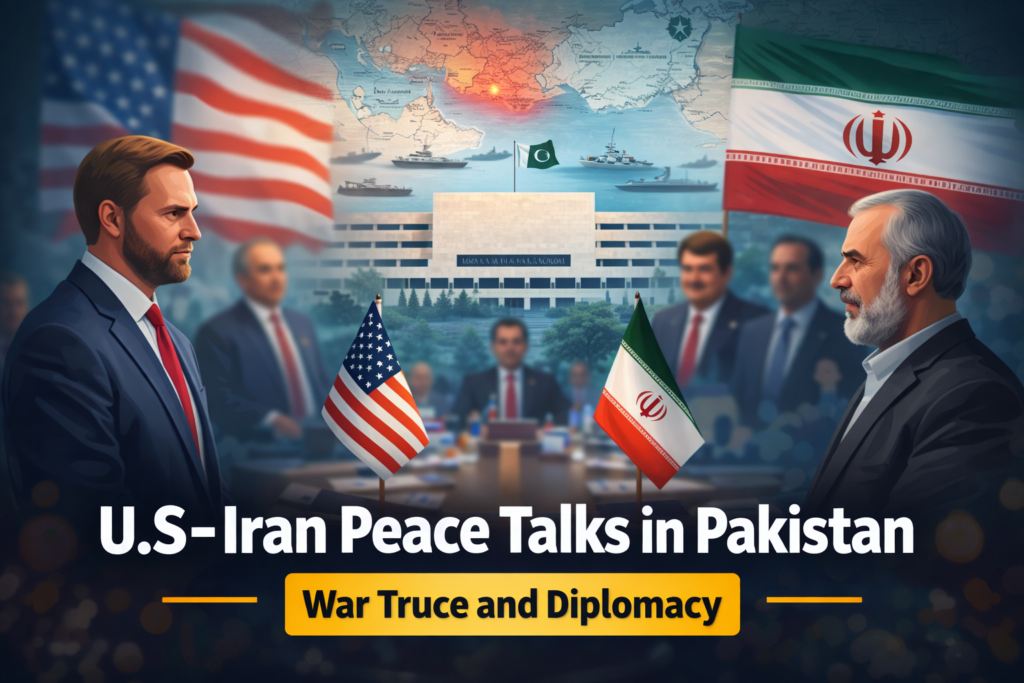
The first formal round of US-Iran peace negotiations under the Iran nuclear deal 2026 framework took place in Islamabad, Pakistan, on April 12, 2026. The American delegation was led by Vice President JD Vance, along with Trump’s special envoys Steve Witkoff and Jared Kushner. Pakistani Prime Minister Shehbaz Sharif welcomed both delegations, framing the talks as an opportunity to reach a conclusive agreement settling all disputes. The first round concluded after 21 hours of negotiations without any concrete resolution on the core issues — particularly Iran’s nuclear enrichment program. Vance told Fox News that Iranian negotiators moved in the US direction but did not move far enough.
Why the First Round Failed
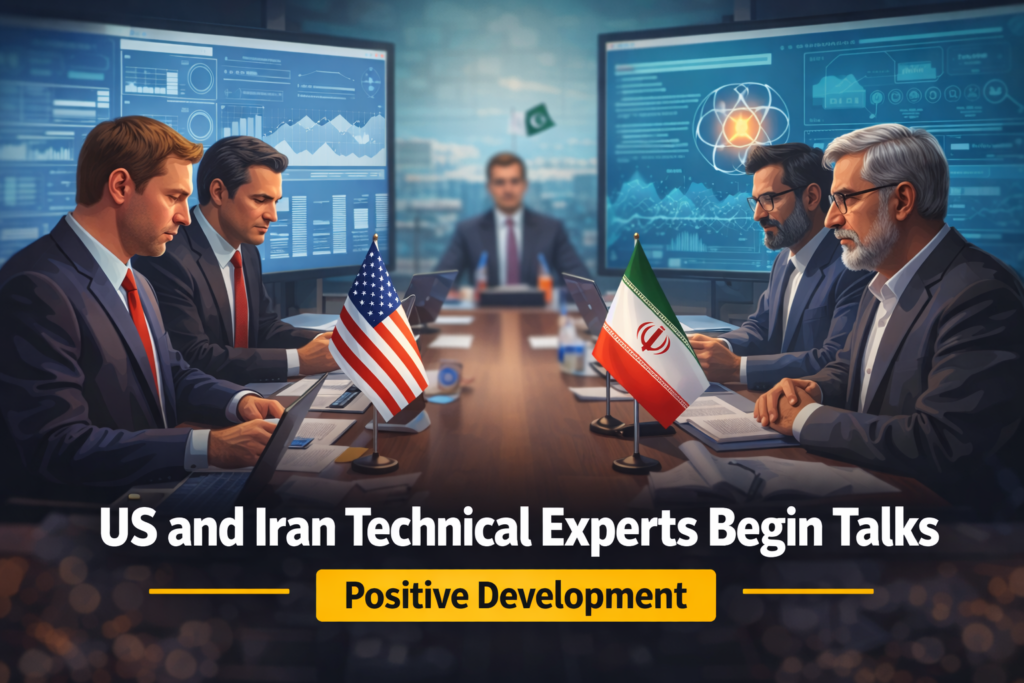
Several factors contributed to the deadlock in the first Islamabad round. The US opened with a demand for a 20-year moratorium on Iranian uranium enrichment. Iran countered with a five-year suspension, which the American side rejected outright. American negotiators also pushed for Iran to dismantle its major nuclear enrichment facilities entirely and hand over more than 400 kilograms of highly enriched uranium. Iran’s negotiating team, led by Parliament Speaker Mohammad Bagher Ghalibaf and Foreign Minister Abbas Araghchi, said they needed to return to Tehran for authorization on any final commitments — a reflection of the deep internal political divisions within the Iranian system between the negotiating team and the hardline Islamic Revolutionary Guard Corps.
Second Round and Ongoing Negotiations
Following the failed first round, both sides signaled openness to a second round of talks. Pakistan’s government prepared Islamabad for renewed negotiations as the ceasefire deadline approached. By April 20, sources indicated that a fresh round of talks was on track to commence, though the situation remained fluid. Iranian President Masoud Pezeshkian issued strongly worded comments asserting Iran’s right to nuclear enrichment under international law, while Trump escalated rhetoric publicly, warning Iran it must agree to a deal one way or another — the nice way or the hard way. Trump also renewed threats to target Iranian bridges and power plants, which international law experts described as potentially constituting war crimes.
Key Demands on the Negotiating Table
US Core Demands in the Iran Nuclear Deal 2026
The Trump administration has set out a list of non-negotiable demands as the foundation of any Iran nuclear deal 2026 agreement. At the top of the list is the complete halting of uranium enrichment by Iran — Trump has publicly stated he wants zero enrichment indefinitely. The US also demands the removal and transfer of Iran’s existing enriched uranium stockpile, the dismantling of major underground nuclear facilities, an end to Iranian support for regional armed groups including Hamas, Hezbollah, the Houthis, and Hashd al-Shaabi, and restrictions on Iran’s ballistic missile program. US envoy Steve Witkoff has emphasized that Iran must halt all uranium enrichment as a baseline American position. Beyond nuclear issues, Trump has conditioned any sanctions relief on Iran adopting a more conciliatory overall posture.
Iran’s Core Demands and Red Lines
Iran’s position in the Iran nuclear deal 2026 talks is anchored in what it describes as its legal rights under international law. Iranian officials point to Article IV of the Nuclear Non-Proliferation Treaty, which grants all signatory states the right to develop and use nuclear energy for peaceful purposes. Tehran insists it will not accept a complete ban on enrichment. Iran has proposed various compromise positions, including a 10-year pause on high-level enrichment followed by a second decade of enrichment only to levels well below weapons-grade. On the financial side, Iran is demanding the unfreezing of tens of billions in frozen assets — initial Iranian demands stood at $27 billion, while the US offered $6 billion in humanitarian-use funds in earlier stages. Iran also wants full sanctions relief, the ability to sell oil at free-market rates, and reintegration into the global financial system, while simultaneously insisting on maintaining control over the Strait of Hormuz.
The Uranium Stockpile Standoff
One of the most technically complex issues in the Iran nuclear deal 2026 is what to do with Iran’s existing stockpile of enriched uranium. The Trump administration’s top priority is ensuring Iran cannot access approximately 2,000 kilograms of enriched uranium buried in its underground nuclear facilities, especially the 450 kilograms enriched to 60 percent purity. The US initially demanded that all nuclear material be shipped to American soil. Iran refused, offering only to down-blend it inside Iran under international monitoring. A compromise proposal has since emerged: some of the highly enriched uranium would be shipped to a neutral third country, while the remainder would be down-blended inside Iran under IAEA supervision. Russia has separately offered to take Iran’s enriched uranium stockpile as part of a broader settlement.
The $20 Billion Cash-for-Uranium Proposal
A significant development in the Iran nuclear deal 2026 negotiations was the emergence of a US proposal to offer approximately $20 billion in exchange for Iran surrendering its nuclear material. The proposal stems from a three-page Memorandum of Understanding that the two sides have been negotiating. Iran would be permitted to maintain nuclear research reactors for producing medical isotopes, but all nuclear facilities would have to be above ground and subject to inspection. Trump publicly contradicted this framework after it was reported, posting on Truth Social that no money will change hands — though his statement did not specifically address the question of unfreezing Iranian funds already held abroad.
The Obstacles to a Deal
Deep Mutual Distrust Between Washington and Tehran
Diplomats and former negotiators who worked on the original 2015 JCPOA are uniformly pessimistic about reaching a quick deal in the Iran nuclear deal 2026 talks. Rob Malley, who served as Special Envoy to Iran under President Biden, has described the level of trust between the two sides as probably at an all-time low. Iranian officials have to wonder how long any American commitment will last, given that Trump already abandoned the JCPOA once in 2018. Malley noted that Iran will be very hesitant to give up something tangible — like its enriched uranium stockpile — in exchange for promises that could be discarded by Trump or any future president. Former lead US negotiator Wendy Sherman has stated plainly: you cannot do a negotiation with Iran in one day, adding that reaching the 2015 JCPOA took a good 18 months of intensive diplomacy.
Trump’s Social Media Diplomacy Problem
A recurring complication in the Iran nuclear deal 2026 process has been Trump’s habit of announcing Iranian concessions publicly before they are actually agreed upon. Multiple Trump officials privately acknowledged to CNN that the president’s public commentary has been detrimental to talks. When Trump told Bloomberg that Iran had agreed to an unlimited suspension of its nuclear program and told CBS News Tehran had agreed to everything, Iranian officials publicly rejected those claims and flatly denied they were preparing for another round of talks — temporarily derailing the rising optimism that a deal was near. One source familiar with the talks explained that the Iranians did not appreciate Trump negotiating through social media and making it appear as if they had signed off on issues they had not agreed to.
Divisions Within Iran’s Leadership
American officials have identified what they believe is a critical divide within Iran’s own power structure. The diplomatic negotiating team led by Ghalibaf and Araghchi appears more willing to engage seriously with a deal framework, but the Islamic Revolutionary Guard Corps holds enormous influence and has shown deep skepticism about any agreement that would require surrendering nuclear capabilities. This internal division creates a situation where Iran’s negotiators may agree to a framework in Islamabad but face resistance from hardliners in Tehran when seeking final approval. Hamid-Reza Haji Babaee, Deputy Speaker of the Iranian Parliament, has stated publicly that he has faith in the military but not in the negotiations.
The JCPOA Comparison Problem for Trump
A structural political problem for the Trump administration in the Iran nuclear deal 2026 talks is that any agreement must appear demonstrably tougher than the Obama-era JCPOA — an agreement Trump spent years denouncing as the worst deal ever made. Trump has made clear he is against even a 20-year pause on uranium enrichment if it could be compared favorably to the JCPOA. This political constraint limits the room for compromise that professional diplomats say is essential to any successful negotiation with Iran. At minimum, negotiators hope to produce a framework MOU that would lead to more detailed talks over the coming weeks — though critics warn that Iran could use extended discussions as a play for time.
What Experts Are Saying
Former Negotiators Warn Against Rushed Timeline
Analysts and former diplomats who participated in the 2015 JCPOA talks are expressing serious concern about the approach to the Iran nuclear deal 2026. The original deal involved hundreds of specialists across technical and legal fields over roughly two years. Jon Finer, who worked on the 2013-2015 negotiations, described Iranian negotiators as extremely capable professionals who know their portfolios and noted they managed to master the details of nuclear weapons, nuclear materials, and US sanctions even without expert advisers immediately at hand. He characterized Iranian negotiating tactics as maddeningly difficult, noting that the same issue often had to be revisited ten or twelve times over weeks or months before any progress was made.
The Geopolitical Stakes for the United States
The Iran nuclear deal 2026 carries consequences far beyond the immediate conflict. Rising gas prices caused by the Strait of Hormuz blockade have been documented as increasingly unpopular with the American public, and Trump officials are reportedly not keen to resume the war. The conflict has also drawn in regional and global players — Pakistan is actively mediating, while Egypt and Turkey are providing behind-the-scenes support to the peace process. China and Russia have held separate meetings with the IAEA about Iran’s nuclear program. Saudi Arabia has been looped in through a diplomatic forum on the sidelines of broader regional discussions. The outcome of the Iran nuclear deal 2026 will shape the Middle East security architecture and America’s global credibility for years to come.
What a Deal Could Look Like
If a breakthrough in the Iran nuclear deal 2026 is achieved, analysts believe it would likely include a multi-decade moratorium on high-level uranium enrichment, the transfer or down-blending of Iran’s existing enriched uranium stockpile, a return to comprehensive IAEA inspections including surprise visits to undeclared sites, and conditional sanctions relief and unfreezing of Iranian financial assets. Iran would likely be permitted to maintain civilian nuclear research capacity, including reactors for producing medical isotopes. In exchange, the US would need to offer credible and durable guarantees — something that has proven politically difficult given Trump’s first-term withdrawal from the JCPOA and Iran’s resulting deep skepticism of American diplomatic commitments.
What Happens if There Is No Deal
The Military Option and Its Risks
Trump has repeatedly and publicly threatened to resume military strikes on Iran if no deal is reached in the Iran nuclear deal 2026 framework. He warned Iran it must agree to a deal the nice way or the hard way and specifically threatened to target bridges and power plants — infrastructure strikes that international law experts have said could constitute war crimes. White House spokesperson Olivia Wales confirmed that after the failure of the first Islamabad talks, the president had ordered a naval blockade of the Strait of Hormuz and kept all additional options on the table. The US military’s top general, Dan Caine, stated publicly that American forces were ready to resume attacks if ordered. Any military escalation would carry enormous risks — for global oil markets, for US troops stationed across the Middle East, and for broader regional stability involving Saudi Arabia, Iraq, Lebanon, and beyond.
Iran’s Leverage and Retaliation Capacity
Iran still retains significant strategic leverage in any no-deal scenario. Iran’s IRGC has warned that it considers any encroachment by US military vessels upon the Strait of Hormuz to be a ceasefire violation that would trigger retaliation. Iran-backed armed groups continue to operate across the region — Hezbollah in Lebanon has been launching rockets and drones into northern Israel, and the Houthis in Yemen have threatened retaliation against the US should any renewed attack be launched on Iran. Iranian drone strikes have also hit targets in Iraqi Kurdistan during the ceasefire period. The combination of direct military capacity and extensive proxy network gives Iran multiple tools to raise costs for the United States even without resuming direct strikes.
The Path Forward for the Iran Nuclear Deal 2026
The Role of Pakistan, Turkey, and Egypt
The diplomatic infrastructure supporting the Iran nuclear deal 2026 is notably multilateral. Pakistan has been central to the process from the beginning, providing both the physical venue in Islamabad and active diplomatic mediation by Prime Minister Shehbaz Sharif. Egypt and Turkey have played supporting roles, and a quad-format meeting involving Pakistani, Egyptian, Turkish, and Saudi officials has been used to coordinate the broader regional diplomatic effort. This multilateral mediation structure is both a strength and a potential vulnerability: more parties involved means more potential for miscommunication or competing agendas to complicate the process.
Timeline and What to Watch Next
The immediate focus of the Iran nuclear deal 2026 is on whether a second round of talks in Islamabad can produce a framework MOU before the ceasefire fully breaks down. Key questions include whether Iran’s negotiating team can secure domestic authorization for major concessions on uranium enrichment, whether Trump will maintain diplomatic discipline and avoid announcing Iranian concessions prematurely on social media, whether Russia and China will play constructive roles in brokering a uranium transfer compromise, and whether the naval standoff over the Strait of Hormuz can be resolved without triggering renewed military conflict. Experts caution that even under the best conditions, a comprehensive and binding Iran nuclear deal 2026 is unlikely to be concluded in weeks — the more realistic goal for now is a framework agreement that creates a pathway to longer and more detailed negotiations.
Conclusion: High Stakes for America and the World
The Iran nuclear deal 2026 is arguably the most consequential diplomatic challenge facing the United States at this moment. The combination of an active military conflict, a fragile ceasefire, a naval blockade, domestic political pressures on both sides, and decades of deeply rooted mutual distrust makes this among the most complex negotiations in modern American foreign policy history. Whether President Trump can secure a deal that is both genuinely effective and politically distinguishable from the Obama-era JCPOA — while Iran decides whether any agreement can provide durable security guarantees worth trading its nuclear leverage for — will determine not just the fate of this conflict but the shape of the Middle East for a generation.
Stay updated on the Iran nuclear deal 2026 and all major geopolitical developments at topichype.com.